






In industries where solid-liquid separation is a critical process, the filter press machine remains one of the most efficient and reliable filtration solutions available. From wastewater treatment plants and chemical processing facilities to pharmaceutical manufacturing and mining operations, filter presses play a vital role in improving productivity and reducing waste.
As industries continue to focus on efficiency, environmental compliance, and cost optimization, understanding the working principle of a filter press has become increasingly important.
In this comprehensive guide, we’ll explain what a filter press machine is, how it works, its major components, benefits, and common industrial applications.
What Is a Filter Press Machine?
A filter press machine is a mechanical filtration device used to separate solids from liquids using pressure filtration.
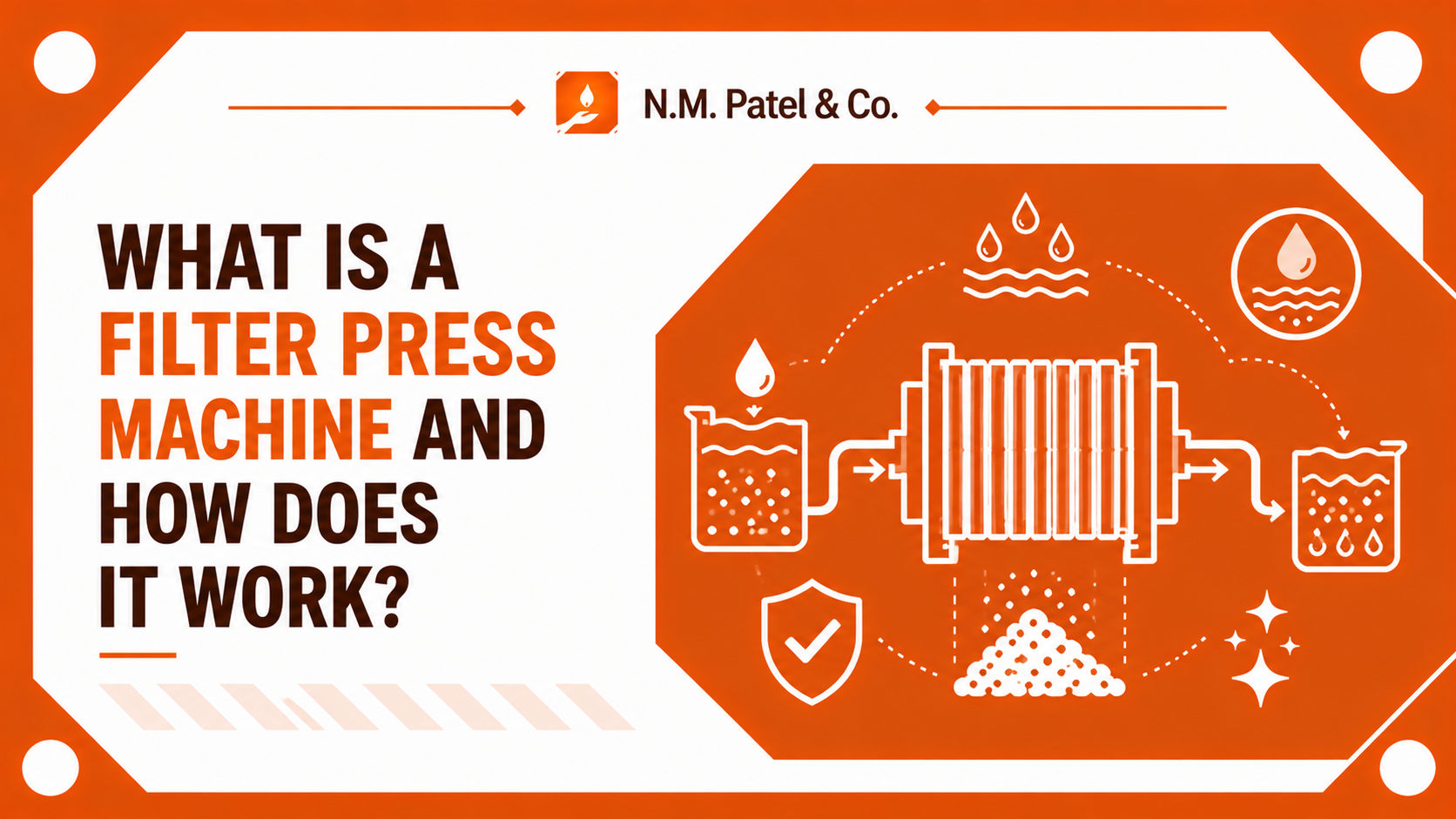
The machine consists of a series of filter plates covered with filter cloths. A slurry mixture containing solids and liquids is pumped into the filter press under pressure. The liquid passes through the filter cloth while solid particles are trapped inside the chambers, forming what is known as a filter cake.
The result is:
- Clean filtrate (liquid)
- Dewatered solids (filter cake)
This process helps industries recover valuable materials, reduce waste volume, and improve process efficiency.
What Is the Working Principle of a Filter Press?
The filter press working principle is based on pressure-driven filtration.
The process involves forcing slurry into a series of filter chambers where solids are retained while liquid passes through the filter media.
Basic Principle
- Slurry enters the filter press.
- Pressure forces liquid through filter cloths.
- Solids accumulate inside chambers.
- Filter cake gradually forms.
- Clean filtrate exits the system.
- Filter cake is discharged after filtration is complete.
The greater the pressure applied, the more effective the solid-liquid separation becomes.
Main Components of a Filter Press Machine
Understanding the major components helps explain how a filter press works.
Filter Plates
Filter plates create the chambers where filtration occurs.
Functions include:
- Supporting filter cloths
- Forming filtration chambers
- Directing filtrate flow
Different plate designs are available depending on the application.
Filter Cloth
The filter cloth acts as the filtration medium.
Its purpose is to:
- Retain solid particles
- Allow liquid to pass through
- Support efficient cake formation
Selecting the correct cloth is essential for filtration performance.
Hydraulic System
The hydraulic system compresses the filter plates together before filtration begins.
Benefits include:
- Leak prevention
- Uniform pressure distribution
- Safe operation
Feed Pump
The feed pump delivers slurry into the filter press.
It generates the pressure required for filtration.
Pump performance directly impacts:
- Cycle time
- Filtration efficiency
- Cake formation quality
Frame Structure
The frame supports the entire filtration system.
A robust frame ensures:
- Structural stability
- Long service life
- Reliable operation
Step-by-Step Filter Press Operation Process
Let’s look at the complete filter press operation process.
Step 1: Plate Closing
The hydraulic system closes and compresses the filter plates.
This creates sealed filtration chambers.
Step 2: Slurry Feeding
The feed pump transfers slurry into the filter chambers.
Pressure begins building inside the system.
Step 3: Filtration Stage
Liquid passes through the filter cloth.
Solid particles remain trapped within the chambers.
As filtration continues:
- Cake thickness increases
- Moisture content decreases
- Filtration pressure rises
Step 4: Cake Formation
Over time, solids accumulate and form a dense filter cake.
The cake acts as an additional filtration layer, improving separation efficiency.
Step 5: Filtrate Collection
Filtered liquid exits through designated discharge channels.
The filtrate can be:
- Reused
- Recycled
- Further processed
- Discharged safely
Step 6: Plate Opening and Cake Discharge
After filtration is complete:
- Plates open automatically or manually
- Filter cake falls from the chambers
- The next filtration cycle begins
Types of Filter Press Machines
Different industries require different filtration solutions.
Recessed Chamber Filter Press
Most commonly used design.
Advantages:
- High efficiency
- Simple operation
- Reliable performance
Membrane Filter Press
Uses flexible membranes to squeeze the filter cake.
Benefits:
- Lower moisture content
- Faster drying
- Improved cake discharge
Plate and Frame Filter Press
Traditional filtration design.
Suitable for:
- Fine filtration
- Laboratory applications
- Specialized processes
Automatic Filter Press
Features automated operation and cake discharge.
Advantages:
- Reduced labor costs
- Higher productivity
- Consistent performance
Industries That Use Filter Press Machines
Filter presses are widely used across multiple industries.
Wastewater Treatment
Applications include:
- Sludge dewatering
- Effluent treatment
- Water recovery
Chemical Industry
Used for:
- Chemical filtration
- Catalyst recovery
- Product purification
Pharmaceutical Industry
Supports:
- API production
- Chemical separation
- Product purification
Mining Industry
Applications include:
- Mineral processing
- Tailings dewatering
- Metal recovery
Food and Beverage Industry
Used for:
- Juice clarification
- Edible oil filtration
- Food processing
Textile Industry
Supports:
- Dye wastewater treatment
- Process water recovery
Benefits of Using a Filter Press Machine
High Filtration Efficiency
Produces excellent solid-liquid separation.
Reduced Waste Volume
Significantly lowers sludge disposal costs.
Lower Operating Costs
Efficient dewatering reduces transportation and disposal expenses.
Water Recovery
Allows industries to reuse filtered water.
Environmental Compliance
Supports wastewater treatment and sustainability goals.
Long Equipment Life
Durable construction ensures years of reliable operation.
Factors to Consider When Choosing a Filter Press
Before purchasing a filter press machine, evaluate:
Slurry Characteristics
Consider:
- Particle size
- Solid concentration
- Viscosity
Production Capacity
Select equipment sized for your operational requirements.
Automation Requirements
Choose between:
- Manual systems
- Semi-automatic systems
- Fully automatic systems
Material of Construction
Options include:
- Mild steel
- Polypropylene
- Stainless steel
Material selection depends on process conditions.
Maintenance Requirements
Easy-to-maintain systems help reduce downtime and operating costs.
Common Maintenance Tips
To maximize performance and lifespan:
Inspect Filter Cloths Regularly
Replace worn or damaged cloths promptly.
Check Hydraulic Systems
Monitor pressure and fluid levels.
Clean Plates Frequently
Prevent buildup and maintain filtration efficiency.
Inspect Seals and Gaskets
Address leaks before they worsen.
Follow Preventive Maintenance Schedules
Routine servicing minimizes unexpected breakdowns.
Why Indian Industries Are Investing in Modern Filter Press Systems
Growing environmental regulations and rising operational costs are driving demand for advanced filtration technology.
Modern filter presses help businesses:
- Improve productivity
- Reduce waste disposal costs
- Meet compliance requirements
- Recover valuable resources
- Improve sustainability
As industrial production continues to expand across India, filter presses remain a critical component of efficient manufacturing operations.
Why Choose N M Patel & Co.?
At N M Patel & Co., we manufacture high-performance filter press systems designed for a wide range of industrial applications.
Our solutions offer:
- Robust construction
- Reliable filtration performance
- Customized designs
- Advanced automation options
- Comprehensive technical support
As a trusted industrial filter press manufacturer India, we help industries achieve efficient and cost-effective filtration solutions.
People Also Ask
What is a filter press machine used for?
A filter press machine is used to separate solids from liquids through pressure filtration.
How does a filter press work?
A filter press pumps slurry into chambers where liquid passes through filter cloths while solids remain trapped as filter cake.
What industries use filter presses?
Wastewater treatment, chemicals, pharmaceuticals, mining, food processing, textiles, and many other industries use filter presses.
What is filter cake in a filter press?
Filter cake is the solid material retained inside the filter chambers after filtration.
What are the advantages of a filter press?
Benefits include high filtration efficiency, reduced waste volume, water recovery, and lower operating costs.
FAQ’s
What is the lifespan of a filter press machine?
With proper maintenance, a filter press can provide reliable service for many years.
How often should filter cloths be replaced?
Replacement frequency depends on operating conditions and process requirements.
Can filter presses handle industrial wastewater?
Yes. Filter presses are widely used for industrial wastewater treatment and sludge dewatering.
What is the difference between a membrane and chamber filter press?
Membrane filter presses use additional squeezing action to achieve lower cake moisture content.
Are automatic filter presses worth the investment?
For high-volume operations, automatic systems often improve productivity and reduce labor costs.
How do I choose the right filter press size?
Selection depends on slurry volume, solids concentration, filtration requirements, and production capacity.
Conclusion
A filter press machine is one of the most effective solutions for solid-liquid separation across a wide range of industries. By using pressure filtration, these systems produce clean filtrate, recover valuable materials, and significantly reduce waste disposal costs.
Understanding how a filter press works, its components, and its applications helps businesses make informed decisions when selecting filtration equipment.
For reliable, efficient, and customized filtration solutions, trust N M Patel & Co., a leading industrial filter press manufacturer in India committed to delivering high-performance filtration systems for modern industry.