






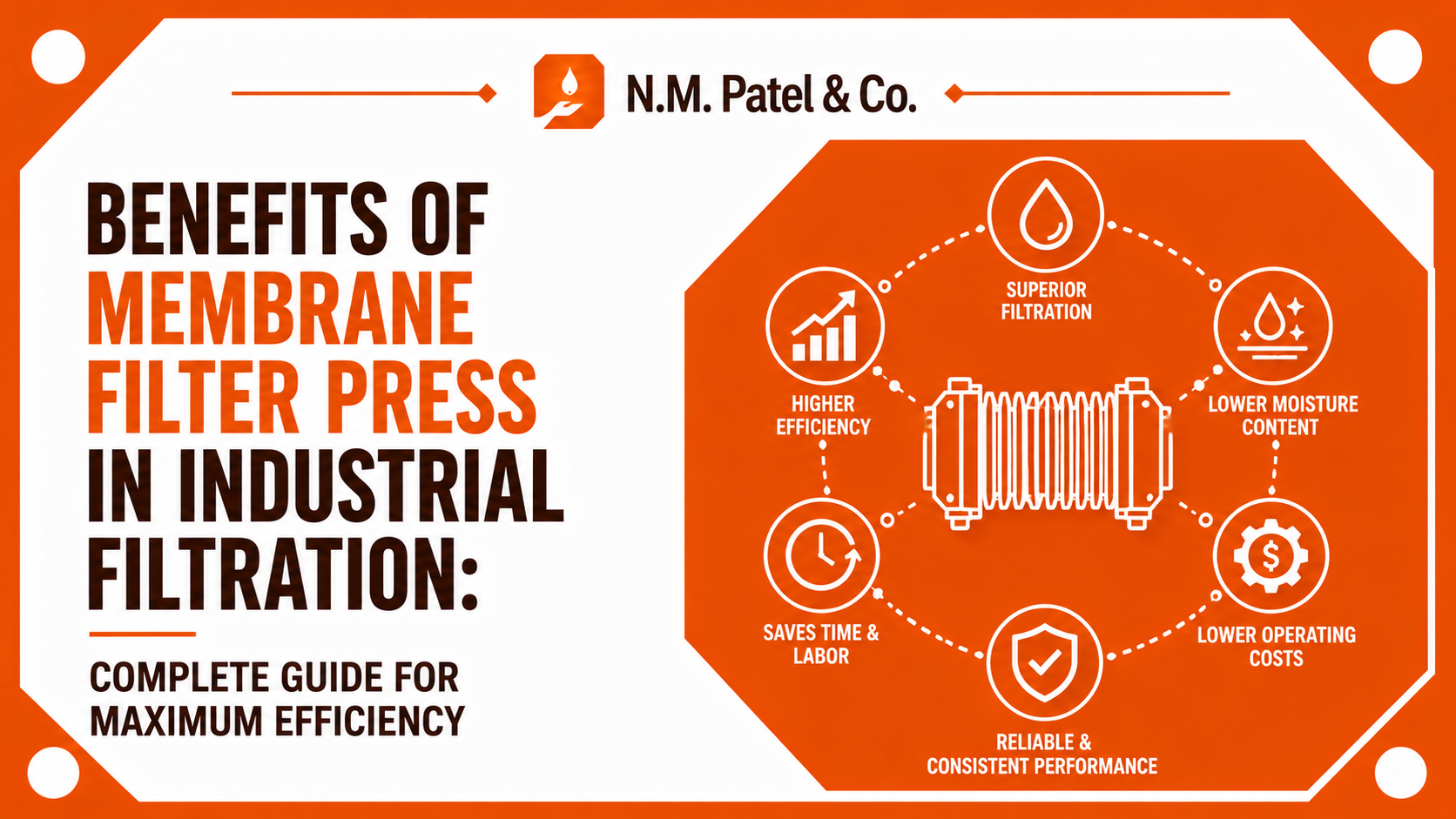
Industrial filtration plays a crucial role in ensuring efficient production, environmental compliance, and cost-effective waste management. As industries generate increasingly complex slurries, traditional filtration methods may not always provide the level of efficiency required.
This is where the Membrane Filter Press stands out. Designed to deliver superior solid-liquid separation, a membrane filter press uses advanced squeezing technology to remove additional moisture from the filter cake after the standard filtration cycle.
Compared to conventional chamber filter presses, membrane filter presses produce drier cakes, improve product recovery, reduce disposal costs, and enhance overall plant efficiency.
In this guide, we’ll explore the major benefits of membrane filter press systems, their working principle, applications, and why they are becoming the preferred choice across multiple industries.
What Is a Membrane Filter Press?
A membrane filter press is an advanced filtration machine that uses specially designed membrane plates to apply additional pressure to the filter cake after the initial filtration process.
The filtration cycle consists of two stages:
- Primary pressure filtration
- Membrane squeezing
During the second stage, compressed air or water inflates the membrane plates, forcing out additional liquid trapped inside the filter cake.
The result is a significantly drier filter cake with improved filtration efficiency.
How Does a Membrane Filter Press Work?
The process includes the following steps:
- Slurry is pumped into the filter chambers.
- Liquid passes through the filter cloth.
- Solids accumulate inside the chambers.
- A filter cake forms.
- Membrane plates inflate using compressed air or water.
- Additional pressure squeezes the cake.
- More moisture is removed.
- The press opens and dry cake is discharged.
This additional squeezing stage is the key feature that differentiates membrane filter presses from conventional chamber filter presses.
Top Benefits of Membrane Filter Press
1. Higher Filter Cake Dryness
One of the biggest membrane filter press advantages is its ability to produce much drier filter cakes.
The membrane squeezing process removes additional moisture that cannot be eliminated through normal pressure filtration alone.
Benefits include:
- Easier handling
- Lower transportation costs
- Reduced disposal expenses
- Faster drying
2. Lower Sludge Disposal Costs
Many industries pay disposal charges based on sludge weight.
Since membrane filter presses reduce moisture content, they significantly reduce sludge volume and weight.
This leads to:
- Lower transportation costs
- Reduced landfill charges
- Improved waste management
Over time, these savings can offset the higher initial investment.
3. Improved Filtration Efficiency
The secondary squeezing stage improves overall filtration performance by:
- Removing more liquid
- Increasing cake density
- Enhancing separation efficiency
- Producing cleaner filtrate
This makes membrane filter presses ideal for demanding industrial applications.
4. Better Product Recovery
Industries processing valuable materials benefit from improved product recovery.
Examples include:
- Pharmaceuticals
- Chemicals
- Pigments
- Minerals
- Food ingredients
Recovering more solids improves production efficiency and profitability.
5. Reduced Drying Time
Since the discharged filter cake contains less moisture, downstream drying processes require:
- Less energy
- Shorter drying cycles
- Lower operating costs
This is particularly valuable in industries where drying is energy-intensive.
6. Increased Production Efficiency
Membrane filter presses help improve overall plant performance by:
- Reducing processing delays
- Improving batch consistency
- Minimizing downtime
- Supporting continuous operations
Higher efficiency contributes to better productivity and faster turnaround times.
7. Improved Environmental Compliance
Industrial wastewater treatment facilities must meet strict environmental regulations.
Membrane filter presses help by:
- Reducing sludge volume
- Producing cleaner filtrate
- Improving wastewater treatment efficiency
- Supporting sustainable waste management
This helps industries comply with pollution control standards.
8. Lower Long-Term Operating Costs
Although membrane filter presses involve a higher initial investment, long-term savings often include:
- Reduced sludge disposal costs
- Lower drying expenses
- Improved product recovery
- Reduced labor requirements
- Better resource utilization
The total cost of ownership can be lower over the equipment’s lifespan.
9. Automation Compatibility
Modern membrane filter presses can be integrated with:
- PLC control systems
- Automatic plate shifting
- Automatic cake discharge
- Filter cloth washing systems
- Remote monitoring
Automation improves operational consistency and reduces manual intervention.
10. Longer Equipment Performance
When properly maintained, membrane filter presses provide:
- Reliable operation
- High filtration efficiency
- Long service life
- Consistent production quality
Routine maintenance ensures long-term performance and minimizes unexpected downtime.
Industries That Benefit from Membrane Filter Presses
Membrane filter presses are widely used in:
Pharmaceutical Industry
- Active pharmaceutical ingredient (API) production
- Fine chemicals
- Hygienic filtration
Chemical Manufacturing
- Specialty chemicals
- Pigments
- Resins
- Dyes
Mining Industry
- Mineral concentrates
- Tailings management
- Metal recovery
Food & Beverage Industry
- Sugar processing
- Edible oils
- Beverage clarification
- Starch production
Wastewater Treatment Plants
- Industrial ETP
- Municipal STP
- Sludge dewatering
Textile Industry
- Dye sludge
- Effluent treatment
- Chemical recovery
Membrane Filter Press vs Conventional Chamber Filter Press
| Feature | Membrane Filter Press | Conventional Chamber Filter Press |
| Cake Dryness | Excellent | Moderate |
| Moisture Removal | Very High | Standard |
| Product Recovery | Higher | Moderate |
| Sludge Disposal Cost | Lower | Higher |
| Energy Savings in Drying | High | Moderate |
| Initial Investment | Higher | Lower |
| Long-Term Cost Savings | Excellent | Moderate |
How to Maximize Membrane Filter Press Performance
To achieve the best results:
- Select the correct filter cloth.
- Operate at recommended pressure.
- Perform regular membrane inspections.
- Clean filter plates routinely.
- Replace worn filter cloths.
- Monitor hydraulic systems.
- Schedule preventive maintenance.
- Use genuine spare parts.
Proper maintenance extends equipment life and maintains filtration efficiency.
Common Mistakes to Avoid
Businesses often reduce performance by:
- Choosing the wrong plate size
- Ignoring slurry characteristics
- Delaying maintenance
- Using damaged filter cloths
- Overloading filtration chambers
- Purchasing low-quality spare parts
Working with an experienced manufacturer helps prevent these issues.
Why Choose NMP Patel & Co.?
At NMP Patel & Co., we manufacture high-performance membrane filter press systems designed to deliver reliable, efficient, and cost-effective filtration for a wide range of industries.
Our product range includes:
- Membrane Filter Press
- Fully Automatic Filter Press
- Hydraulic Filter Press
- Recessed Chamber Filter Press
- Filter Plates
- Filter Cloths
- Filter Press Spare Parts
- Customized Filtration Solutions
- Installation & Commissioning
- After-Sales Service
As a trusted provider of industrial membrane filter press India, we help businesses improve productivity, reduce operating costs, and achieve consistent filtration performance.
People Also Search For
- Membrane filter press advantages
- Membrane filter press working principle
- Industrial membrane filter press India
- Chamber filter press vs membrane filter press
- Sludge dewatering machine
- Fully automatic filter press
- Filter press manufacturer India
- Industrial filtration system
- Filter press applications
- Wastewater filter press
People Also Ask
What are the benefits of a membrane filter press?
A membrane filter press produces drier filter cakes, improves product recovery, reduces sludge disposal costs, enhances filtration efficiency, and lowers long-term operating expenses.
How is a membrane filter press different from a chamber filter press?
A membrane filter press includes an additional squeezing stage that removes more moisture from the filter cake, whereas a standard chamber filter press relies only on pressure filtration.
Which industries use membrane filter presses?
Industries such as pharmaceuticals, chemicals, mining, food processing, textiles, and wastewater treatment commonly use membrane filter presses for efficient solid-liquid separation.
Is a membrane filter press worth the investment?
Yes. Although the initial cost is higher, many businesses recover the investment through lower disposal costs, improved product recovery, reduced drying time, and increased operational efficiency.
How long does a membrane filter press last?
With proper maintenance, regular inspections, and timely replacement of consumable parts, a membrane filter press can provide reliable performance for many years.
Frequently Asked Questions
Can a membrane filter press be customized for different industries?
Yes. Membrane filter presses can be designed with different plate sizes, automation levels, operating pressures, and filtration capacities to meet specific industrial requirements.
Does a membrane filter press require more maintenance?
Routine maintenance is similar to other filter presses, but membrane plates should be inspected periodically to ensure optimal squeezing performance and long service life.
Can membrane filter presses be fully automated?
Yes. Modern systems can include PLC controls, automatic plate shifting, cake discharge, filter cloth washing, and remote monitoring for improved productivity.
How do I know if my process needs a membrane filter press?
If your operation requires low-moisture filter cakes, reduced sludge disposal costs, improved product recovery, or enhanced filtration efficiency, a membrane filter press is often the preferred solution.
Why choose NMP Patel & Co. for membrane filter press solutions?
NMP Patel & Co. combines engineering expertise, high-quality manufacturing, customized designs, and dependable after-sales support to deliver filtration systems that meet the performance demands of industries across India.
Conclusion
The benefits of membrane filter press technology make it one of the most effective solutions for industrial solid-liquid separation. By producing drier filter cakes, improving product recovery, reducing sludge disposal costs, and enhancing filtration efficiency, membrane filter presses help businesses increase productivity while lowering long-term operating expenses.
Whether you operate in pharmaceuticals, chemicals, mining, food processing, textiles, or wastewater treatment, investing in a membrane filter press can deliver measurable operational and financial advantages. Choosing the right equipment and maintaining it properly ensures consistent performance and maximum return on investment.
If you’re searching for a reliable industrial membrane filter press India, NMP Patel & Co. offers advanced filtration solutions, customized engineering, and dedicated after-sales support to help your business achieve efficient and sustainable industrial filtration.