






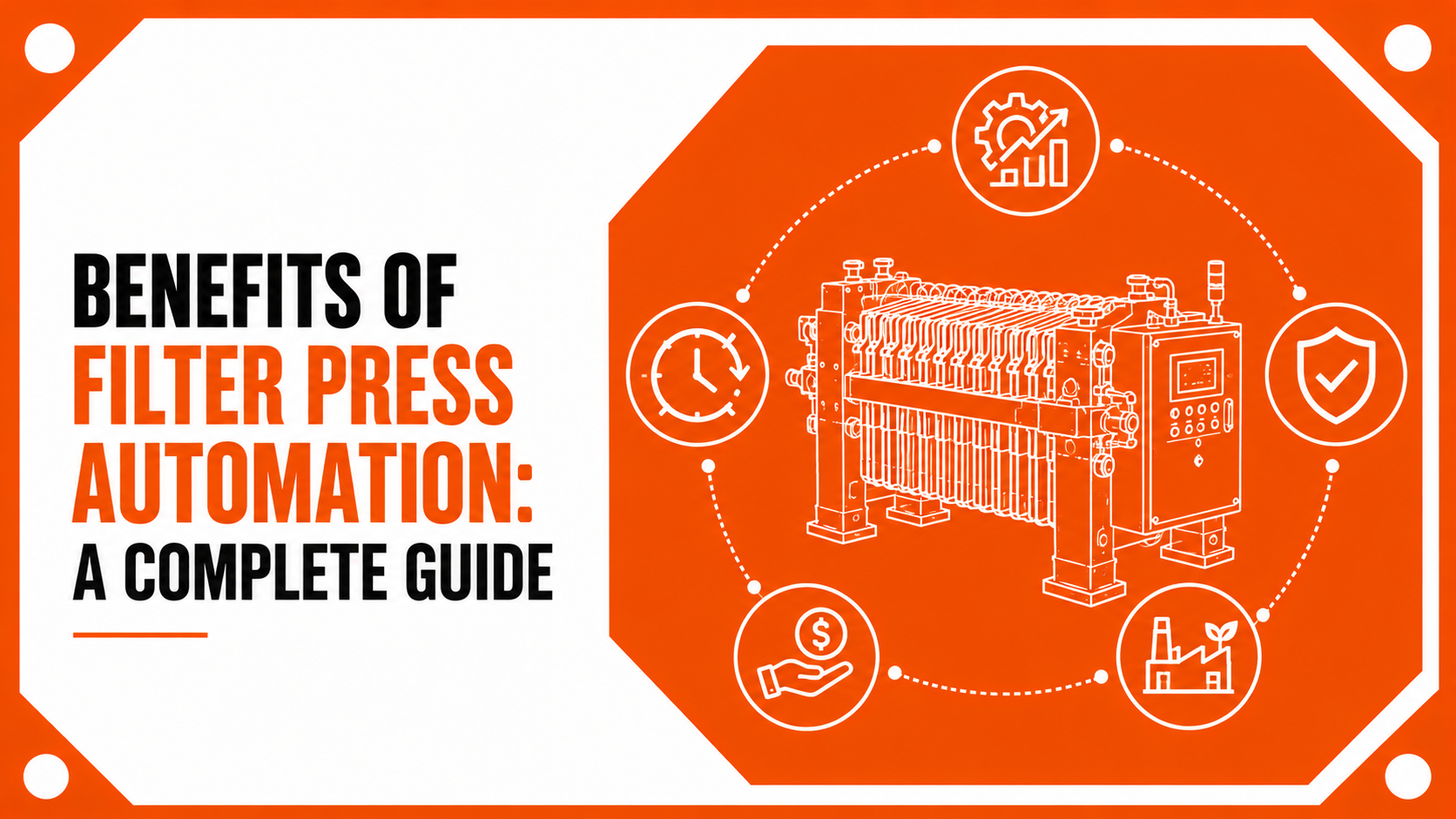
Industrial filtration is evolving rapidly as manufacturers seek higher productivity, consistent product quality, and lower operating costs. While traditional filter presses have served industries well for decades, increasing production demands and labor challenges are driving businesses toward automated filtration systems.
A fully automatic filter press integrates advanced control systems, hydraulic mechanisms, automatic plate shifting, and intelligent monitoring to streamline the filtration process with minimal manual intervention. Automation not only improves efficiency but also enhances workplace safety, reduces downtime, and delivers consistent filtration performance.
In this guide, we’ll explore the key benefits of filter press automation, how automated systems work, and why they have become the preferred choice for modern industrial operations.
What Is a Fully Automatic Filter Press?
A fully automatic filter press is an advanced filtration system that automates multiple stages of the filtration cycle, including:
- Plate closing
- Slurry feeding
- Filtration monitoring
- Membrane squeezing (where applicable)
- Plate opening
- Automatic cake discharge
- Filter cloth cleaning (optional)
- Process control and monitoring
Automation minimizes manual handling while improving cycle consistency and productivity.
Why Industries Are Adopting Filter Press Automation
Industries today face several operational challenges:
- Rising labor costs
- Higher production targets
- Strict quality standards
- Increased workplace safety requirements
- Environmental compliance
- Demand for uninterrupted production
Automated filter press systems address these challenges by delivering reliable, repeatable, and efficient filtration processes.
Key Benefits of Filter Press Automation
1. Increased Productivity
One of the biggest advantages of automation is higher production output.
Automated systems reduce non-productive time between filtration cycles by performing operations such as plate opening, cake discharge, and plate closing automatically.
Benefits include:
- Faster production cycles
- Higher daily throughput
- Reduced idle time
- Improved equipment utilization
2. Reduced Labor Costs
Traditional filter presses often require operators for:
- Plate opening
- Cake removal
- Plate closing
- Process monitoring
Automation significantly reduces manual involvement.
Advantages
- Lower labor requirements
- Reduced operating costs
- Improved workforce efficiency
- Better allocation of skilled personnel
3. Consistent Filtration Performance
Automation ensures that every filtration cycle follows the same operating parameters.
This results in:
- Uniform cake formation
- Consistent filtrate quality
- Stable operating pressure
- Predictable cycle times
Consistency improves product quality and reduces process variations.
4. Improved Cake Discharge
Automatic plate shifting allows filter cakes to discharge more efficiently.
Benefits include:
- Faster cake removal
- Reduced manual cleaning
- Lower downtime
- Improved productivity
For sticky or difficult sludges, automatic systems significantly simplify operation.
5. Better Workplace Safety
Industrial filtration often involves:
- High-pressure equipment
- Hazardous chemicals
- Hot process liquids
- Heavy filter plates
Automation reduces operator exposure to these risks.
Safety Improvements
- Less manual handling
- Reduced contact with chemicals
- Fewer repetitive lifting tasks
- Controlled hydraulic operations
- Safer working environment
6. Lower Operating Costs
Although automatic filter presses require a higher initial investment, they often reduce long-term operating expenses.
Savings come from:
- Lower labor costs
- Reduced downtime
- Higher filtration efficiency
- Better resource utilization
- Reduced maintenance issues
The result is a lower total cost of ownership over the equipment’s lifespan.
7. Enhanced Filtration Efficiency
Automation enables precise control over key process parameters, including:
- Feed pressure
- Filtration time
- Membrane squeezing pressure
- Cycle duration
This optimization improves solids recovery and filtrate quality while reducing process variability.
8. Reduced Downtime
Automated systems continuously monitor equipment performance and execute filtration cycles without unnecessary delays.
Benefits include:
- Faster startup
- Reduced manual intervention
- Improved equipment availability
- Higher production uptime
9. Easy Integration with Modern Manufacturing Systems
Today’s automatic filter presses can be integrated with:
- PLC control systems
- SCADA platforms
- Production monitoring software
- Industrial automation networks
This enables centralized monitoring and better process control across the manufacturing facility.
10. Scalability for Future Growth
As production volumes increase, automated systems can handle higher workloads with minimal additional labor.
This makes them an ideal long-term investment for expanding industries.
How Filter Press Automation Works
A typical automated filtration cycle includes:
Step 1 – Automatic Plate Closing
Hydraulic systems close and lock the filter plates.
Step 2 – Slurry Feeding
The feed pump transfers slurry into the filter chambers under controlled pressure.
Step 3 – Filtration Monitoring
Sensors monitor pressure, filtration time, and process performance.
Step 4 – Membrane Squeezing (Optional)
Membrane filter presses apply additional pressure to reduce cake moisture.
Step 5 – Automatic Plate Opening
After filtration, the hydraulic system opens the filter plates automatically.
Step 6 – Cake Discharge
Automatic plate shifting allows the filter cake to fall into collection systems without manual intervention.
Step 7 – Ready for Next Cycle
The system resets automatically for the next filtration process.
Industries That Benefit from Filter Press Automation
Automated filter presses are widely used across:
Pharmaceutical Industry
- API production
- Solvent recovery
- Process filtration
Chemical Industry
- Pigments
- Specialty chemicals
- Fine chemicals
Food & Beverage Industry
- Sugar processing
- Beverage clarification
- Edible oil filtration
Mining Industry
- Mineral concentrates
- Tailings dewatering
- Ore processing
Wastewater Treatment
- Industrial sludge dewatering
- Municipal wastewater treatment
- Effluent treatment plants
Textile Industry
- Dye recovery
- Process wastewater treatment
Manual vs Automatic Filter Press
| Feature | Manual Filter Press | Fully Automatic Filter Press |
| Labor Requirement | High | Low |
| Productivity | Moderate | High |
| Cake Discharge | Manual | Automatic |
| Process Consistency | Operator Dependent | Highly Consistent |
| Automation | Limited | Advanced |
| Downtime | Higher | Lower |
| Safety | Moderate | Improved |
| Long-Term Operating Cost | Higher | Lower |
Is Filter Press Automation Worth the Investment?
For many industries, the answer is yes.
Automation becomes especially valuable when:
- Production volumes are high
- Labor availability is limited
- Product consistency is critical
- Downtime is expensive
- Workplace safety is a priority
- Long-term operating costs need to be reduced
Although the upfront investment may be higher, the operational savings and productivity gains often deliver a strong return over time.
Factors to Consider Before Upgrading
Before investing in an automated filter press, evaluate:
- Daily production capacity
- Sludge characteristics
- Existing filtration process
- Available plant space
- Automation requirements
- Budget
- Future expansion plans
- Maintenance capabilities
Working with an experienced manufacturer helps ensure the selected system matches your operational needs.
Common Mistakes to Avoid
- Choosing automation without evaluating production requirements
- Focusing only on purchase price instead of lifecycle costs
- Ignoring operator training
- Overlooking maintenance planning
- Selecting equipment without reliable technical support
Proper planning helps maximize the benefits of automation.
Why Choose N.M. Patel & Co.?
With decades of expertise in industrial filtration, N.M. Patel & Co. designs and manufactures advanced filter press systems that help businesses improve efficiency, reduce operating costs, and achieve reliable long-term performance.
Our product portfolio includes:
- Fully Automatic Filter Press
- Membrane Filter Press
- Recessed Chamber Filter Press
- Plate & Frame Filter Press
- Hydraulic Filter Press
- Filter Press Spare Parts
- Filter Cloths
- Customized Filtration Systems
- Installation & Commissioning
- Preventive Maintenance & Technical Support
Our engineering team works closely with clients to understand their production processes and recommend automation solutions tailored to their specific requirements. From system selection to after-sales support, N.M. Patel & Co. is committed to helping industries optimize filtration performance and maximize return on investment.
People Also Search For
- benefits of filter press automation
- automatic filter press advantages
- automated filter press systems
- fully automatic filter press
- industrial filter press automation
- membrane filter press automation
- filter press manufacturer India
- industrial filtration equipment
- automatic sludge dewatering system
- filter press supplier India
People Also Ask
What are the benefits of a fully automatic filter press?
A fully automatic filter press increases productivity, reduces labor costs, improves filtration consistency, enhances workplace safety, and lowers long-term operating expenses.
Is filter press automation suitable for small industries?
Automation is beneficial for businesses with consistent production volumes and plans for future growth. The right solution depends on process requirements and budget.
Does automation improve filtration efficiency?
Yes. Automated systems precisely control pressure, cycle time, and operating parameters, resulting in more consistent filtration performance and improved solids recovery.
Which industries use automatic filter presses?
Automatic filter presses are commonly used in pharmaceuticals, chemicals, mining, food processing, textiles, wastewater treatment, and other industries that require efficient solid-liquid separation.
Why choose N.M. Patel & Co.?
N.M. Patel & Co. offers advanced automated filter press systems, customized engineering solutions, dependable after-sales support, and decades of expertise in industrial filtration.
Frequently Asked Questions
Can an existing filter press be upgraded to automation?
In some cases, existing systems can be retrofitted with automation features, depending on the equipment design and condition. A technical evaluation is recommended.
Does automation reduce maintenance?
Automation helps reduce operational errors and improves process consistency, but regular preventive maintenance is still essential for reliable performance.
Is operator training required?
Yes. Operators should be trained to monitor the automated system, perform routine inspections, and handle maintenance tasks safely.
How long does it take to recover the investment?
The payback period depends on production volume, labor savings, reduced downtime, and operating efficiency. Many businesses achieve a positive return within a few years.
Does N.M. Patel & Co. provide customized automation solutions?
Yes. N.M. Patel & Co. offers customized automated filter press systems designed to meet industry-specific process requirements, production capacities, and operational goals.
Conclusion
Filter press automation is transforming industrial filtration by delivering higher productivity, lower labor costs, improved safety, and consistent process performance. As industries continue to focus on efficiency, quality, and sustainability, automated filter press systems have become a strategic investment rather than just an operational upgrade.
At N.M. Patel & Co., we help businesses embrace modern filtration technology with advanced automatic filter press solutions engineered for reliability, durability, and long-term value. Whether you are upgrading an existing filtration system or planning a new installation, our team provides customized solutions, technical expertise, and dependable support to help you achieve maximum operational efficiency.