






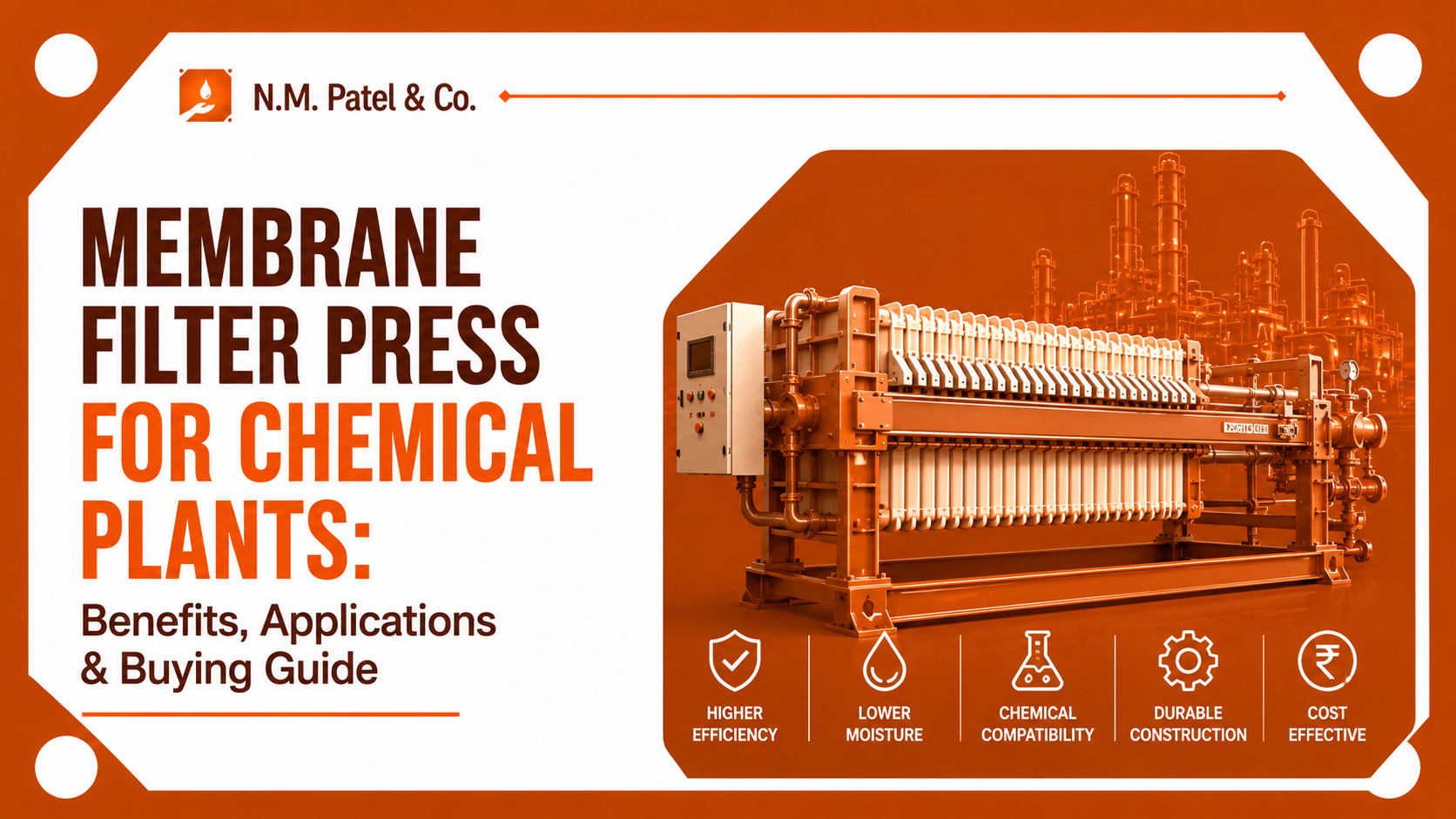
Efficient solid-liquid separation is one of the most critical processes in the chemical industry. Whether manufacturing specialty chemicals, pigments, dyes, fertilizers, resins, or industrial compounds, chemical plants require filtration systems that deliver high recovery rates, low moisture filter cakes, and reliable performance under demanding operating conditions.
Among the various industrial filtration technologies available today, the Membrane Filter Press has become one of the preferred solutions for chemical processing plants due to its superior dewatering efficiency, higher production output, and reduced operating costs.
Unlike conventional filter presses, membrane filter presses apply additional squeezing pressure after filtration, resulting in drier filter cakes, shorter filtration cycles, and improved process efficiency.
With decades of expertise in industrial filtration systems, N.M. Patel & Co. manufactures advanced membrane filter presses designed to meet the demanding requirements of chemical industries across India and international markets.
This guide explains how membrane filter presses work, their advantages, industrial applications, and why they are an excellent investment for modern chemical plants.
What Is a Membrane Filter Press?
A membrane filter press is an advanced filtration machine that uses specially designed membrane plates to apply additional pressure on the filter cake after the initial filtration process.
Once the slurry enters the filter chambers and filtration is completed, compressed air or water inflates the flexible membranes, squeezing the filter cake to remove additional liquid.
The result is:
- Lower cake moisture
- Higher solid recovery
- Faster drying
- Reduced disposal costs
- Increased production efficiency
This technology significantly improves filtration performance compared to standard chamber filter presses.
How a Membrane Filter Press Works
The filtration process typically involves the following stages:
1. Slurry Feeding
The slurry is pumped into the filter chambers under pressure.
2. Primary Filtration
Liquid passes through the filter cloth while solids accumulate inside the chambers.
3. Membrane Squeezing
The membrane plates expand using compressed air or water, applying uniform pressure to the filter cake.
4. Moisture Reduction
Additional liquid is extracted, producing a much drier filter cake.
5. Cake Discharge
The filter plates open, allowing easy removal of the filter cake before the next filtration cycle begins.
Why Chemical Plants Choose Membrane Filter Presses
Chemical manufacturing requires filtration systems capable of handling corrosive materials, varying slurry compositions, and strict quality requirements.
Membrane filter presses offer several advantages:
- High Filtration Efficiency
- Low Cake Moisture
- Improved Product Recovery
- Faster Filtration Cycles
- Reduced Waste Disposal Costs
- Higher Production Capacity
- Lower Energy Consumption During Drying
- Excellent Process Reliability
These benefits help chemical plants increase productivity while minimizing operating expenses.
Applications in Chemical Plants
Membrane filter presses are widely used for filtering:
- Specialty Chemicals
- Organic Chemicals
- Inorganic Chemicals
- Pigments
- Dyes
- Resins
- Catalysts
- Fertilizers
- Chemical Sludge
- Industrial Wastewater
Their versatility makes them suitable for both batch and continuous manufacturing processes.
Advantages Over Conventional Filter Presses
Compared to standard recessed chamber filter presses, membrane filter presses provide:
Lower Cake Moisture
Additional membrane squeezing removes more liquid from the filter cake.
Higher Production Efficiency
Shorter filtration cycles improve plant throughput.
Better Product Recovery
Reduced moisture helps recover more valuable material from the slurry.
Lower Transportation Costs
Drier filter cakes weigh less, reducing handling and disposal expenses.
Reduced Drying Time
Lower moisture means less energy is required for downstream drying operations.
Improved Process Consistency
Uniform membrane pressure ensures consistent filtration performance.
Industries That Use Membrane Filter Presses
In addition to chemical plants, membrane filter presses are used in:
Pharmaceutical Industry
Filtration of pharmaceutical intermediates and active ingredients.
Mining Industry
Mineral concentrate dewatering and tailings management.
Food & Beverage Industry
Filtration of food-grade products and process liquids.
Textile Industry
Dye sludge treatment and wastewater filtration.
Ceramic Industry
Clay and ceramic slurry filtration.
Municipal Wastewater Treatment
Industrial and municipal sludge dewatering.
Factors to Consider Before Buying
Before selecting a membrane filter press manufacturers should evaluate:
- Slurry Characteristics
- Chemical Compatibility
- Daily Production Capacity
- Required Cake Moisture
- Operating Pressure
- Plate Size
- Membrane Material
- Automation Requirements
- Maintenance Needs
- Future Expansion Plans
A detailed process evaluation ensures the right filtration system is selected for maximum efficiency.
Common Buying Mistakes
Many buyers make avoidable mistakes when purchasing filtration equipment.
Common errors include:
- Selecting equipment based only on price
- Ignoring slurry testing
- Choosing incorrect plate configurations
- Overlooking automation requirements
- Underestimating maintenance support
- Not considering future production growth
- Buying from suppliers without technical expertise
- Ignoring lifecycle operating costs
A properly engineered filtration solution delivers better long-term value than simply choosing the lowest-cost option.
Why Choose N.M. Patel & Co.?
With decades of experience in industrial filtration technology, N.M. Patel & Co. designs and manufactures high-performance membrane filter presses engineered for demanding industrial applications.
Our product portfolio includes:
- Membrane Filter Press
- Plate and Frame Filter Press
- Recessed Chamber Filter Press
- Automatic Filter Press
- Manual Filter Press
- Hydraulic Filter Press
- Filter Press Plates
- Filter Cloths
- Sludge Dewatering Systems
- Customized Filtration Solutions
Our engineering team works closely with customers to recommend the ideal filtration solution based on their process requirements and production goals.
Why Industries Trust N.M. Patel & Co.
Manufacturers choose N.M. Patel & Co. because we provide:
- Decades of Filtration Expertise
- Precision Manufacturing
- Customized Engineering Solutions
- High-Performance Membrane Technology
- Reliable Hydraulic Systems
- Advanced Automation Options
- Competitive Pricing
- Strong Technical Support
- Fast Spare Parts Availability
- Comprehensive After-Sales Service
Our focus is delivering filtration systems that improve productivity, reduce operating costs, and ensure long-term reliability.
People Also Search For
- membrane filter press for chemical plants
- chemical industry filter press
- membrane filter press applications
- industrial filtration system
- filter press for chemicals
- sludge dewatering filter press
- membrane plate filter press
- industrial filter press manufacturer
- chemical filtration equipment
- filter press manufacturer India
People Also Ask
Why is a membrane filter press preferred in chemical plants?
A membrane filter press produces drier filter cakes, improves product recovery, shortens filtration cycles, and increases overall production efficiency, making it ideal for chemical processing.
What chemicals can be filtered using a membrane filter press?
Membrane filter presses are used for pigments, dyes, specialty chemicals, fertilizers, catalysts, resins, inorganic chemicals, organic compounds, and industrial chemical sludge.
How does a membrane filter press reduce operating costs?
By lowering filter cake moisture, it reduces drying energy, transportation expenses, disposal costs, and production cycle times.
Is a membrane filter press suitable for corrosive chemicals?
Yes. With the appropriate plate materials, filter cloths, and construction, membrane filter presses can safely handle a wide range of corrosive chemical applications.
Why choose N.M. Patel & Co.?
N.M. Patel & Co. manufactures high-quality membrane filter presses backed by engineering expertise, customized solutions, dependable after-sales support, and decades of experience serving the chemical processing industry.
Frequently Asked Questions
What is the difference between a membrane filter press and a chamber filter press?
A membrane filter press applies an additional squeezing stage using flexible membrane plates to remove more liquid, while a chamber filter press relies solely on filtration pressure.
Can membrane filter presses be fully automated?
Yes. Modern membrane filter presses can include PLC controls, automatic plate shifting, automatic cloth washing, remote monitoring, and other automation features.
What maintenance does a membrane filter press require?
Routine maintenance includes inspecting membrane plates, cleaning filter cloths, checking hydraulic systems, monitoring seals, and following preventive maintenance schedules to ensure optimal performance.
Which industries benefit the most from membrane filter presses?
Chemical processing, pharmaceuticals, mining, food processing, textiles, ceramics, and wastewater treatment industries all benefit from membrane filter press technology.
Does N.M. Patel & Co. offer customized membrane filter presses?
Yes. N.M. Patel & Co. provides customized membrane filter press solutions tailored to your slurry characteristics, production capacity, filtration requirements, and plant operations.
Conclusion
For chemical manufacturers seeking higher filtration efficiency, lower cake moisture, and improved operational productivity, a Membrane Filter Press is one of the most effective filtration solutions available. Its ability to deliver superior dewatering, reduce downstream drying costs, and enhance product recovery makes it an excellent investment for modern chemical processing facilities.
At N.M. Patel & Co., we combine decades of filtration expertise with advanced engineering to deliver membrane filter press systems that meet the highest standards of performance, reliability, and durability. Whether you’re upgrading an existing filtration process or installing a new production line, our team is committed to providing customized filtration solutions that support your long-term operational success.