






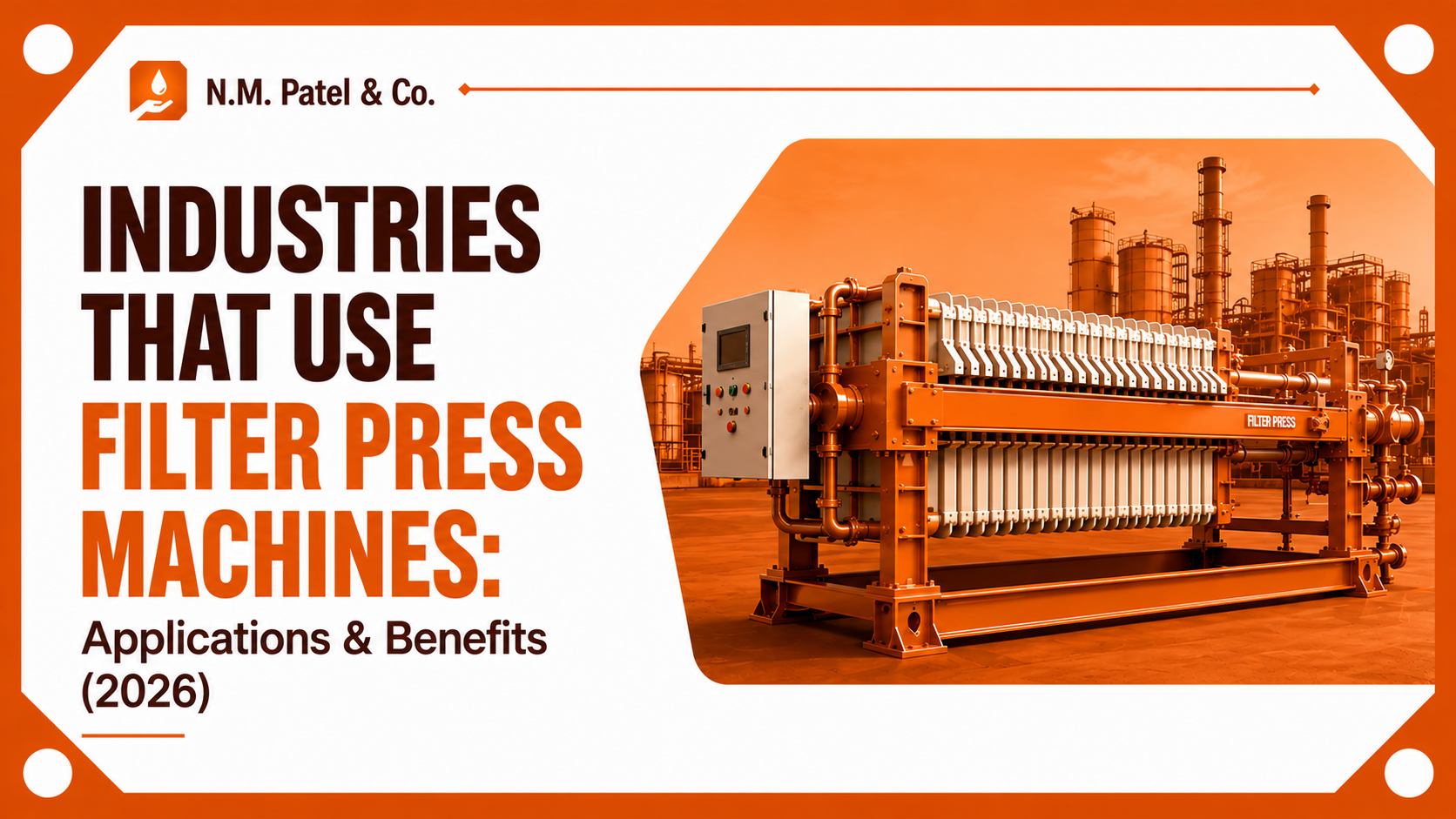
Filter press machines play an important role in modern industries where solid-liquid separation, sludge dewatering, and wastewater treatment are required. These machines help businesses separate solid particles from liquids efficiently, recover valuable materials, reduce waste volume, and improve production processes.
Industries such as chemical manufacturing, mining, pharmaceuticals, food processing, textiles, and wastewater treatment depend on filter press technology to achieve better filtration performance and meet environmental regulations.
Choosing the right filter press machine allows manufacturers to improve operational efficiency, reduce disposal costs, and maintain consistent product quality.
Quick Answer
Industries that use filter press machines include wastewater treatment, chemical processing, mining, pharmaceutical, food and beverage, textile, ceramic, paint, metal finishing, and manufacturing industries. Filter presses help these industries separate solids from liquids, recover valuable materials, reduce waste, and improve filtration efficiency while supporting environmental compliance.
Key Takeaways
- Filter press machines are used for efficient solid-liquid separation.
- Wastewater treatment is one of the largest applications of filter presses.
- Chemical, mining, pharmaceutical, and food industries use filtration systems extensively.
- Filter presses reduce waste volume and improve resource recovery.
- Selecting the right filtration system improves industrial productivity.
Table of Contents
- What Is a Filter Press Machine?
- Why Are Filter Press Machines Important for Industries?
- Which Industries Use Filter Press Machines?
- High Efficiency vs Traditional Filtration Methods
- How Do Industries Benefit From Filter Press Machines?
- How to Choose the Right Filter Press Machine?
- Why Choose N.M. Patel & Co.?
- FAQs
What Is a Filter Press Machine?
Quick Answer
A filter press machine is an industrial filtration system that separates solid particles from liquids using pressure filtration technology. It works by forcing slurry through filter plates and filter cloths, allowing clean liquid to pass while retaining solid materials as filter cakes.
Filter presses are widely used in industries requiring efficient sludge dewatering and material recovery.
Main Components of Filter Press Machine
- Filter plates
- Filter cloth
- Hydraulic system
- Filtration chamber
- Feeding pump
- Control panel
- Pressure system
How Does a Filter Press Work?
The filtration process involves:
- Slurry enters the filter press chamber.
- Pressure pushes liquid through filter cloth.
- Solid particles remain trapped inside chambers.
- Filter cake is collected and removed.
This process provides efficient separation with minimum material loss.
Why Are Filter Press Machines Important for Industries?
Quick Answer
Filter press machines are important because they improve filtration efficiency, reduce industrial waste, recover reusable materials, and support environmentally responsible operations. They help industries manage wastewater, chemical waste, and production residues while reducing operational costs.
Benefits of Using Filter Press Machines
1. Effective Solid-Liquid Separation
Filter presses provide high-quality separation by removing suspended solids from liquids.
2. Reduced Waste Disposal Cost
The machine produces dry filter cakes that are easier and cheaper to handle.
3. Water Recovery
Filtered water can often be reused in industrial processes.
4. Improved Environmental Compliance
Industries can meet wastewater treatment and pollution control requirements.
5. Better Production Efficiency
Efficient filtration reduces downtime and improves overall operations.
Which Industries Use Filter Press Machines?
Quick Answer
Many industries use filter press machines for wastewater treatment, material recovery, and filtration processes. Major sectors include chemical manufacturing, mining, pharmaceuticals, food processing, textiles, ceramics, metal finishing, and industrial manufacturing.
1. Wastewater Treatment Industry
Wastewater treatment plants are among the largest users of filter press machines.
Applications:
- Industrial sludge dewatering
- Effluent treatment plants (ETP)
- Sewage treatment plants (STP)
- Sludge management
Benefits:
- Reduced sludge volume
- Cleaner water recovery
- Easy waste disposal
2. Chemical Industry
Chemical industries require reliable filtration systems for separating chemicals and processing waste materials.
Applications:
- Chemical slurry filtration
- Catalyst recovery
- Pigment separation
- Industrial waste treatment
Benefits:
- High filtration accuracy
- Chemical-resistant operation
- Improved material recovery
3. Mining and Mineral Processing Industry
Mining operations generate large amounts of slurry containing minerals and waste materials.
Applications:
- Mineral concentrate filtration
- Tailings management
- Coal processing
- Ore beneficiation
Benefits:
- Recover valuable minerals
- Reduce water consumption
- Improve waste handling
4. Pharmaceutical Industry
Pharmaceutical manufacturing requires controlled filtration processes for maintaining product quality.
Applications:
- Active ingredient filtration
- Chemical separation
- Medicine production processes
Benefits:
- Hygienic filtration
- Reliable performance
- High-quality output
5. Food and Beverage Industry
Food processing industries use filter presses for separating liquids and solids during production.
Applications:
- Oil filtration
- Juice clarification
- Sugar processing
- Beverage filtration
Benefits:
- Improved product quality
- Reduced production waste
- Better process efficiency
6. Textile Industry
Textile industries generate wastewater containing dyes and chemicals.
Applications:
- Dye sludge filtration
- Textile wastewater treatment
- Chemical separation
Benefits:
- Lower environmental impact
- Efficient sludge management
- Compliance with regulations
7. Paint and Coating Industry
Paint manufacturing requires filtration for pigment recovery and waste treatment.
Applications:
- Paint sludge filtration
- Pigment recovery
- Chemical waste separation
Benefits:
- Material recovery
- Reduced waste costs
- Cleaner production
8. Ceramic and Cement Industry
Ceramic and cement industries use filter presses for handling slurry-based materials.
Applications:
- Clay filtration
- Ceramic slurry processing
- Wastewater treatment
Benefits:
- Improved material utilization
- Reduced water wastage
- Better production efficiency
9. Metal Finishing and Electroplating Industry
Electroplating industries generate metal-containing sludge that requires proper treatment.
Applications:
- Heavy metal sludge filtration
- Wastewater treatment
- Metal recovery
Benefits:
- Effective separation
- Reduced disposal expenses
- Environmental protection
High Efficiency vs Traditional Filtration Methods
Quick Answer
Filter press machines provide better filtration efficiency compared to traditional methods because they use pressure-based separation technology. They produce drier filter cakes, reduce waste volume, and improve recovery rates.
| High Efficiency Filter Press | Traditional Filtration |
| Higher solid recovery | Lower recovery rate |
| Reduced moisture content | More liquid retention |
| Better waste management | Higher disposal requirement |
| Industrial-scale operation | Limited capacity |
| Lower operating cost | Higher maintenance cost |
How Do Industries Benefit From Filter Press Machines?
Quick Answer
Industries benefit from filter press machines through improved productivity, lower waste management costs, better resource recovery, and efficient wastewater treatment. These systems help businesses achieve sustainable operations while maintaining high filtration standards.
Major Industrial Benefits
- Reduced operational costs
- Improved water recycling
- Lower waste volume
- Increased production efficiency
- Better environmental compliance
- Long equipment life
How to Choose the Right Filter Press Machine?
Quick Answer
Selecting the right filter press machine depends on industry requirements, slurry characteristics, filtration capacity, material compatibility, and operating conditions. A properly selected machine delivers better performance, reliability, and long-term cost savings.
Factors to Consider Before Buying
- Filtration capacity
- Slurry type
- Required pressure level
- Filter plate material
- Automation requirements
- Maintenance needs
- After-sales support
Why Choose N.M. Patel & Co.?
Quick Answer
N.M. Patel & Co. provides reliable filter press machines designed for industrial filtration applications. With engineering expertise, quality manufacturing, and customized solutions, the company helps industries achieve efficient solid-liquid separation and improved operational performance.
Why Industries Choose N.M. Patel & Co.
High-quality filter press machines
Customized filtration solutions
Industrial expertise
Durable machine construction
Technical support
Reliable after-sales service
Cost-effective solutions
Whether you need filtration equipment for wastewater treatment, chemical processing, mining, or manufacturing, N.M. Patel & Co. provides solutions designed for your specific requirements.
Frequently Asked Questions
Which industries commonly use filter press machines?
Industries including wastewater treatment, chemical, mining, pharmaceutical, food processing, textile, ceramic, and metal finishing use filter press machines.
What is the main purpose of a filter press machine?
A filter press machine separates solid particles from liquids to produce cleaner liquid and dry solid filter cakes.
Are filter presses used in wastewater treatment?
Yes, filter presses are widely used for sludge dewatering and industrial wastewater treatment applications.
How does a filter press reduce industrial waste?
Filter presses remove excess water from sludge, reducing waste volume and making disposal easier and more economical.
How do I select the right filter press machine?
The right machine depends on filtration capacity, slurry characteristics, industry requirements, automation needs, and operational conditions.
Ready to Improve Your Industrial Filtration Process?
Efficient filtration starts with the right equipment and technology. N.M. Patel & Co. provides advanced filter press solutions that help industries reduce waste, recover resources, and improve operational efficiency.
Contact N.M. Patel & Co. today to find the right filter press machine for your industrial requirements.
Conclusion
Industries that use filter press machines benefit from improved filtration efficiency, reduced waste generation, and better resource recovery. From wastewater treatment and chemical processing to mining, pharmaceuticals, food, and manufacturing, filter presses have become an essential part of industrial operations.
Investing in the right filter press machine helps businesses improve productivity, reduce costs, and achieve sustainable manufacturing goals.
N.M. Patel & Co. delivers dependable filtration solutions designed to meet the diverse needs of modern industries.