






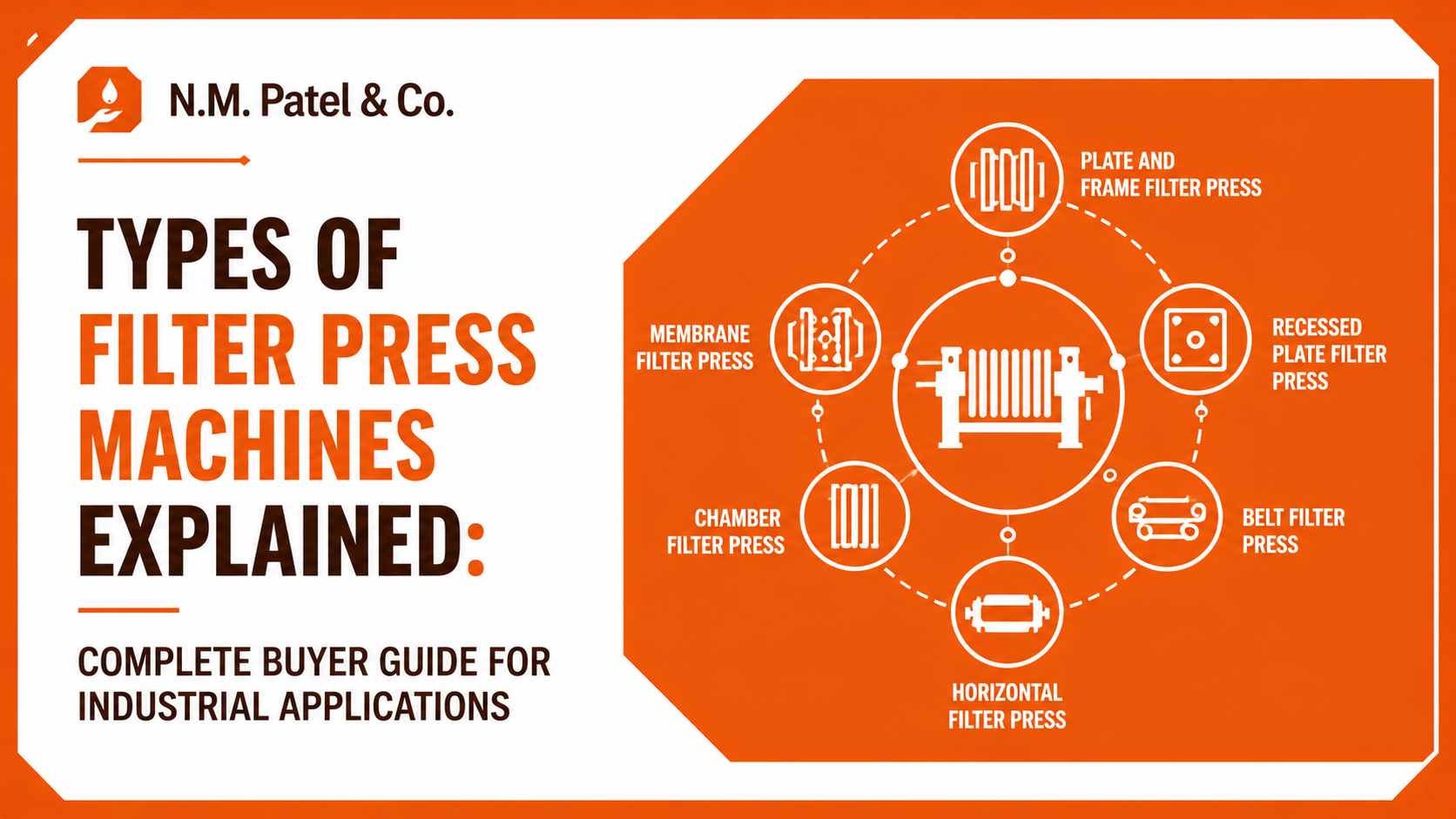
Efficient solid-liquid separation is essential across industries such as wastewater treatment, pharmaceuticals, chemicals, food processing, mining, and textiles. Choosing the right filter press machine can significantly improve productivity, reduce operating costs, and ensure regulatory compliance.
However, not all filter presses are designed for the same application. Each type offers unique features, automation levels, and filtration capabilities.
Whether you’re planning a new industrial filtration system or upgrading an existing plant, understanding the different types of filter press machines is the first step toward making the right investment.
In this comprehensive guide, we’ll explain the major types of filter press machines, their applications, advantages, and how to choose the best one for your business.
What Is a Filter Press Machine?
A filter press machine is an industrial filtration system used to separate solids from liquids by applying pressure through specially designed filter plates and filter cloths.
The process produces:
- Clear filtrate
- Dry filter cake
- Reduced sludge volume
- Easier waste disposal
- Improved resource recovery
Filter presses are widely used in industrial wastewater treatment, chemical processing, pharmaceuticals, food manufacturing, mining, and many other sectors.
Why Choosing the Right Filter Press Matters
Selecting the correct industrial filter press machine helps businesses achieve:
- Faster filtration cycles
- Lower operating costs
- Reduced maintenance
- Better cake dryness
- Higher production efficiency
- Compliance with environmental regulations
The ideal machine depends on your industry, slurry characteristics, production volume, and automation requirements.
Main Types of Filter Press Machines
1. Manual Filter Press
A manual filter press requires operators to manually close the plates, start the filtration cycle, and remove the filter cake after completion.
Best For
- Small-scale industries
- Laboratories
- Pilot plants
- Low-volume production
Advantages
- Lower initial investment
- Easy operation
- Simple maintenance
- Suitable for limited production
Limitations
- Labor-intensive
- Longer cycle times
- Lower productivity
2. Hydraulic Filter Press
Hydraulic filter presses use hydraulic cylinders to apply consistent pressure during filtration.
This design provides better sealing and more efficient operation than manual systems.
Best For
- Chemical industries
- Dye manufacturing
- Ceramic plants
- Medium-scale production
Advantages
- Improved filtration efficiency
- Higher operating pressure
- Better filter cake quality
- Reduced manual effort
3. Semi-Automatic Filter Press
Semi-automatic machines automate several operations while requiring minimal operator involvement.
Typical automated functions include:
- Hydraulic plate closing
- Pressure control
- Filtration cycle management
Cake discharge is generally performed manually.
Ideal Applications
- Food processing
- Pharmaceutical production
- Industrial wastewater treatment
4. Fully Automatic Filter Press
A fully automatic filter press automates the complete filtration process.
Functions include:
- Plate shifting
- Cake discharge
- Cloth washing
- Pressure monitoring
- PLC-based control
- Automatic cycle operation
Best For
- Large manufacturing facilities
- Continuous production
- High-capacity ETP plants
Advantages
- Maximum productivity
- Reduced labor costs
- Consistent performance
- Minimal downtime
- Higher operational efficiency
5. Membrane Filter Press
A membrane filter press uses flexible membrane plates that apply additional pressure to the filter cake after the filtration cycle.
This secondary squeezing process removes more moisture.
Industries Using Membrane Filter Presses
- Pharmaceuticals
- Mining
- Chemicals
- Food processing
- High-value mineral processing
Benefits
- Higher cake dryness
- Lower disposal costs
- Reduced moisture content
- Faster drying process
6. Recessed Chamber Filter Press
This is one of the most commonly used filter press designs in industrial applications.
Filter chambers are formed by recessed plates that collect solids during filtration.
Applications
- Wastewater treatment
- Electroplating
- Chemical plants
- Textile industries
Advantages
- Reliable operation
- High filtration capacity
- Cost-effective maintenance
- Wide industrial compatibility
7. Plate and Frame Filter Press
This traditional filter press alternates plates and frames to create filtration chambers.
Although newer technologies have become more common, plate and frame systems remain suitable for certain industries requiring precision filtration.
Common Industries
- Pharmaceuticals
- Food processing
- Specialty chemicals
- Beverage manufacturing
Comparison of Filter Press Types
| Filter Press Type | Automation | Production Capacity | Best For |
| Manual | Low | Small | Laboratories & Small Industries |
| Hydraulic | Medium | Medium | Chemical & Industrial Plants |
| Semi-Automatic | Medium | Medium to High | ETP & Food Industries |
| Fully Automatic | High | High | Large Manufacturing Units |
| Membrane | High | High | Pharmaceuticals & Mining |
| Recessed Chamber | Medium | High | Wastewater Treatment |
| Plate & Frame | Low | Medium | Precision Filtration |
Industries That Use Filter Press Machines
Filter press machines are widely used across:
- Wastewater Treatment Plants
- Chemical Manufacturing
- Pharmaceutical Industry
- Food & Beverage Processing
- Mining
- Ceramics
- Textile Industry
- Electroplating Plants
- Paper Industry
- Sugar Industry
- Oil & Gas
- Steel Plants
Each industry has unique filtration requirements, making machine selection critical.
How to Choose the Right Filter Press Machine
Before purchasing a filter press, evaluate:
Filtration Capacity
Determine daily slurry processing requirements.
Slurry Characteristics
Consider:
- Solid concentration
- Particle size
- Chemical composition
- Temperature
- Viscosity
Desired Cake Dryness
Industries requiring lower disposal costs often benefit from membrane filter presses.
Automation Requirements
High-volume production facilities generally benefit from fully automatic systems.
Available Installation Space
Machine size should match plant layout and future expansion plans.
Maintenance Requirements
Select a machine with easy access to components and readily available spare parts.
Benefits of Investing in the Right Industrial Filter Press Machine
A properly selected filter press offers:
- Improved filtration efficiency
- Lower operating expenses
- Reduced sludge handling costs
- Better environmental compliance
- Higher productivity
- Longer equipment lifespan
- Lower maintenance costs
- Consistent filtration performance
It becomes a long-term investment in operational efficiency.
Common Buying Mistakes
Avoid these common errors:
- Choosing based only on price
- Ignoring future production growth
- Underestimating automation needs
- Selecting incorrect plate size
- Overlooking maintenance costs
- Buying from inexperienced suppliers
- Ignoring after-sales service
A reliable supplier helps ensure long-term performance.
Why Choose NMP Patel & Co.?
At NMP Patel & Co., we manufacture and supply high-performance filtration equipment designed for demanding industrial applications across India.
Our solutions include:
- Fully Automatic Filter Press
- Hydraulic Filter Press
- Membrane Filter Press
- Plate & Frame Filter Press
- Filter Press Spare Parts
- Filter Cloth
- Filter Plates
- Customized Filtration Solutions
- Installation Support
- After-Sales Service
As a trusted filter press manufacturer India, we help businesses improve filtration efficiency while reducing operating costs and downtime.
People Also Search For
- What is a filter press machine?
- Fully automatic filter press
- Membrane filter press
- Hydraulic filter press
- Industrial filter press machine
- Filter press working principle
- Filter press manufacturer India
- Chamber filter press
- Plate and frame filter press
- Wastewater filter press
People Also Ask
What are the different types of filter press machines?
The main types include manual filter presses, hydraulic filter presses, semi-automatic filter presses, fully automatic filter presses, membrane filter presses, recessed chamber filter presses, and plate & frame filter presses.
Which filter press is best for wastewater treatment?
Fully automatic and recessed chamber filter presses are commonly used for industrial wastewater treatment because they provide efficient solid-liquid separation and high productivity.
What is the difference between a membrane filter press and a chamber filter press?
A membrane filter press uses flexible membranes to squeeze the filter cake after filtration, producing a drier cake than a standard recessed chamber filter press.
Which industries use filter press machines?
Industries such as pharmaceuticals, chemicals, mining, food processing, textiles, wastewater treatment, ceramics, paper, and electroplating rely on filter press machines.
How do I choose the right filter press machine?
Consider slurry characteristics, filtration capacity, desired cake dryness, automation requirements, available space, maintenance needs, and after-sales support before selecting a machine.
Frequently Asked Questions
What is the lifespan of a filter press machine?
With proper maintenance, quality filter press machines can operate efficiently for many years. Regular inspection, timely replacement of filter cloths, and preventive servicing help maximize equipment life.
Can a filter press be customized for specific industries?
Yes. Filter presses can be customized based on plate size, operating pressure, automation level, filtration capacity, and application-specific requirements to meet the needs of different industries.
How often should filter cloths be replaced?
Replacement depends on operating conditions, slurry characteristics, and maintenance practices. Worn or damaged filter cloths should be replaced promptly to maintain filtration efficiency.
Are fully automatic filter presses worth the investment?
For medium to large-scale operations, fully automatic filter presses reduce labor costs, improve productivity, and provide consistent filtration performance, making them a cost-effective long-term investment.
Why choose NMP Patel & Co. for filter press solutions?
NMP Patel & Co. offers high-quality filtration equipment, customized engineering solutions, dependable after-sales support, and extensive industry experience. Our team helps customers select the right filtration system based on their operational requirements and long-term production goals.
Conclusion
Understanding the different types of filter press machines is essential for selecting the right filtration solution for your industry. From manual and hydraulic systems to advanced membrane and fully automatic models, each machine is designed to meet specific production, efficiency, and operational requirements.
Investing in the right industrial filter press machine can improve filtration performance, reduce maintenance costs, enhance environmental compliance, and increase overall productivity. By evaluating factors such as slurry characteristics, automation requirements, and production capacity, businesses can choose equipment that delivers long-term value.
If you’re looking for a trusted filter press manufacturer India, NMP Patel & Co. provides reliable, high-performance filtration solutions backed by technical expertise, customization options, and dedicated after-sales support to help your business achieve efficient and sustainable operations.