






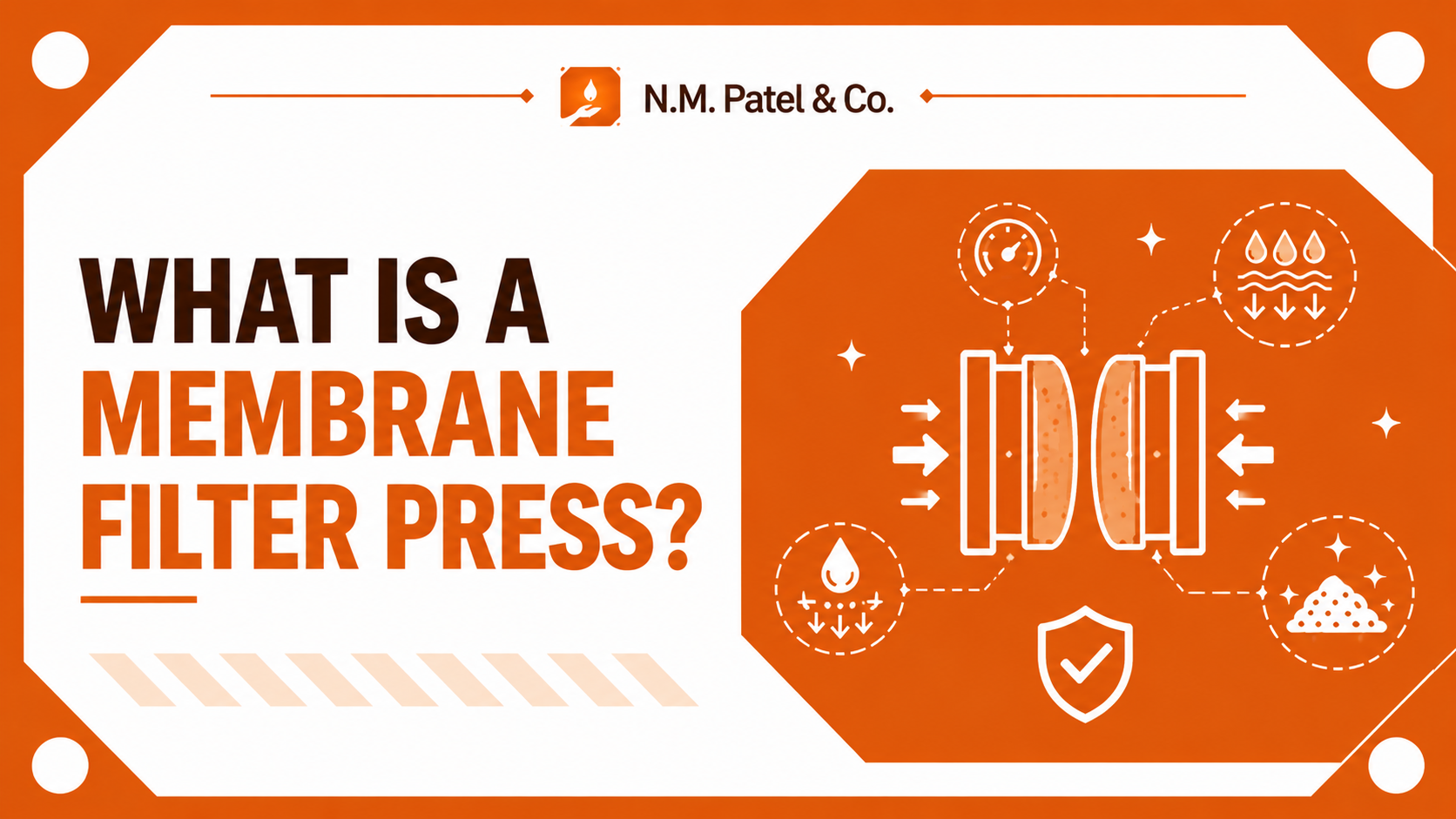
In industries where efficient solid-liquid separation is critical, achieving the lowest possible moisture content in filter cake can significantly reduce disposal costs, improve product recovery, and enhance operational efficiency. This is where the membrane filter press stands out as one of the most advanced filtration technologies available today.
Compared to conventional filter presses, membrane filter presses offer superior dewatering performance through an additional cake-squeezing process. As a result, industries such as chemicals, pharmaceuticals, mining, wastewater treatment, food processing, and ceramics increasingly rely on membrane filtration systems to improve productivity and reduce operating expenses.
This guide explains what a membrane filter press is, how it works, its advantages, and the industries that benefit most from this advanced filtration solution.
What Is a Membrane Filter Press?
A membrane filter press is a pressure filtration system designed to separate solids from liquids while achieving lower residual moisture content in the filter cake.
Unlike conventional chamber filter presses, membrane filter presses contain special membrane plates that can be inflated using compressed air or water after the filtration cycle.
This additional squeezing action compresses the filter cake, removing more liquid and producing a drier solid output.
The result is:
- Higher solids recovery
- Lower moisture content
- Reduced drying requirements
- Improved process efficiency
How Does a Membrane Filter Press Work?
The membrane filter press working principle involves two separate stages:
Stage 1: Filtration Process
The slurry is pumped into the filter chambers under pressure.
During this stage:
- Liquid passes through the filter cloth.
- Solid particles remain inside the chambers.
- Filter cake begins forming.
- Filtrate is collected through drainage channels.
This process is similar to a conventional filter press.
Stage 2: Membrane Squeezing Process
Once the chambers are full and filtration is complete, the membrane plates are inflated using compressed air or water.
The membranes expand and exert pressure directly on the filter cake.
This additional compression:
- Removes trapped liquid
- Increases cake density
- Reduces cake moisture content
- Shortens drying time
The squeezing stage is what makes membrane filter presses more efficient than traditional systems.
Main Components of a Membrane Filter Press
Membrane Plates
Special flexible plates capable of expansion under pressure.
These plates perform the cake-squeezing action.
Chamber Plates
Create filtration chambers where solids accumulate.
Filter Cloth
Acts as the filtration medium and retains solid particles.
Hydraulic System
Compresses the plate pack and ensures leak-free operation.
Feed Pump
Transfers slurry into the filtration chambers.
Control System
Manages filtration cycles and membrane squeezing operations.
Difference Between Membrane Filter Press and Chamber Filter Press
Many industrial buyers compare membrane and recessed chamber filter presses before making an investment.
| Feature | Chamber Filter Press | Membrane Filter Press |
| Filtration Process | Standard Filtration | Filtration + Membrane Squeezing |
| Cake Moisture | Higher | Lower |
| Dewatering Efficiency | Good | Excellent |
| Processing Time | Longer | Faster |
| Product Recovery | Standard | Higher |
| Operating Efficiency | Moderate | High |
| Disposal Costs | Higher | Lower |
For applications requiring maximum dewatering performance, membrane filter presses are generally the preferred solution.
Benefits of a Membrane Filter Press
Lower Cake Moisture Content
The primary advantage is the ability to produce significantly drier filter cakes.
This reduces:
- Disposal costs
- Transportation costs
- Drying expenses
Improved Product Recovery
Additional squeezing helps recover more valuable liquid from the slurry.
This is especially beneficial in:
- Chemical processing
- Pharmaceuticals
- Mining operations
Faster Processing Cycles
Because membrane squeezing accelerates dewatering, overall cycle times can often be reduced.
This improves plant productivity.
Reduced Operating Costs
Lower moisture content means:
- Less drying energy
- Lower sludge handling costs
- Reduced disposal expenses
Better Filtration Performance
Membrane presses achieve higher filtration efficiency compared to conventional systems.
Increased Production Capacity
Shorter filtration cycles often allow more batches to be processed each day.
Industries That Use Membrane Filter Presses
Wastewater Treatment
Applications include:
- Industrial sludge dewatering
- ETP plants
- STP facilities
Benefits:
- Reduced sludge volume
- Lower disposal costs
Chemical Industry
Used for:
- Chemical filtration
- Catalyst recovery
- Process slurry dewatering
Pharmaceutical Industry
Supports:
- API production
- Fine chemical processing
- Product purification
Mining and Minerals
Applications include:
- Mineral concentrate dewatering
- Tailings management
- Metal recovery
Food and Beverage Industry
Used for:
- Starch processing
- Sugar filtration
- Food ingredient separation
Ceramic and Clay Industries
Supports:
- Clay dewatering
- Ceramic slurry filtration
Why Industries Prefer Automatic Membrane Filter Press Systems
Modern manufacturing facilities increasingly choose automatic membrane filter press systems because they offer:
Reduced Labor Requirements
Automation minimizes manual intervention.
Improved Productivity
Continuous operation increases throughput.
Consistent Filtration Results
Automated control improves process reliability.
Enhanced Safety
Reduces operator exposure to process materials.
Lower Downtime
Automated cake discharge speeds up cycle completion.
Factors to Consider When Choosing a Membrane Filter Press
Before selecting a system, evaluate:
Slurry Characteristics
Consider:
- Particle size
- Solids concentration
- Viscosity
Moisture Reduction Goals
Determine target cake dryness levels.
Production Capacity
Match equipment size to operational requirements.
Automation Requirements
Choose manual, semi-automatic, or fully automatic systems.
Material of Construction
Common options include:
- Polypropylene
- Stainless Steel
- Mild Steel
Material selection depends on process conditions.
Maintenance Tips for Membrane Filter Presses
Regular maintenance ensures long-term reliability.
Inspect Membrane Plates
Check for:
- Wear
- Cracks
- Damage
Monitor Hydraulic Systems
Ensure proper pressure levels are maintained.
Replace Worn Filter Cloths
Cloth condition directly affects filtration performance.
Clean Plates Regularly
Prevent residue buildup and maintain efficiency.
Follow Preventive Maintenance Schedules
Routine servicing reduces unexpected breakdowns.
Why Indian Industries Are Investing in Membrane Filter Press Technology
Industries across India are facing increasing pressure to:
- Reduce waste disposal costs
- Improve environmental compliance
- Increase operational efficiency
- Recover valuable resources
Membrane filter presses help organizations achieve these goals while improving overall profitability.
As environmental regulations become stricter, advanced filtration systems are becoming essential investments for industrial operations.
Why Choose N M Patel & Co.?
At N M Patel & Co., we manufacture high-performance membrane filter press systems engineered for demanding industrial applications.
Our solutions offer:
- Advanced dewatering technology
- Reliable filtration performance
- Custom-built designs
- Automation options
- Robust construction
- Expert technical support
As a trusted membrane filter press manufacturer India, we help industries improve efficiency, reduce operating costs, and achieve superior filtration results.
People Also Ask
What is a membrane filter press used for?
A membrane filter press is used for solid-liquid separation and advanced dewatering applications where low cake moisture content is required.
How does a membrane filter press work?
It performs standard filtration followed by membrane squeezing, which compresses the filter cake and removes additional liquid.
What is the difference between a membrane filter press and a chamber filter press?
A membrane filter press includes a squeezing stage that reduces moisture content more effectively than a chamber filter press.
Which industries use membrane filter presses?
Wastewater treatment, chemicals, pharmaceuticals, mining, food processing, and ceramics industries commonly use membrane filter presses.
Why is membrane squeezing important?
Membrane squeezing improves dewatering efficiency, increases product recovery, and lowers disposal costs.
Frequently Asked Questions (FAQs)
Is a membrane filter press more efficient than a chamber filter press?
Yes. Membrane filter presses typically achieve lower moisture content and faster processing times.
Can membrane filter presses be automated?
Yes. Fully automatic systems are widely available and commonly used in industrial applications.
What is the lifespan of membrane plates?
Lifespan depends on operating conditions, maintenance practices, and slurry characteristics.
Are membrane filter presses suitable for wastewater treatment?
Yes. They are widely used for sludge dewatering in wastewater treatment plants.
How much moisture reduction can be achieved?
Results vary depending on material properties, but membrane squeezing generally produces significantly drier filter cakes.
How often should membrane plates be inspected?
Routine inspections should be performed as part of a preventive maintenance program.
Conclusion
A membrane filter press is one of the most efficient filtration solutions available for industries requiring superior dewatering performance. By combining conventional pressure filtration with membrane squeezing technology, these systems achieve lower cake moisture content, improved product recovery, and reduced operating costs.
For industries focused on productivity, sustainability, and cost optimization, investing in a membrane filter press can deliver substantial long-term benefits.
For high-performance membrane filtration solutions, visit N M Patel & Co. and discover advanced systems designed to meet modern industrial filtration requirements.