






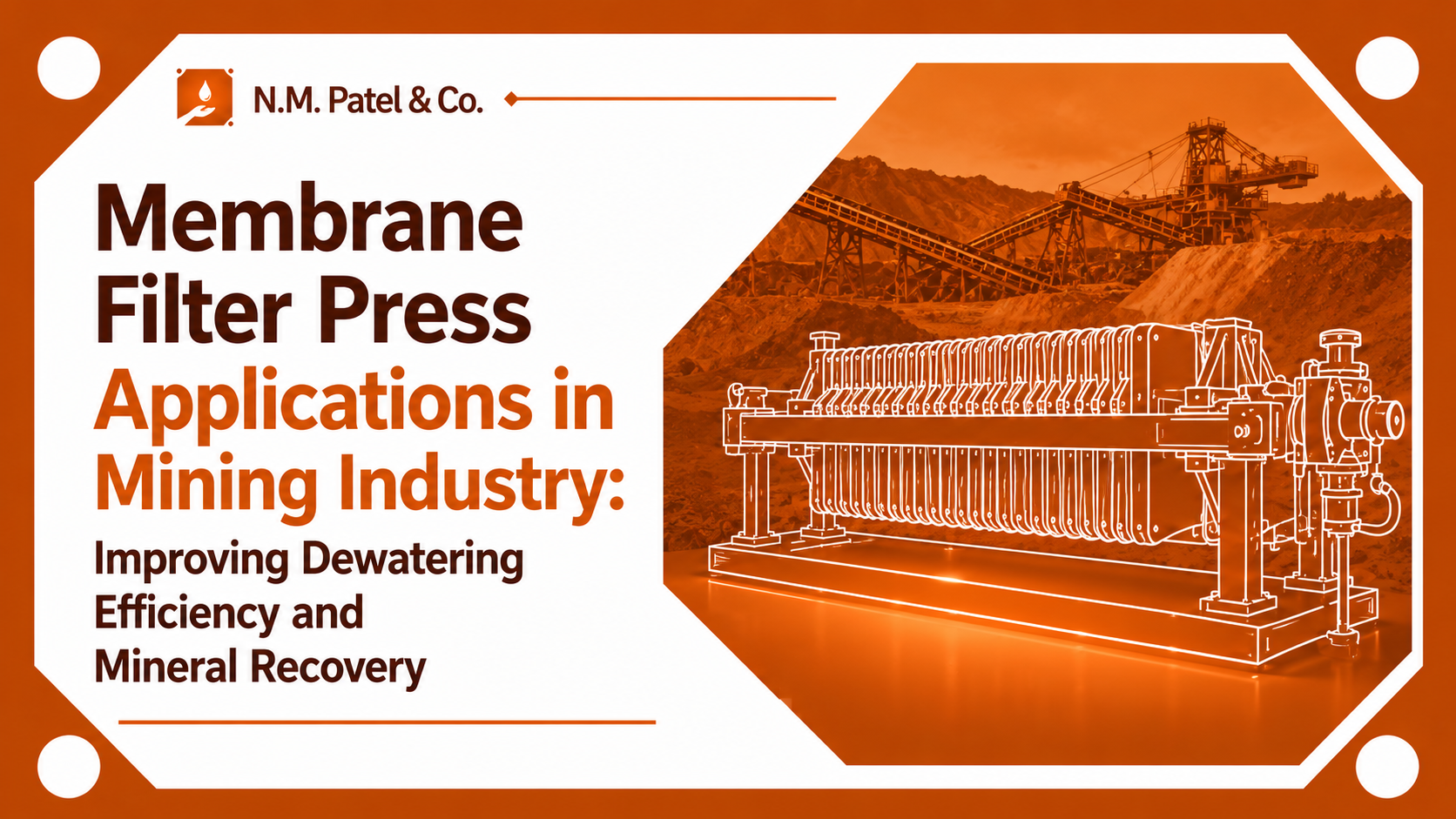
Mining operations generate enormous quantities of slurry during mineral extraction and processing. Efficient separation of solids from liquids is essential for reducing waste, recovering valuable minerals, minimizing environmental impact, and lowering operational costs.
Among today’s advanced filtration technologies, the membrane filter press has become one of the most effective solutions for mining and mineral processing industries. Compared to conventional filter presses, membrane systems produce drier filter cakes, recover more process water, and improve overall plant efficiency.
With nearly 90 years of filtration expertise and 12,000+ successful installations, N.M. Patel & Co. manufactures high-performance membrane filter presses designed for demanding industrial applications, including mining and mineral processing.
This guide explores the applications, advantages, and selection criteria for membrane filter presses in the mining industry.
What Is a Membrane Filter Press?
A membrane filter press is an advanced pressure filtration system that uses flexible membrane plates to apply additional squeezing pressure after the initial filtration cycle.
Unlike standard recessed chamber filter presses, membrane presses compress the filter cake after filtration, removing additional moisture and producing a significantly drier solid cake.
This technology is particularly valuable in mining operations where efficient dewatering directly impacts transportation, storage, disposal, and metal recovery.
Why Mining Operations Need Membrane Filter Presses
Mining facilities process large volumes of slurry containing valuable minerals and fine solid particles.
Effective filtration helps:
- Recover valuable minerals
- Reduce tailings volume
- Improve water recycling
- Lower transportation costs
- Minimize environmental impact
- Increase production efficiency
- Improve downstream processing
As environmental regulations become stricter, membrane filter presses are becoming an essential part of modern mining operations.
Major Applications in the Mining Industry
Mine Tailings Dewatering
One of the most common applications is dewatering mine tailings.
Membrane filter presses:
- Reduce tailings moisture
- Produce stackable dry cakes
- Decrease tailings pond dependency
- Improve environmental compliance
- Lower disposal costs
Dry stack tailings are becoming increasingly popular due to their environmental and operational advantages.
Mineral Concentrate Filtration
After flotation or mineral separation, concentrates require efficient dewatering before transportation or further processing.
Common minerals include:
- Copper
- Zinc
- Lead
- Iron Ore
- Nickel
- Gold
- Silver
Membrane filter presses produce lower cake moisture, improving concentrate quality and reducing shipping costs.
Coal Processing
Coal washing plants generate large amounts of fine slurry.
Membrane filter presses help:
- Recover fine coal
- Reduce waste
- Improve water recycling
- Lower operating costs
- Increase plant efficiency
Rare Earth & Critical Minerals
Processing rare earth minerals often involves handling fine particles that require high-performance filtration.
Membrane technology provides:
- Improved solids recovery
- Better filtrate clarity
- Enhanced product quality
- Efficient handling of difficult slurries
Industrial Mineral Processing
Industries processing minerals such as:
- Kaolin
- Bentonite
- Silica
- Feldspar
- Talc
- Limestone
benefit from improved dewatering and higher production efficiency using membrane filter presses.
Benefits of Membrane Filter Presses in Mining
Lower Cake Moisture
Additional membrane squeezing removes more water than conventional filter presses, producing significantly drier cakes.
Higher Mineral Recovery
Improved filtration minimizes the loss of valuable minerals during the separation process.
Reduced Transportation Costs
Drier filter cakes weigh less, lowering transportation expenses for concentrates and waste materials.
Water Recovery
Recovered filtrate can often be recycled back into the production process, reducing fresh water consumption.
Environmental Compliance
Efficient dewatering reduces reliance on tailings ponds and supports more sustainable mining operations.
Lower Operating Costs
Reduced disposal costs, improved water recycling, and higher process efficiency contribute to lower lifecycle operating expenses.
Key Features of Modern Membrane Filter Presses
Advanced systems typically include:
- High-pressure membrane squeezing
- Automatic hydraulic closing
- PLC-based controls
- Automatic plate shifting
- Filter cloth washing systems
- Drip trays
- High-strength filter plates
- Corrosion-resistant construction
- Safety interlocks
- Process monitoring systems
These features improve productivity while reducing manual intervention.
Factors to Consider Before Selection
Choosing the right membrane filter press depends on several factors:
- Type of mineral processed
- Slurry characteristics
- Particle size
- Daily production capacity
- Required cake moisture
- Filtration cycle time
- Operating pressure
- Water recovery goals
- Automation requirements
- Available installation space
Slurry testing is highly recommended to determine the most suitable machine configuration.
Why Slurry Testing Is Important
Every mining application is different.
Laboratory testing helps determine:
- Filtration rate
- Cake permeability
- Suitable filter cloth
- Chamber depth
- Membrane pressure
- Cycle time
- Expected production capacity
Accurate testing ensures optimal machine sizing and maximum filtration performance.
Why Choose N.M. Patel & Co.?
N.M. Patel & Co. has been designing and manufacturing industrial filtration equipment since 1935, serving mining, mineral processing, chemical, pharmaceutical, food processing, and wastewater industries.
Our mining filtration solutions include:
- Membrane Filter Presses
- Recessed Chamber Filter Presses
- Plate & Frame Filter Presses
- Automatic Filter Press Systems
- Filter Plates
- Filter Cloths
- Hydraulic Systems
- Slurry Sample Testing
- Process Engineering Support
- Installation & After-Sales Service
Every system is engineered to maximize filtration efficiency while minimizing operating costs.
Why Mining Companies Trust N.M. Patel & Co.
Our customers rely on us because of our:
- Nearly 90 years of filtration expertise
- 12,000+ successful installations
- Customized engineering solutions
- High-performance membrane technology
- Advanced automation capabilities
- Comprehensive technical support
- Reliable spare parts availability
- Proven experience across multiple industries
We partner with customers to deliver filtration systems that improve productivity, reduce costs, and support sustainable mining operations.
People Also Search For
- membrane filter press applications in mining industry
- mining filter press
- mine tailings dewatering
- membrane filter press for mineral processing
- mining slurry filtration
- filter press for iron ore
- copper concentrate filter press
- dry stack tailings filtration
- industrial mining filtration equipment
- mineral processing filter press
People Also Ask
Why are membrane filter presses used in mining?
They produce lower-moisture filter cakes, improve mineral recovery, reduce tailings volume, recycle process water, and lower operating costs.
What minerals can be processed using membrane filter presses?
Membrane filter presses are used for copper, iron ore, gold, silver, zinc, lead, nickel, coal, rare earth minerals, kaolin, silica, and many other industrial minerals.
How do membrane filter presses improve dewatering?
After the initial filtration cycle, flexible membranes apply additional pressure to the filter cake, removing more water than conventional filter presses.
Can membrane filter presses reduce environmental impact?
Yes. They reduce water consumption through filtrate recovery, minimize tailings pond requirements, and produce stackable dry cakes that simplify waste management.
Why choose N.M. Patel & Co.?
N.M. Patel & Co. combines decades of filtration expertise, customized engineering, advanced membrane technology, and dependable after-sales support to deliver high-performance filtration solutions for mining operations.
Frequently Asked Questions
Are membrane filter presses suitable for large-scale mining operations?
Yes. They are available in a wide range of sizes and automation levels to handle high-capacity mineral processing applications.
Can membrane filter presses recover process water?
Yes. The recovered filtrate is often clean enough to be reused in mining operations, reducing freshwater consumption and operating costs.
What maintenance is required?
Routine maintenance includes inspecting filter cloths, hydraulic systems, membrane plates, seals, pumps, and control systems to maintain peak performance.
Does N.M. Patel & Co. offer customized membrane filter presses?
Yes. Machines can be customized based on mineral type, slurry characteristics, filtration capacity, automation level, operating pressure, and plant layout.
Does N.M. Patel & Co. provide technical support?
Yes. We provide slurry testing, application engineering, installation guidance, operator training, spare parts, preventive maintenance, and comprehensive after-sales support.
Conclusion
Membrane filter presses have become an essential technology for modern mining operations by delivering superior dewatering performance, improved mineral recovery, higher water recycling, and lower operating costs. Their ability to produce drier filter cakes makes them ideal for tailings management, concentrate filtration, and sustainable mineral processing.
With nearly 90 years of engineering excellence, 12,000+ successful installations, and a complete range of customized filtration solutions, N.M. Patel & Co. continues to help mining companies improve operational efficiency through advanced membrane filter press technology tailored to their specific process requirements.