






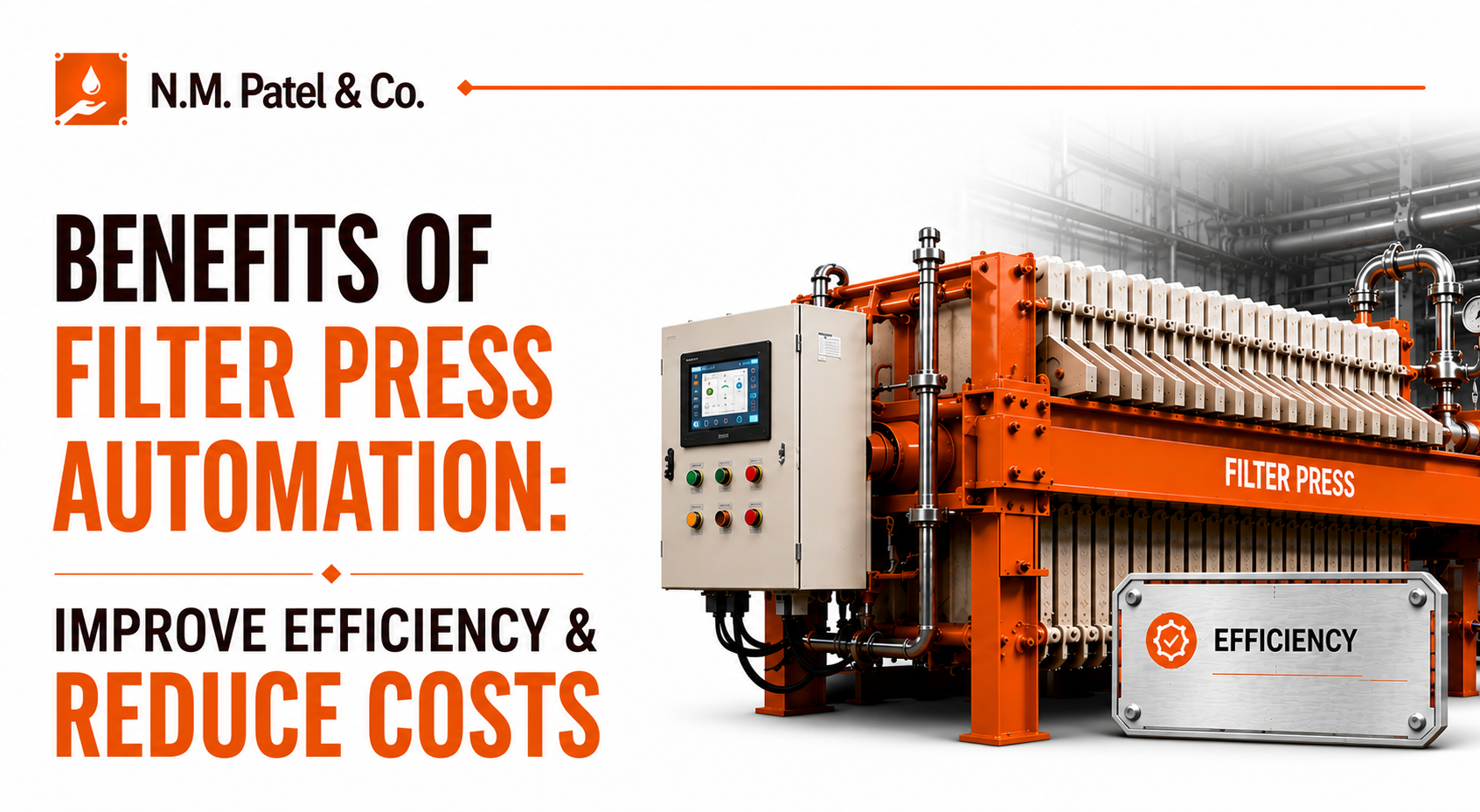
As industries continue to focus on improving productivity and reducing operating costs, automation has become a key part of modern filtration systems. Traditional filter press operations often require manual intervention for plate shifting, cake discharge, and process monitoring, which can increase labor costs, slow production, and lead to inconsistent performance.
Filter press automation eliminates many of these challenges by automating critical filtration processes. Automated filter press systems improve cycle times, enhance workplace safety, reduce human error, and deliver more consistent filtration results. Whether used in wastewater treatment, mining, chemicals, pharmaceuticals, or food processing, automation helps industries maximize efficiency while minimizing downtime.
In this guide, we’ll explore the major benefits of filter press automation and explain why more manufacturers are investing in automated filtration systems.
Quick Answer
Filter press automation improves industrial filtration by reducing manual labor, shortening filtration cycles, increasing production efficiency, improving operator safety, and delivering consistent filtration performance. Automated systems also lower maintenance requirements and help businesses reduce long-term operating costs.
Key Takeaways
- Reduce manual labor requirements.
- Increase filtration productivity.
- Improve workplace safety.
- Minimize operational downtime.
- Deliver consistent filtration performance.
- Lower long-term operating costs.
What Is Filter Press Automation?
Quick Answer
Filter press automation refers to the use of automated control systems, hydraulic mechanisms, sensors, and programmable logic controllers (PLCs) to manage the filtration process with minimal human intervention. It automates tasks such as plate opening, cake discharge, pressure monitoring, and cycle control for faster and more efficient operation.
Automation improves consistency while reducing the dependence on manual operations.
Key Features of Automated Filter Press Systems
- Automatic plate shifting
- PLC-based control systems
- Automatic cake discharge
- Hydraulic closing mechanism
- Pressure monitoring
- Cycle time optimization
- Remote system monitoring
- Safety interlocks
These features enable continuous, reliable, and efficient filtration across a wide range of industrial applications.
How Does an Automated Filter Press Work?
Quick Answer
An automated filter press performs the complete filtration cycle using intelligent controls and hydraulic systems. Once the slurry enters the filter press, the system automatically manages filtration pressure, separates solids from liquids, opens filter plates, discharges filter cake, and prepares the machine for the next cycle without extensive operator involvement.
Automation reduces cycle times while maintaining consistent filtration quality.
Automated Filtration Process
- Slurry enters the filter press
- Hydraulic system closes filter plates
- Filtration pressure separates solids and liquids
- Filtrate is collected
- Filter cake forms inside chambers
- Automatic plate opening begins
- Cake discharge is completed
- Machine resets for the next filtration cycle
This streamlined process improves production efficiency and reduces unnecessary delays.
Why Are Industries Adopting Filter Press Automation?
Quick Answer
Industries are adopting filter press automation to improve productivity, reduce labor dependency, increase process consistency, and enhance workplace safety. Automated filtration systems also help manufacturers meet higher production demands while lowering operating costs and minimizing equipment downtime.
As industrial processes become more demanding, automation provides a competitive advantage through faster and more reliable filtration.
Reasons Industries Invest in Automation
- Higher production capacity
- Reduced labor costs
- Faster filtration cycles
- Improved operational efficiency
- Better filtration consistency
- Enhanced workplace safety
- Lower maintenance requirements
- Reduced human error
- Improved equipment reliability
- Higher return on investment
Automation allows businesses to achieve greater productivity without compromising filtration quality.
Manual Filter Press vs Automated Filter Press
Quick Answer
While manual filter presses rely heavily on operator involvement, automated filter press systems perform most filtration tasks automatically. This results in faster processing, lower labor costs, improved safety, and greater operational efficiency.
| Manual Filter Press | Automated Filter Press |
| High manual labor | Minimal operator intervention |
| Longer filtration cycles | Faster automated cycles |
| Higher labor costs | Lower operating costs |
| Manual plate handling | Automatic plate shifting |
| Greater risk of human error | Consistent automated operation |
| Slower production | Higher productivity |
| Basic process monitoring | PLC-based intelligent control |
| Limited scalability | Ideal for high-volume operations |
For industries handling continuous or high-volume filtration, automation offers significant improvements in efficiency, reliability, and long-term cost savings.
What Are the Benefits of Filter Press Automation?
Quick Answer
The benefits of filter press automation include increased productivity, faster filtration cycles, reduced labor costs, improved operator safety, consistent filtration quality, and lower maintenance requirements. Automated systems optimize the entire filtration process, helping industries improve efficiency while minimizing operational expenses.
Automation also enables businesses to scale production without significantly increasing manpower.
Key Benefits of Filter Press Automation
- Higher filtration efficiency
- Faster cycle times
- Reduced manual labor
- Lower operating costs
- Improved workplace safety
- Consistent filtration performance
- Reduced machine downtime
- Better filter cake discharge
- Higher production capacity
- Improved return on investment (ROI)
By automating repetitive tasks, industries can focus on improving production output and product quality while reducing operational risks.
How Should You Choose the Right Automated Filter Press?
Quick Answer
Choosing the right automated filter press depends on your filtration capacity, slurry characteristics, industry requirements, automation level, and long-term operational goals. A reliable machine should deliver consistent performance, easy maintenance, and dependable after-sales support.
Selecting the correct system ensures maximum efficiency and long-term value.
Factors to Consider Before Buying
- Filtration capacity
- Plate size and chamber volume
- Hydraulic system quality
- PLC and automation features
- Cycle time requirements
- Filter cloth compatibility
- Machine construction material
- Energy efficiency
- Spare parts availability
- After-sales service and technical support
A properly selected automated filter press reduces maintenance costs and improves overall plant productivity.
Why Choose N.M. Patel & Co.?
Quick Answer
N.M. Patel & Co. is a trusted manufacturer of filter press machines and filtration equipment, delivering reliable, high-performance solutions for industries across India and international markets. Our automated filter press systems are designed to improve productivity, reduce downtime, and ensure long-term operational efficiency.
Why Industries Trust N.M. Patel & Co.
- Advanced Filter Press Technology
- Custom Automation Solutions
- Durable Machine Construction
- High Filtration Efficiency
- PLC-Based Automation Systems
- Reliable After-Sales Support
- Genuine Spare Parts
- Expert Technical Assistance
- Competitive Pricing
- Industry-Specific Filtration Solutions
Whether you’re upgrading an existing filtration system or investing in a new automated filter press, N.M. Patel & Co. provides dependable solutions tailored to your operational requirements.
Frequently Asked Questions
What is filter press automation?
Filter press automation uses PLCs, hydraulic systems, sensors, and automated controls to manage the filtration process with minimal manual intervention, improving efficiency and consistency.
What are the main benefits of an automated filter press?
The main benefits include reduced labor costs, faster filtration cycles, improved operator safety, consistent filtration quality, lower downtime, and increased productivity.
Which industries use automated filter presses?
Automated filter presses are widely used in wastewater treatment, mining, chemicals, pharmaceuticals, food processing, ceramics, textiles, and metal processing industries.
Does filter press automation reduce maintenance costs?
Yes. Automated systems minimize manual handling, reduce wear caused by improper operation, optimize filtration cycles, and help identify maintenance needs early, lowering long-term maintenance costs.
Why choose N.M. Patel & Co. for automated filter press solutions?
N.M. Patel & Co. offers high-quality filter press machines, customized automation solutions, expert technical support, genuine spare parts, and dependable after-sales service to maximize filtration efficiency.
Ready to Upgrade Your Filtration Process?
Modern industries require filtration systems that are faster, safer, and more efficient. Filter press automation helps businesses reduce operating costs, improve productivity, and maintain consistent filtration performance.
Contact N.M. Patel & Co. today to explore advanced automated filter press solutions designed to increase efficiency, reduce downtime, and support your long-term production goals.
Conclusion
The benefits of filter press automation go far beyond reducing manual labor. Automated systems improve filtration efficiency, shorten cycle times, enhance workplace safety, lower operating costs, and deliver consistent performance across industrial applications. As manufacturing and processing industries continue to embrace automation, investing in an automated filter press is a smart step toward improving productivity and long-term profitability. With N.M. Patel & Co. as your filtration partner, you gain access to reliable equipment, advanced automation technology, and expert support for every stage of your operation.
Contact N.M. Patel & Co. today to discuss your filtration requirements and discover high-performance filter press solutions designed for your industry.