





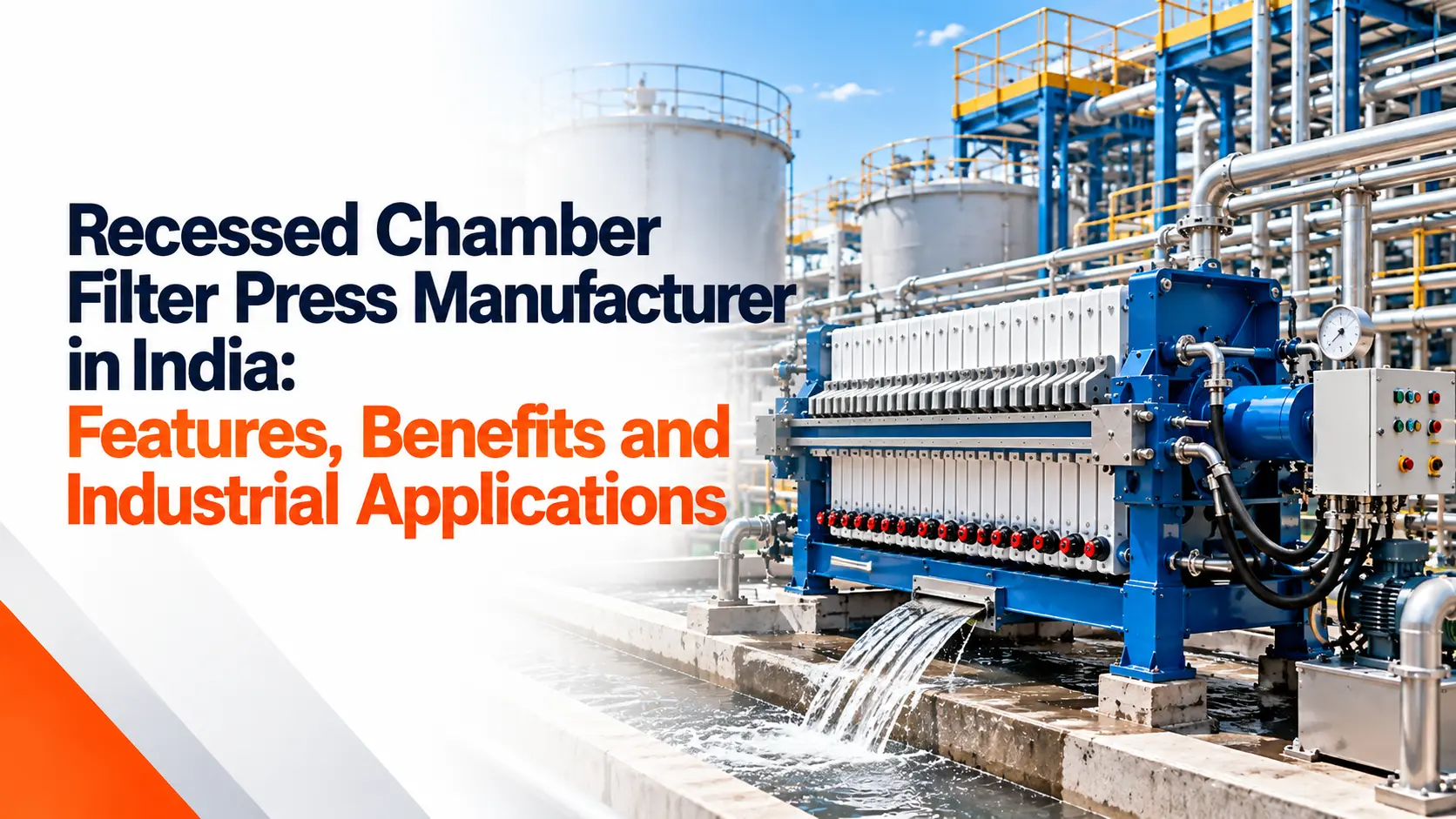
A recessed chamber filter press manufacturer in India provides industrial filtration equipment designed to separate solid particles from liquid slurries through pressure filtration. These machines are widely used in wastewater treatment, chemical manufacturing, pharmaceuticals, mining, food processing and other industries requiring dependable solid-liquid separation.
N.M. Patel & Co., based in Bilimora, Gujarat, manufactures recessed chamber filter presses designed for industrial dewatering applications. With experience in filtration equipment manufacturing since 1935, the company offers customizable systems with different plate sizes, filtration capacities and operating configurations.
For industries seeking efficient sludge dewatering, improved filtrate recovery and manageable operating costs, recessed chamber filtration offers a practical solution.
What Is a Recessed Chamber Filter Press?
A recessed chamber filter press is an industrial filtration machine that uses specially designed filter plates to separate solids from liquids.
Each plate contains a recessed section. When adjacent plates are compressed together, they create chambers that hold slurry during filtration.
A pump feeds slurry into these chambers under pressure. Liquid passes through the filter cloth while solid particles accumulate inside, forming filter cakes.
Once filtration is complete, the plates are separated to discharge the collected solids.
Key advantages include:
- Effective solid-liquid separation
- Consistent filter cake formation
- Durable polypropylene filter plates
- Relatively simple operation and maintenance
- Customizable filtration capacity
- Suitability for different industrial slurries
These characteristics make recessed chamber filter presses useful for industrial operations requiring repeatable batch filtration.
How Does a Recessed Chamber Filter Press Work?
The filtration process generally involves five stages.
Step 1: Plate Closing
The filter plates are compressed together using a closing mechanism, creating sealed filtration chambers.
Step 2: Slurry Feeding
A feeding pump transfers slurry into the chambers at a pressure appropriate for the process and equipment design.
Step 3: Solid-Liquid Separation
The filter cloth retains suspended solids while the liquid passes through designated drainage channels.
Step 4: Filter Cake Formation
Solid particles gradually accumulate inside the chambers, forming cakes. Filtration continues until the required operating endpoint is reached.
Step 5: Cake Discharge
The press opens, allowing the collected filter cakes to be removed before another filtration cycle begins.
Actual filtration times depend on slurry characteristics, solids concentration, filtration pressure and filter media.
Key Features of Recessed Filter Presses Manufactured in India
Choosing an experienced recessed filter press manufacturer is important for obtaining equipment that matches industrial process requirements.
N.M. Patel & Co. manufactures recessed filter press systems with features intended to support reliable filtration.
| Feature | Industrial Benefit |
| Polypropylene filter plates | Chemical resistance and durability |
| Robust equipment frame | Structural stability during filtration |
| Customizable plate sizes | Adaptability to process capacities |
| Multiple operating options | Manual, semi-automatic and automatic operation |
| Accessible plate arrangement | Simplified cleaning and maintenance |
| Recessed chamber design | Consistent cake formation |
Filtration performance depends on correct equipment selection, operating conditions and routine maintenance.
Industrial Applications of Recessed Chamber Filter Presses
1. Wastewater Treatment Plants
Effluent treatment plants use filter presses to dewater sludge and reduce the volume of material requiring further handling or disposal.
2. Chemical Manufacturing
Chemical processing facilities use pressure filtration for slurry separation, solid recovery and clarification.
3. Pharmaceutical Processing
Suitable filtration systems help separate solids and liquids during selected pharmaceutical production processes, subject to process-specific hygiene and validation requirements.
4. Mining and Mineral Processing
Mining operations use filter presses for mineral slurry dewatering, solids recovery and wastewater management.
5. Food and Beverage Processing
Appropriately configured filtration equipment can support clarification and separation processes in food manufacturing.
6. Dyes and Pigment Manufacturing
Filter presses assist in separating pigments and dyes from processing liquids while supporting controlled cake formation.
Recessed Chamber Filter Press vs Membrane Filter Press
Both machines perform pressure filtration, but they differ in their dewatering mechanisms.
| Comparison | Recessed Chamber Press | Membrane Filter Press |
| Filtration mechanism | Pressure filtration | Pressure filtration with additional cake squeezing |
| Equipment complexity | Generally lower | Generally higher |
| Cake moisture | Depends on slurry and process | Can achieve lower moisture |
| Initial investment | Often lower | Often higher |
| Best suited for | General industrial filtration | Applications requiring additional cake dewatering |
Industries prioritizing additional cake moisture reduction can also explore membrane filter press solutions.
How to Choose a Recessed Chamber Filter Press Manufacturer in India
Selecting filtration equipment requires more than comparing machine prices.
Industrial buyers should evaluate the following factors:
1. Manufacturing experience: Choose manufacturers with demonstrated knowledge of industrial filtration applications.
2. Filtration capacity: Determine the required slurry volume, solids concentration and operating cycle.
3. Plate specifications: Check plate dimensions, materials, cake thickness and compatibility with process chemicals.
4. Automation requirements: Select manual, semi-automatic or fully automatic operation according to production needs.
5. Testing capabilities: Slurry trials can help determine suitable operating parameters before equipment selection.
6. Maintenance support: Confirm spare parts availability, servicing arrangements and filter cloth compatibility.
High-quality filter press plates are particularly important because plate design, drainage and filtration chamber geometry directly influence performance.
Why Choose N.M. Patel & Co. for Recessed Chamber Filter Presses?
N.M. Patel & Co. is an established Indian filtration equipment manufacturer headquartered in Bilimora, Gujarat.
The company reports filtration industry experience dating back to 1935 and offers recessed, membrane, plate-and-frame and automated filter press systems.
Its manufacturing capabilities include custom filtration configurations, filter plates, filter cloths and auxiliary equipment.
For industrial buyers, the ability to evaluate slurry characteristics before equipment selection can be especially valuable.
N.M. Patel & Co. also offers slurry sample testing services to help assess filtration requirements and identify suitable equipment configurations.
Frequently Asked Questions
What is a recessed chamber filter press used for?
It is used to separate suspended solids from liquid slurries in wastewater treatment, chemical processing, mining, pharmaceuticals and other industrial applications.
Who manufactures recessed chamber filter presses in India?
N.M. Patel & Co., based in Gujarat, manufactures recessed chamber filter presses for industrial solid-liquid separation applications.
What material is used for recessed filter press plates?
Polypropylene is commonly used because of its chemical resistance, durability and relatively low weight. Other materials may be selected for specialized applications.
What is the difference between recessed and membrane filter presses?
Recessed chamber presses rely on pressure filtration. Membrane presses add a squeezing stage that can reduce filter cake moisture.
Can recessed chamber filter presses be customized?
Yes. Manufacturers can configure plate sizes, filtration capacity, construction materials and automation levels according to process requirements.
Conclusion
Choosing a reliable recessed chamber filter press manufacturer in India helps industrial facilities obtain filtration equipment suited to their production and wastewater treatment requirements.
With customizable equipment configurations, durable filtration components and experience across industrial applications, N.M. Patel & Co. provides recessed chamber filtration solutions for businesses seeking dependable solid-liquid separation.
Industrial buyers can contact the manufacturer to discuss slurry characteristics, operating conditions, filtration capacity and suitable equipment options.