






Introduction
Chemical manufacturing involves complex processes where effective solid-liquid separation is often essential for maintaining product quality, recovering valuable materials, managing process residues, and reducing waste.
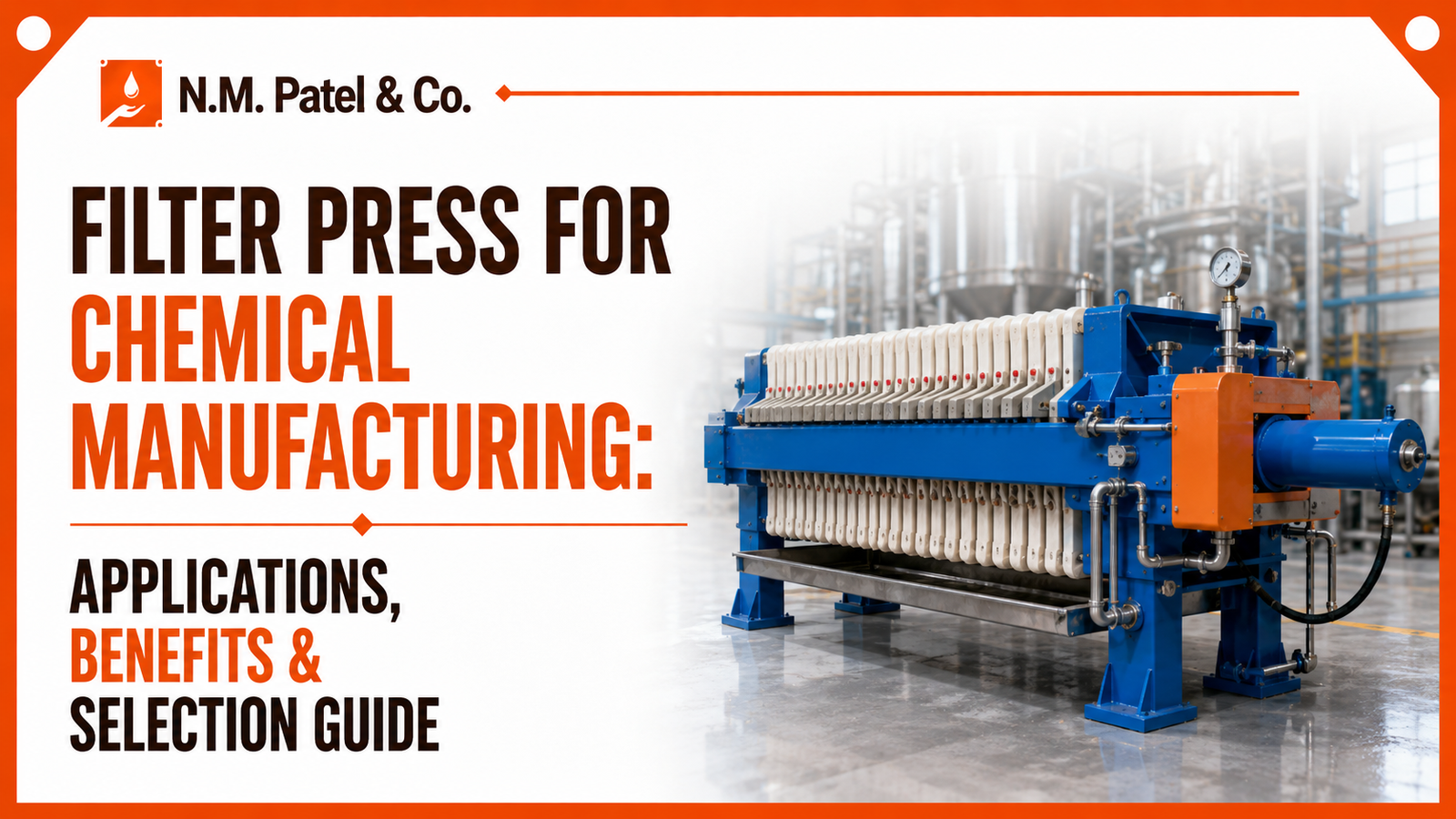
A Filter Press for Chemical Manufacturing provides a practical method for separating suspended solids from liquids by applying pressure through a series of filter plates and filter cloths.
From chemical precipitation and crystallization processes to wastewater treatment and sludge dewatering, filter presses can be adapted to different industrial filtration requirements.
However, selecting a filter press for a chemical manufacturing application requires more than choosing a machine based on capacity. The chemical characteristics of the slurry, filtration temperature, pressure requirements, particle size, cake properties, and material compatibility all influence equipment selection.
For chemical manufacturers, the right filtration system can improve process efficiency, support consistent operations, and reduce handling and disposal requirements.
Quick Answer
A Filter Press for Chemical Manufacturing is an industrial solid-liquid separation system used to remove suspended or precipitated solids from chemical process liquids. It uses filter plates, filter cloths, and pressure to form a solid filter cake while allowing clarified liquid to pass through. Filter presses are commonly used for chemical processing, sludge dewatering, wastewater treatment, pigment production, mineral processing, and other applications requiring efficient batch filtration.
Key Takeaways
- Filter presses provide effective solid-liquid separation.
- Chemical manufacturing involves a wide range of filtration applications.
- Filter cloth selection affects filtration performance.
- Plate and frame configurations can be selected according to process requirements.
- Material compatibility is important when handling aggressive chemicals.
- Filter presses can produce relatively dry filter cakes.
- Proper sizing helps improve filtration efficiency and operating performance.
- Chemical manufacturers should evaluate slurry characteristics before selecting equipment.
Table of Contents
- What Is a Filter Press?
- Why Filter Presses Are Used in Chemical Manufacturing
- Applications of Filter Presses in the Chemical Industry
- How a Chemical Filter Press Works
- Benefits of Using a Filter Press for Chemical Manufacturing
- How to Select the Right Filter Press
- Important Filter Press Components
- Filter Press vs Other Industrial Filtration Methods
- Maintenance Requirements
- Why Choose N.M. Patel & Co.?
- Frequently Asked Questions
- Conclusion
What Is a Filter Press?
Quick Answer
A filter press is a pressure-based filtration machine designed to separate solids from liquids. It uses a series of filter plates covered with filter media to retain solid particles while allowing liquid to pass through.
A typical filtration cycle includes:
Slurry Feeding → Filtration → Cake Formation → Filtrate Collection → Cake Discharge
During operation, slurry enters the filter press under pressure.
The liquid passes through the filter cloth while suspended particles are retained between the plates.
As filtration continues, the retained solids form a filter cake.
Once the chambers are filled, the filtration cycle is stopped and the accumulated cake is discharged.
The equipment can then be prepared for the next cycle.
Why Filter Presses Are Used in Chemical Manufacturing
Quick Answer
Filter presses are used in chemical manufacturing because they can efficiently separate solids from liquids, handle a wide range of slurries, produce filter cakes suitable for further processing or disposal, and be configured according to different chemical process requirements.
Chemical manufacturing may generate:
- Precipitated solids
- Chemical sludge
- Crystals
- Pigments
- Catalysts
- Process residues
- Suspended solids
- Wastewater sludge
These materials often need to be separated from liquids before the next processing stage.
A filter press can provide controlled batch filtration for these applications.
Applications of Filter Presses in the Chemical Industry
Quick Answer
Filter presses can be used across chemical manufacturing for process filtration, chemical precipitation, sludge dewatering, pigment processing, wastewater treatment, and recovery of solids from process liquids.
| Application | Purpose |
| Chemical Precipitation | Separate precipitated solids from liquid |
| Sludge Dewatering | Reduce liquid content in chemical sludge |
| Pigment Processing | Separate pigment solids from liquid |
| Crystal Recovery | Recover solid crystals from process streams |
| Process Filtration | Remove suspended solids |
| Wastewater Treatment | Dewater treatment sludge |
| Catalyst Recovery | Separate catalyst particles |
| Mineral-Based Chemicals | Separate solids from process slurry |
| Chemical Waste Treatment | Reduce liquid content before disposal |
| Product Recovery | Recover useful solid materials |
The exact application depends on the chemical composition and characteristics of the slurry.
How Does a Filter Press Work?
Quick Answer
A filter press works by pumping slurry into enclosed filter chambers. Pressure forces the liquid through the filter cloth while solid particles are retained. As solids accumulate, they form a filter cake inside the chambers. Once the filtration cycle is complete, the plates are opened and the filter cake is removed.
Step 1: Slurry Feeding
The chemical slurry is pumped into the filter press.
The slurry contains both:
- Liquid
- Suspended or precipitated solids
Step 2: Pressure Filtration
Pressure forces the liquid through the filter media.
The filter cloth retains the solid particles.
Step 3: Filter Cake Formation
As more solids accumulate, a layer of filter cake develops inside the filter chamber.
The cake itself can become part of the filtration medium.
Step 4: Filtrate Collection
The filtered liquid, known as filtrate, exits through dedicated channels.
Depending on the process, the filtrate may:
- Return to production
- Move to another treatment stage
- Be reused
- Be discharged after appropriate treatment
Step 5: Cake Discharge
After the filtration cycle is completed, the plates are separated and the accumulated filter cake is removed.
Benefits of Using a Filter Press for Chemical Manufacturing
Quick Answer
A properly selected filter press can provide efficient solid-liquid separation, controlled filtration, reduced sludge volume, and consistent filter cake formation for chemical manufacturing operations.
Efficient Solid-Liquid Separation
Filter presses are designed to separate suspended solids from liquids through pressure filtration.
This can be valuable when high levels of solids need to be removed from process streams.
Reduced Sludge Volume
Dewatering reduces the amount of free liquid contained in sludge.
This can make subsequent:
- Handling
- Transportation
- Storage
- Processing
- Disposal
more manageable.
Recoverable Solids
In some chemical processes, the retained solids may have commercial or process value.
A filter press can support recovery of:
- Crystals
- Pigments
- Catalysts
- Precipitated chemicals
- Other process solids
Flexible Configuration
Filter presses can be configured using different:
- Plate sizes
- Filter cloths
- Chamber capacities
- Materials of construction
- Operating pressures
The configuration should be selected according to the application.
Batch Processing
Filter presses are well suited to applications where batch filtration is acceptable or preferred.
How to Select the Right Filter Press for Chemical Manufacturing
Quick Answer
Selecting a filter press requires evaluating slurry properties, chemical compatibility, filtration pressure, required capacity, desired cake moisture, operating temperature, filter media, and process requirements.
1. Understand the Slurry
Start by identifying:
- Solid concentration
- Particle size
- Solid type
- Liquid viscosity
- pH
- Temperature
- Chemical composition
These characteristics directly influence filtration performance.
2. Check Chemical Compatibility
The filter press must be constructed from materials compatible with the chemicals being processed.
Depending on the application, manufacturers may need to consider:
- Corrosion resistance
- Plate material
- Piping material
- Pump compatibility
- Filter cloth compatibility
- Gasket material
3. Determine Required Capacity
The required filtration capacity depends on:
- Slurry volume
- Solids concentration
- Filtration cycle time
- Number of operating cycles
- Required production rate
Oversizing or undersizing the equipment can affect operational efficiency.
4. Select Appropriate Filter Cloth
Filter cloth is one of the most important filtration components.
The appropriate cloth depends on:
- Particle size
- Chemical compatibility
- Filtration rate
- Cake release characteristics
- Required filtrate clarity
5. Consider Operating Pressure
The required filtration pressure depends on slurry characteristics and the desired filtration result.
Higher pressure isn’t automatically better for every application.
The correct operating conditions should be established through process evaluation and testing.
Important Filter Press Components
Quick Answer
A filter press consists of several components that work together to provide controlled solid-liquid separation.
| Component | Function |
| Filter Plates | Create filtration chambers |
| Filter Cloth | Retains solid particles |
| Filter Frame | Supports plates and filtration assembly |
| Hydraulic Closing System | Applies closing force |
| Feed Pump | Moves slurry into the press |
| Filtrate Channels | Collect filtered liquid |
| Manifold | Directs filtrate flow |
| Plate Pack | Forms filtration chambers |
| Cake Discharge System | Removes accumulated solids |
The exact configuration depends on the application and level of automation required.
Filter Press vs Other Industrial Filtration Methods
Quick Answer
A filter press is particularly useful when a process requires pressure-based batch filtration and effective cake formation. Other filtration technologies may be better suited to continuous operation or specific slurry characteristics.
| Factor | Filter Press | Centrifuge | Vacuum Filter |
| Operation | Typically batch | Typically continuous | Continuous |
| Filtration Mechanism | Pressure | Centrifugal force | Vacuum |
| Cake Formation | Excellent | Application dependent | Good |
| Sludge Dewatering | Excellent for many slurries | Good | Good |
| Chemical Compatibility | Configurable | Application dependent | Application dependent |
| Automation | Available | Available | Available |
| Best Fit | Pressure filtration & dewatering | Continuous separation | Continuous filtration |
The best technology depends on the slurry, production requirements, filtration objective, and process design.
Filter Press Maintenance Requirements
Quick Answer
Regular filter press maintenance helps maintain filtration performance, reduce unexpected downtime, and extend equipment service life.
Important maintenance areas include:
Filter Cloth Inspection
Check cloths for:
- Damage
- Blinding
- Wear
- Chemical degradation
- Improper installation
Plate Inspection
Inspect plates for:
- Cracks
- Deformation
- Surface damage
- Seal problems
Hydraulic System
Check:
- Hydraulic pressure
- Seals
- Hydraulic oil
- Closing mechanism
Feed Pump
Monitor the feed pump for:
- Pressure changes
- Leakage
- Wear
- Reduced pumping performance
Cleaning
Regularly clean filtration components according to the process requirements and chemical compatibility.
Why Choose N.M. Patel & Co.?
Quick Answer
N.M. Patel & Co. provides industrial filtration and process equipment solutions designed around the specific requirements of manufacturing applications. For chemical processing, equipment selection should be based on slurry characteristics, filtration objectives, chemical compatibility, capacity, and operating conditions.
When evaluating a filter press for your chemical manufacturing facility, the right solution depends on the actual process.
Important considerations include:
- Type of chemical slurry
- Solid concentration
- Required filtration capacity
- Chemical compatibility
- Cake moisture requirements
- Operating pressure
- Filter cloth selection
- Automation requirements
- Installation environment
A process-specific approach helps ensure that the selected filtration system is appropriate for the intended application.
For chemical manufacturing filtration requirements, contact N.M. Patel & Co. to discuss your process and filter press requirements.
Frequently Asked Questions
What is a filter press used for in chemical manufacturing?
A filter press is used to separate solids from liquids in chemical manufacturing processes. Common applications include chemical precipitation, sludge dewatering, pigment processing, crystal recovery, wastewater treatment, and process filtration.
Which filter press is best for chemical processing?
The appropriate filter press depends on the slurry composition, solids concentration, chemical properties, required capacity, filtration pressure, temperature, and desired cake characteristics. Process testing and equipment evaluation can help determine the appropriate configuration.
Can a filter press handle corrosive chemicals?
Filter presses can be configured with materials and components selected for chemical compatibility. However, the specific chemical composition, concentration, temperature, and operating conditions must be evaluated before selecting materials.
How does a filter press reduce chemical sludge?
A filter press removes liquid from sludge through pressure filtration. The remaining solids form a filter cake with significantly less free liquid, making the material easier to handle and transport.
What affects filter press filtration performance?
Filtration performance can be affected by slurry properties, particle size, solids concentration, filter cloth, pressure, temperature, cake thickness, and filtration cycle conditions.
Is a filter press suitable for chemical wastewater treatment?
Yes. Filter presses are commonly used for dewatering sludge generated during industrial wastewater treatment. The suitability depends on the characteristics of the sludge and the required treatment process.
Conclusion
A Filter Press for Chemical Manufacturing can play an important role in solid-liquid separation, chemical process filtration, sludge dewatering, and recovery of valuable solids.
However, selecting the right equipment requires understanding the complete filtration process rather than choosing a machine based solely on capacity or pressure.
Slurry characteristics, chemical compatibility, filter media, filtration pressure, cake requirements, operating temperature, and production volume should all be considered before equipment selection.
For chemical manufacturers looking for reliable industrial filtration equipment, a properly engineered filter press can provide a practical solution for controlled batch filtration and solid-liquid separation.
N.M. Patel & Co. can help businesses evaluate their chemical filtration requirements and identify an appropriate filter press configuration for their application.