






Introduction
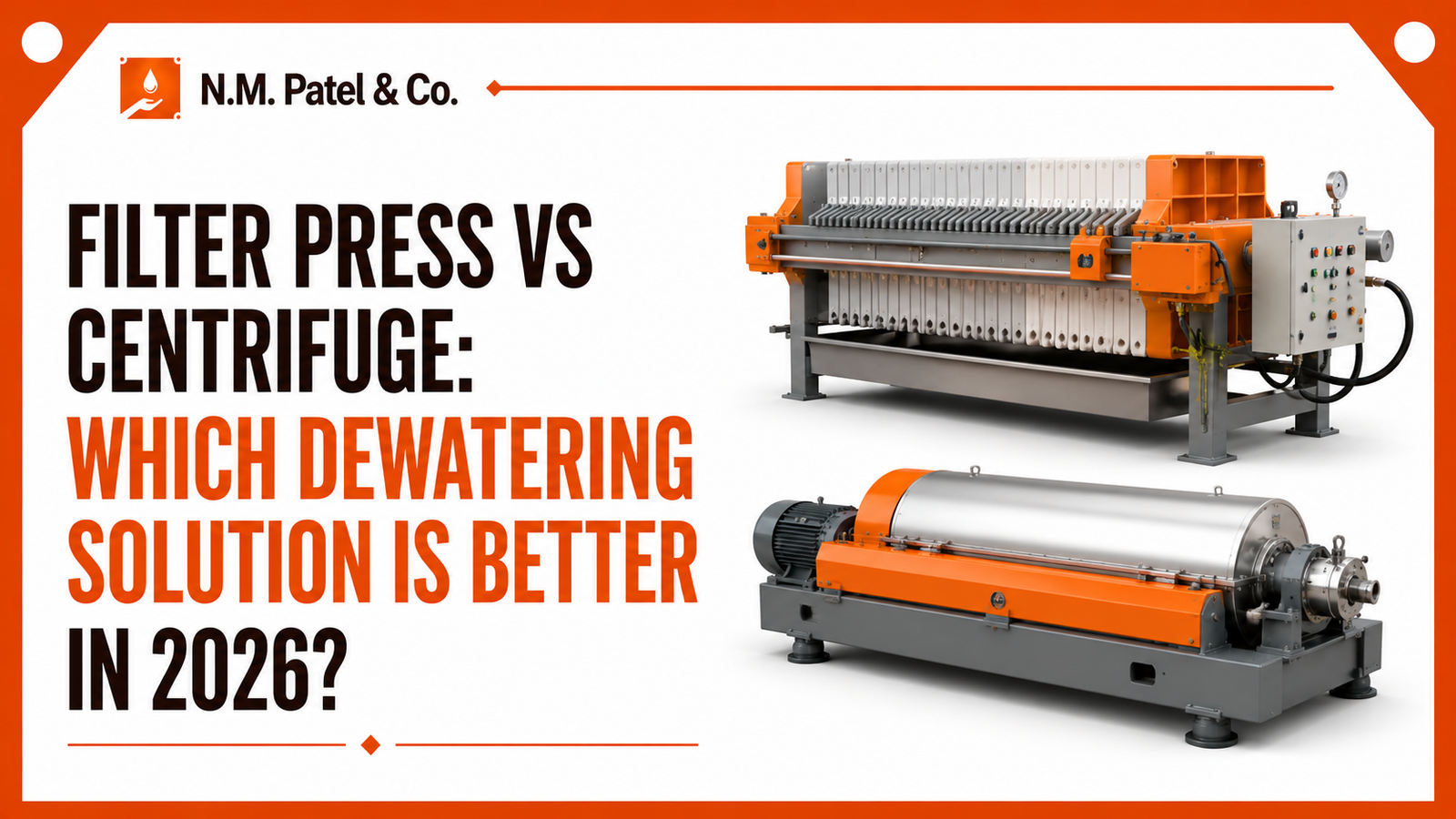
Efficient dewatering is a critical process in industries such as wastewater treatment, mining, chemical processing, pharmaceuticals, food manufacturing, and metal finishing. Selecting the right dewatering equipment directly impacts production efficiency, operating costs, sludge disposal expenses, and overall plant performance. Among the most widely used technologies are filter presses and centrifuges, each offering unique advantages depending on the application.
Although both systems are designed to separate solids from liquids, they operate using entirely different principles. A filter press relies on pressure filtration to remove water from sludge, while a centrifuge uses high-speed rotational force to achieve separation. Choosing the wrong equipment can result in higher maintenance costs, excessive energy consumption, lower cake dryness, and reduced operational efficiency.
Understanding the differences between these two technologies helps businesses invest in the most suitable solution based on sludge characteristics, production capacity, operating budget, and long-term maintenance requirements.
In this guide, we’ll compare filter presses and centrifuges in detail to help you determine which dewatering solution best meets your industrial needs.
Quick Answer
Filter presses and centrifuges are both effective dewatering solutions, but they serve different operational requirements. Filter presses generally produce drier filter cakes with lower operating costs, making them ideal for industries prioritizing maximum solids recovery. Centrifuges provide faster continuous processing and are better suited for applications requiring high throughput and automated operation.
Key Takeaways
- Filter presses provide higher cake dryness.
- Centrifuges offer continuous operation.
- Operating costs differ significantly.
- Maintenance requirements vary between systems.
- Sludge characteristics influence equipment selection.
- Energy consumption is generally lower for filter presses.
- Choosing the right equipment improves efficiency and reduces disposal costs.
What Is a Filter Press?
Quick Answer
A filter press is a pressure filtration system that separates solids from liquids by forcing slurry through filter cloths mounted between filter plates. The process removes water efficiently, producing dry filter cakes and clean filtrate suitable for industrial applications.
A typical filter press consists of:
- Filter plates
- Filter cloths
- Hydraulic closing system
- Feed pump
- Filtrate collection system
- Control panel
During operation, slurry is pumped into the press under pressure. Liquids pass through the filter cloth while solid particles remain trapped inside the chambers, gradually forming compact filter cakes.
Filter presses are commonly used in:
- Wastewater treatment
- Chemical processing
- Mining
- Ceramic manufacturing
- Food processing
- Pharmaceuticals
- Metal finishing
- Industrial filtration
Because of their ability to produce high solids content, filter presses are widely preferred where sludge disposal costs are significant.
What Is a Centrifuge?
Quick Answer
A centrifuge is a mechanical dewatering system that separates solids and liquids using centrifugal force generated by high-speed rotation. It enables continuous operation and is widely used in industries requiring rapid sludge processing.
Inside the centrifuge, slurry enters a rotating bowl where centrifugal force pushes heavier solid particles toward the outer wall while lighter liquid remains closer to the center.
Main components include:
- Rotating bowl
- Scroll conveyor
- Drive motor
- Feed system
- Gearbox
- Control system
Centrifuges are commonly used in:
- Municipal wastewater treatment
- Oil and gas
- Food processing
- Chemical plants
- Pharmaceutical manufacturing
- Industrial sludge treatment
Their continuous operation makes them suitable for facilities handling large sludge volumes.
Filter Press vs Centrifuge: Key Differences
Quick Answer
Although both systems perform sludge dewatering, they differ in operating principle, moisture removal, energy consumption, maintenance, automation, and long-term operating costs. The ideal solution depends on your production goals and sludge characteristics.
Operating Principle
A filter press uses hydraulic pressure to force liquid through filter cloths, while a centrifuge separates materials using centrifugal force created by rapid rotation.
Dewatering Performance
Filter presses generally achieve lower residual moisture, producing drier filter cakes that reduce disposal costs.
Centrifuges usually produce wetter solids but process material continuously at higher throughput.
Operating Mode
Filter presses typically operate in batches.
Centrifuges operate continuously without frequent production interruptions.
Energy Consumption
Filter presses generally consume less electrical power because they do not require high-speed rotating equipment.
Centrifuges require significantly more energy to maintain rotational speed.
Maintenance
Filter presses require periodic replacement of filter cloths and routine hydraulic maintenance.
Centrifuges contain high-speed rotating components that demand regular servicing and balancing.
Filter Press vs Centrifuge Comparison
Quick Answer
The following comparison highlights the major differences between filter presses and centrifuges, helping businesses evaluate which solution best matches their production requirements.
| Feature | Filter Press | Centrifuge |
| Operating Method | Batch process | Continuous process |
| Separation Principle | Pressure filtration | Centrifugal force |
| Cake Dryness | Very high | Moderate |
| Processing Speed | Moderate | High |
| Energy Consumption | Low | High |
| Maintenance Cost | Low to Moderate | Moderate to High |
| Operating Cost | Lower | Higher |
| Automation | Semi-automatic or automatic | Fully automatic |
| Initial Investment | Moderate | Higher |
| Suitable for High Solids Recovery | Excellent | Good |
| Sludge Disposal Cost | Lower due to drier cake | Higher due to wetter solids |
| Best Applications | Mining, chemicals, ceramics, industrial wastewater | Municipal wastewater, food processing, oil & gas |
Why This Comparison Matters
Both technologies provide effective sludge dewatering, but their performance varies depending on operational priorities. A filter press is often the preferred choice for businesses seeking maximum cake dryness, lower operating costs, and efficient solids recovery. A centrifuge is better suited for facilities requiring continuous processing, higher throughput, and automated operation.
Which Dewatering Solution Is Better?
Quick Answer
The best dewatering solution depends on your application, production volume, sludge characteristics, operating budget, and desired cake dryness. Filter presses are generally the better choice for industries seeking maximum solids recovery and lower operating costs, while centrifuges are ideal for continuous, high-volume processing where automation and speed are priorities.
Choose a Filter Press If You Need
- Higher cake dryness
- Lower sludge disposal costs
- Lower energy consumption
- Better filtrate clarity
- Cost-effective long-term operation
- Reliable batch processing
Choose a Centrifuge If You Need
- Continuous operation
- High processing capacity
- Minimal operator intervention
- Compact installation
- Fast sludge handling
- Automated processing
For many industrial applications, a filter press delivers greater long-term value due to its lower operating costs and superior dewatering performance.
Advantages of Filter Press
Quick Answer
Filter presses are widely preferred because they produce drier filter cakes, consume less energy, and provide excellent solids recovery. They are particularly suitable for industries where sludge disposal costs and filtration efficiency are major considerations.
Higher Cake Dryness
Filter presses remove more water from sludge, resulting in drier filter cakes.
Benefits include:
- Lower disposal costs
- Easier material handling
- Reduced transportation expenses
Lower Operating Costs
Compared to centrifuges, filter presses generally require:
- Less electrical power
- Lower maintenance expenses
- Fewer moving components
This reduces long-term operational costs.
Better Filtrate Quality
Pressure filtration produces cleaner filtrate suitable for recycling or further treatment in many industrial processes.
Longer Equipment Life
Because filter presses operate with fewer high-speed mechanical components, they often experience lower mechanical wear and longer service life.
Suitable for Multiple Industries
Filter presses are commonly used in:
- Mining
- Chemical processing
- Pharmaceuticals
- Food processing
- Ceramic manufacturing
- Wastewater treatment
- Metal finishing
Advantages of Centrifuge
Quick Answer
Centrifuges provide continuous sludge processing with high throughput and automated operation. They are particularly effective in facilities where uninterrupted processing and rapid separation are more important than achieving maximum cake dryness.
Continuous Operation
Unlike batch-operated filter presses, centrifuges process material continuously, making them suitable for high-capacity facilities.
Higher Processing Speed
Large sludge volumes can be processed quickly without frequent production interruptions.
Compact Installation
Many centrifuge systems require less floor space compared to large filter press installations.
Automated Operation
Modern centrifuges integrate easily with automated industrial control systems, reducing manual intervention.
Suitable for Large Municipal Plants
Centrifuges are frequently installed in:
- Municipal wastewater treatment plants
- Food processing facilities
- Oil & gas operations
- Chemical industries
Factors to Consider Before Choosing
Quick Answer
Choosing between a filter press and a centrifuge requires evaluating process requirements, operating costs, maintenance needs, sludge characteristics, and production capacity. Selecting equipment based on application-specific requirements delivers better long-term performance and return on investment.
Consider the following factors before investing:
| Decision Factor | Filter Press | Centrifuge |
| Initial Investment | Moderate | Higher |
| Operating Cost | Lower | Higher |
| Energy Consumption | Lower | Higher |
| Cake Dryness | Excellent | Good |
| Continuous Processing | No | Yes |
| Maintenance Complexity | Lower | Higher |
| Throughput Capacity | Moderate | High |
| Automation Level | Moderate to High | High |
| Sludge Disposal Cost | Lower | Higher |
| Best for Industrial Applications | Excellent | Good |
Evaluate both short-term investment and long-term operating expenses before making a purchasing decision.
Why Choose N.M. Patel & Co.?
Quick Answer
N.M. Patel & Co. is a trusted manufacturer of high-performance filtration and dewatering equipment, delivering reliable solutions for industries across India and international markets. Our expertise helps businesses improve operational efficiency, reduce maintenance costs, and maximize equipment performance.
Our Product Range
- Filter Press Machines
- Automatic Filter Press Systems
- Hydraulic Filter Presses
- Filter Plates
- Filter Press Spare Parts
- Hydraulic Cylinders
- Industrial Filtration Equipment
- Customized Dewatering Solutions
- Installation & Commissioning
- After-Sales Service & Technical Support
With decades of manufacturing experience, we provide customized filtration solutions designed to meet industry-specific requirements while ensuring long-term reliability and performance.
Frequently Asked Questions
Which produces a drier filter cake: a filter press or a centrifuge?
A filter press generally produces a much drier filter cake than a centrifuge, making it a preferred choice for industries aiming to reduce sludge disposal and transportation costs.
Which dewatering system consumes less energy?
Filter presses typically consume less energy because they rely on hydraulic pressure rather than high-speed rotational force, resulting in lower operating expenses.
Is a centrifuge better for continuous processing?
Yes. Centrifuges are designed for continuous operation and are ideal for facilities that process large volumes of sludge without interruption.
Which industries commonly use filter presses?
Filter presses are widely used in mining, chemicals, pharmaceuticals, ceramics, food processing, wastewater treatment, metal finishing, and various industrial filtration applications.
Why choose N.M. Patel & Co. for dewatering solutions?
N.M. Patel & Co. provides high-quality filter press systems, customized filtration solutions, expert technical support, and dependable after-sales service, helping industries achieve efficient, reliable, and cost-effective dewatering operations.
Find the Right Dewatering Solution for Your Business
Selecting the right dewatering equipment can significantly improve operational efficiency, reduce maintenance costs, and lower sludge disposal expenses. Understanding your process requirements and production goals is essential for making the right investment.
Partner with N.M. Patel & Co. to explore advanced filter press solutions designed to deliver superior dewatering performance, long-term reliability, and maximum operational value.
Conclusion
Both filter presses and centrifuges are proven dewatering technologies, but each serves different operational needs. Filter presses are the preferred choice for industries requiring maximum cake dryness, lower energy consumption, and reduced operating costs, while centrifuges excel in continuous, high-throughput applications where automation is a priority. Evaluating factors such as sludge characteristics, production capacity, maintenance requirements, and total cost of ownership helps businesses choose the most effective solution. With N.M. Patel & Co., you gain access to industry-leading filtration systems, technical expertise, and customized dewatering solutions built for long-term performance.