





Industrial filtration systems are becoming increasingly important for manufacturers seeking to recover process water, manage sludge, and improve solid-liquid separation. In 2026, selecting filtration equipment requires more than comparing machine capacity. Plant operators must evaluate slurry characteristics, filter cake moisture, automation requirements, and long-term operating costs.
For industries across India, including chemical processing, pharmaceuticals, mining, and wastewater treatment, the right filtration system can support consistent production and more efficient resource management.
However, not every filtration technology is suitable for every industrial application.
Why Industrial Water Reuse Is Influencing Filtration Decisions
Water management is an important operational consideration for industrial facilities, particularly those processing significant volumes of liquid waste.
Industrial water reuse involves treating recovered water until it meets the quality requirements of a specific application.
Filtration can help separate suspended solids from process liquids, but additional treatment may be necessary to remove dissolved substances or other contaminants.
Manufacturers should evaluate three priorities:
- Filtrate quality: Whether the separated liquid is suitable for its intended next stage.
- Sludge management: How efficiently solids can be concentrated and handled.
- Operational reliability: Whether filtration equipment can meet daily processing requirements.
A properly selected filtration system supports these objectives without introducing unnecessary complexity.
What Does an Industrial Filtration Equipment Manufacturer Provide?
An industrial filtration equipment manufacturer develops machinery and associated components for separating solids from liquids or supporting other filtration processes.
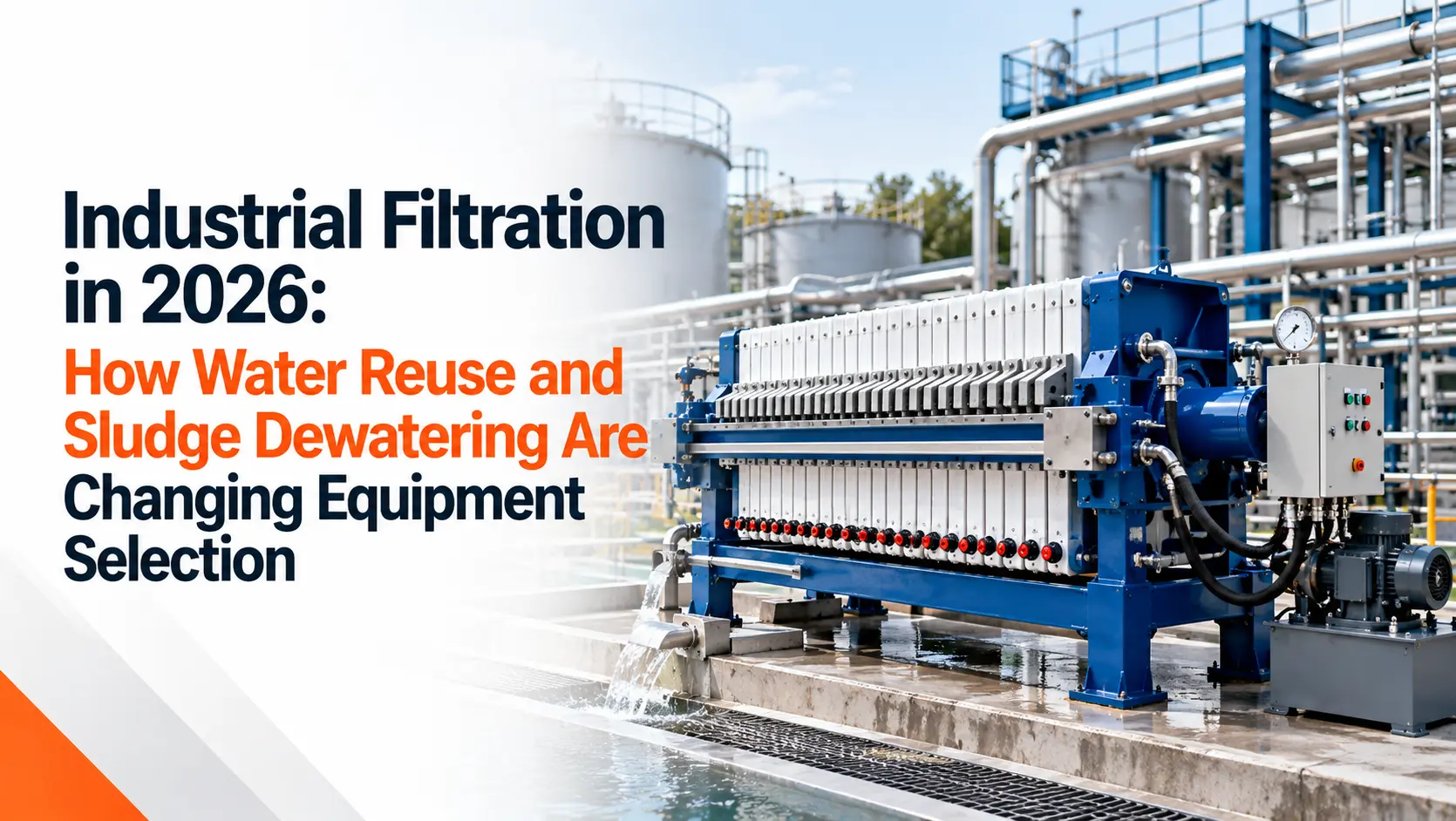
For industrial slurry treatment, filter presses are commonly used to retain solids inside filtration chambers while allowing liquid to pass through filter media.
A complete filtration arrangement may involve filter plates, cloth, pumps, controls, and auxiliary equipment.
N.M. Patel & Co., based in Bilimora, Gujarat, manufactures industrial filter presses and related filtration components.
Businesses evaluating equipment options can review its industrial filtration equipment range to explore available technologies.
Choosing the Right Industrial Filtration System Manufacturer
Selecting an industrial filtration system manufacturer should begin with technical requirements rather than purchase price alone.
The manufacturer must understand the liquid being processed, the type of suspended solids, and the expected operating conditions.
Essential Parameters to Evaluate
| Parameter | Why it matters |
| Slurry concentration | Influences solids loading and filtration cycles |
| Particle characteristics | Affects filter media selection and cake formation |
| Required capacity | Helps determine filtration area and system sizing |
| Cake moisture | Influences discharge, disposal and handling requirements |
| Chemical compatibility | Determines suitable materials of construction |
| Automation level | Affects operator workload and process consistency |
A system that performs well with one slurry may deliver different results with another.
For this reason, laboratory evaluation and application-specific engineering are important parts of equipment selection.
Membrane Filter Presses and Improved Sludge Dewatering
Reducing residual moisture in filter cake can simplify handling and potentially lower downstream treatment or transport requirements.
A membrane filter press uses flexible membranes to apply additional squeezing pressure after initial cake formation.
This additional stage can remove more liquid from certain filter cakes, depending on their characteristics.
Where Membrane Technology Can Help
Membrane filtration may be appropriate when manufacturers need:
- Lower residual cake moisture.
- More consistent dewatering performance.
- Improved handling of suitable industrial slurries.
- Greater control over filtration cycles.
N.M. Patel & Co. manufactures membrane filter presses for industrial solid-liquid separation applications.
Actual dewatering results should be verified through testing rather than assumed from equipment specifications alone.
Automation Is Changing Industrial Filtration Operations
Automated filtration systems can reduce repetitive operator tasks and improve consistency between filtration cycles.
Depending on system configuration, automation may support plate shifting, cake discharge, cloth washing, and process controls.
These capabilities are particularly relevant to plants operating multiple shifts or processing substantial slurry volumes.
However, automation does not eliminate the need for maintenance, inspections, or appropriate safety procedures.
Before investing, operators should compare anticipated labour requirements, maintenance complexity, production targets, and equipment costs.
Manufacturers planning upgrades can explore filter press automation and auxiliary systems to understand available supporting technologies.
Why Filtration Equipment Manufacturer India Searches Need Application-Specific Evaluation
Businesses searching for a filtration equipment manufacturer India often need equipment suited to particular industrial conditions.
An industrial plant processing chemical sludge may require different construction materials and filtration media from a facility processing mineral slurry.
The selection process should therefore consider:
- The nature of the process liquid.
- Expected daily and peak filtration volumes.
- Required solids recovery or cake dryness.
- Compatibility with existing infrastructure.
- Availability of servicing and replacement components.
A manufacturer with relevant engineering capabilities can help assess these requirements before equipment is specified.
The Role of Slurry Testing Before Purchasing Equipment
Slurry testing is one of the most practical ways to reduce uncertainty during filtration system selection.
Testing can help determine how quickly a slurry filters, whether a satisfactory cake forms, and how the liquid behaves during separation.
For example, two slurries with similar solids concentrations may require different filtration approaches because their particle characteristics differ.
Testing can also inform filter cloth selection and operational planning.
N.M. Patel & Co. offers slurry sample testing services to help assess filtration behaviour before selecting equipment.
Frequently Asked Questions
What is industrial filtration equipment?
Industrial filtration equipment separates suspended solids from liquids or gases, depending on the technology. Filter presses are commonly used for industrial solid-liquid separation and sludge dewatering.
Which industries use industrial filtration systems in India?
Applications include chemical processing, pharmaceuticals, mining, food processing, wastewater treatment, dyes, pigments, and other industries handling liquid-solid mixtures.
Can filter presses support industrial water reuse?
Yes. Filter presses can remove suspended solids from certain industrial process streams. However, additional treatment may be needed before recovered water is suitable for reuse.
What is the difference between a conventional and membrane filter press?
A conventional chamber filter press separates solids under feed pressure. A membrane filter press adds a squeezing stage that can further reduce cake moisture.
How should an industrial filtration system be selected?
Selection should consider slurry characteristics, required throughput, cake moisture, chemical compatibility, operating pressure, available space, and automation requirements. Slurry testing can help validate the choice.
Conclusion
Industrial filtration in 2026 is increasingly about matching equipment performance to operational requirements, water management objectives, and long-term reliability.
From membrane filtration and automation to slurry testing, effective equipment selection starts with understanding the material being processed.
N.M. Patel & Co. manufactures industrial filtration equipment in Gujarat, India, including filter presses, filtration components, and supporting systems.
Industrial buyers planning new installations or equipment upgrades can evaluate their slurry characteristics, capacity requirements, and filtration objectives before requesting a suitable system recommendation.