






Efficient solid-liquid separation is a critical part of many industrial processes. Whether you’re manufacturing pharmaceuticals, chemicals, food products, or treating industrial wastewater, choosing the right filtration equipment directly impacts product quality, production efficiency, and operating costs.
Among the most reliable filtration systems available today, the plate and frame filter press remains one of the industry’s most trusted solutions. Known for its simple construction, high filtration efficiency, and long service life, it continues to be widely used across numerous industries.
If you’re planning to invest in an industrial plate and frame filter press, this comprehensive guide explains everything you need to know—from its working principle and key components to applications, maintenance, and buying considerations.
What Is a Plate and Frame Filter Press?
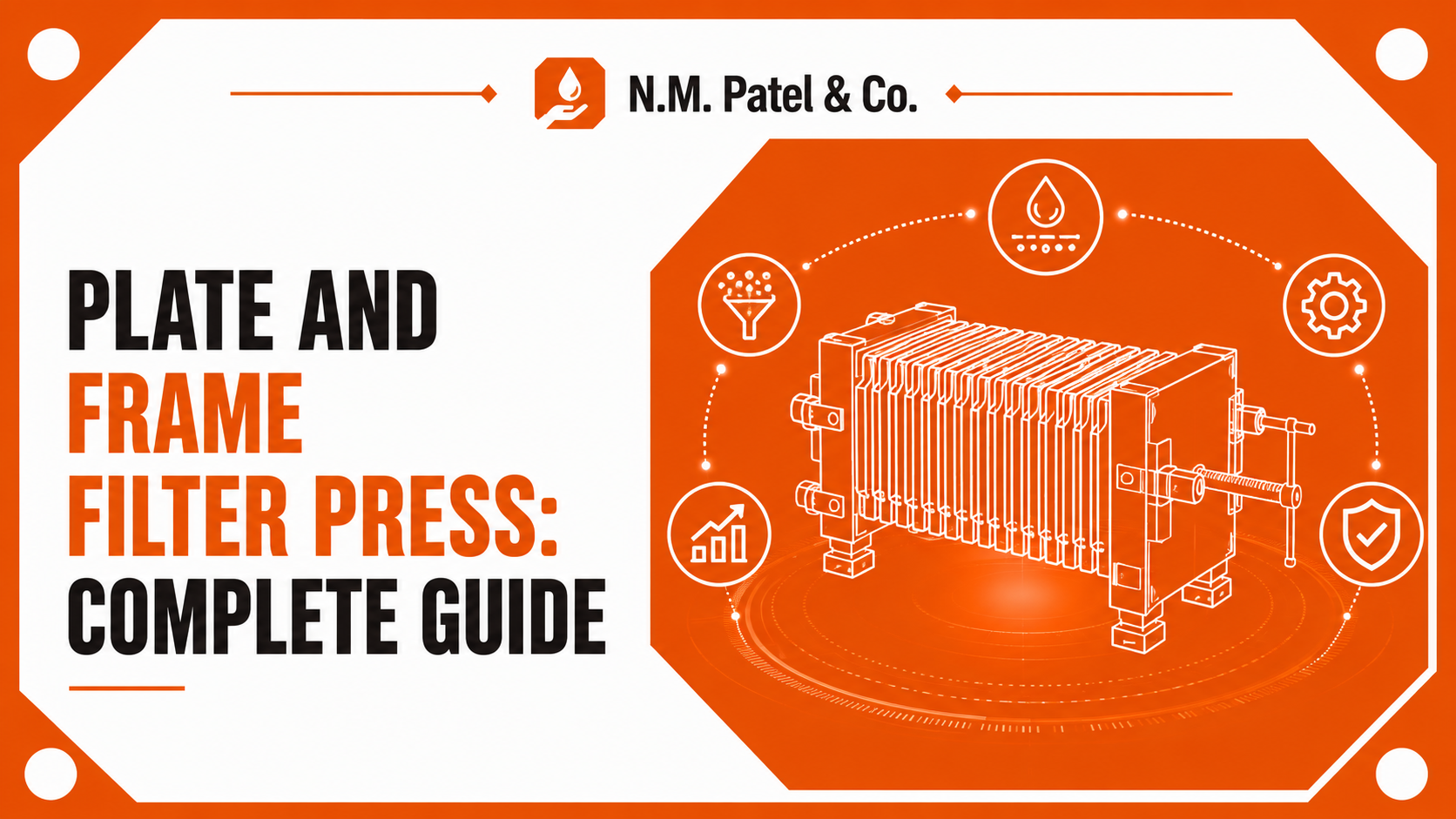
A plate and frame filter press is a pressure filtration system designed to separate suspended solids from liquids. It consists of alternating filter plates and frames covered with specially selected filter cloths.
During operation, slurry is pumped into the filter press under pressure. The liquid passes through the filter cloth while the solid particles remain trapped inside the chambers, gradually forming a filter cake. Once the cycle is complete, the plates are separated and the filter cake is discharged.
Because of its excellent filtration performance, this system is widely used wherever high-quality solid-liquid separation is required.
Main Components of a Plate and Frame Filter Press
Every filter press is made up of several important components that work together to achieve efficient filtration.
1. Filter Plates
Filter plates support the filter cloth and contain drainage channels that allow the filtered liquid to flow out efficiently.
2. Filter Frames
Frames create chambers where solids accumulate during the filtration process.
3. Filter Cloth
The filter cloth acts as the filtration medium.
Its primary function is to:
- Retain solid particles
- Allow liquid to pass
- Produce clear filtrate
- Support filter cake formation
Selecting the correct filter cloth material is essential for achieving optimal filtration efficiency.
4. Hydraulic Closing System
The hydraulic system compresses the plate pack tightly, ensuring leak-proof operation even under high operating pressures.
5. Feed Pump
The feed pump supplies slurry into the filtration chambers at the required pressure.
Proper pump selection significantly influences filtration performance.
6. Filtrate Outlet
Filtered liquid exits through dedicated channels and is collected for reuse or further processing.
7. Cake Discharge System
After filtration is complete, the plates are opened manually or hydraulically, allowing easy removal of the filter cake.
How Does a Plate and Frame Filter Press Work?
The filtration process follows several simple steps.
Step 1 – Plate Compression
The hydraulic system compresses all plates and frames together, creating sealed filtration chambers.
Step 2 – Slurry Feeding
The feed pump pushes slurry into the chambers under pressure.
Step 3 – Solid-Liquid Separation
As slurry enters:
- Liquid passes through the filter cloth.
- Solids remain trapped inside.
- Filter cake gradually develops.
Step 4 – Cake Formation
The accumulated solids create a dense filter cake that improves filtration efficiency as the cycle progresses.
Step 5 – Filtrate Collection
The clarified liquid flows through internal channels and exits the filter press.
Step 6 – Cake Discharge
After filtration is complete:
- Hydraulic pressure is released.
- Plates are opened.
- Filter cake is removed.
- The machine is prepared for the next cycle.
Advantages of Plate and Frame Filter Press
A plate and frame filter press offers several advantages for industrial operations.
High Filtration Efficiency
Pressure filtration removes suspended solids effectively, producing excellent separation results.
Superior Filtrate Quality
The system produces clean, clear filtrate suitable for various industrial applications.
Low Operating Cost
Compared to many alternative filtration technologies, filter presses consume relatively little energy and offer long service life.
Simple Construction
The straightforward design makes operation, maintenance, and inspection easier.
Flexible Operation
Different plate sizes, cloth materials, and configurations allow the system to handle a wide range of process requirements.
Easy Maintenance
Most components are accessible, reducing maintenance time and minimizing production downtime.
Limitations of Plate and Frame Filter Press
Like every industrial machine, plate and frame filter presses have certain limitations.
- Batch operation rather than continuous processing
- Manual cake discharge in many configurations
- Periodic filter cloth cleaning required
- Longer filtration cycles compared to fully automatic systems
Despite these limitations, they remain one of the most cost-effective filtration solutions for numerous industries.
Applications of Plate and Frame Filter Press
An industrial plate and frame filter press is widely used across multiple sectors.
Pharmaceutical Industry
- API filtration
- Solvent recovery
- Intermediate processing
- Chemical purification
Chemical Industry
- Pigments
- Specialty chemicals
- Catalysts
- Fine chemicals
Food & Beverage Industry
- Sugar processing
- Beverage clarification
- Edible oil filtration
- Starch production
Wastewater Treatment
- Sludge dewatering
- Effluent treatment
- Industrial wastewater recycling
Mining & Minerals
- Mineral concentrate recovery
- Tailings management
- Slurry dewatering
Ceramic Industry
- Clay filtration
- Ceramic slurry processing
Plate and Frame Filter Press vs Chamber Filter Press
| Feature | Plate & Frame | Chamber Filter Press |
| Construction | Plates & Frames | Recessed Plates |
| Cake Formation | Separate Frames | Built-in Chambers |
| Initial Cost | Lower | Higher |
| Automation | Limited | Available |
| Cake Removal | Manual | Easier |
| Maintenance | Moderate | Lower |
| Best For | Batch Filtration | High-Volume Operations |
Both systems offer excellent filtration performance, but the right choice depends on production requirements and process automation needs.
How to Choose the Right Plate and Frame Filter Press
Selecting the right machine requires careful evaluation.
Filtration Capacity
Estimate your daily slurry volume before selecting the machine size.
Slurry Characteristics
Consider:
- Solid concentration
- Particle size
- Temperature
- Chemical composition
- Viscosity
Filter Cloth Selection
The correct cloth material improves filtration efficiency and extends service life.
Plate Size
Larger plates increase filtration area and processing capacity.
Operating Pressure
Ensure the filter press is designed for your process pressure.
Maintenance Requirements
Choose equipment that allows quick cleaning and easy component replacement.
After-Sales Support
Reliable service support minimizes downtime and ensures long-term performance.
Maintenance Tips
Routine maintenance extends machine life.
Daily
- Clean filter cloths
- Remove filter cake
- Check hydraulic pressure
- Inspect leakage
Weekly
- Inspect plates
- Lubricate moving components
- Check pump performance
Monthly
- Inspect hydraulic cylinders
- Examine seals
- Replace damaged cloths
- Tighten fasteners
A preventive maintenance schedule significantly improves equipment reliability.
Common Problems and Solutions
| Problem | Cause | Solution |
| Leakage | Worn filter cloth | Replace cloth |
| Slow filtration | Blocked cloth | Clean filter cloth |
| Uneven cake | Poor slurry distribution | Inspect feed system |
| Hydraulic pressure loss | Hydraulic leak | Service hydraulic unit |
| Plate damage | Excessive pressure | Operate within recommended limits |
Why Choose N.M. Patel & Co.?
For decades, N.M. Patel & Co. has been delivering dependable filtration solutions to industries across India. As an experienced plate and frame filter press manufacturer India, we understand that every filtration process has unique operational requirements.
Our engineering team works closely with customers to provide filtration systems that deliver reliable performance, high efficiency, and long service life.
Our Product Range
- Plate and Frame Filter Press
- Chamber Filter Press
- Membrane Filter Press
- Manual Filter Press
- Hydraulic Filter Press
- Filter Press Spare Parts
- Filter Cloths
- Hydraulic Power Packs
- Customized Filtration Systems
Why Industries Choose Us
- Decades of manufacturing experience
- High-quality engineering standards
- Customized filtration solutions
- Durable construction
- Excellent after-sales support
- Spare parts availability
- Technical consultation
- Timely delivery across India
Whether you require a standard machine or a customized filtration solution, our experts help you select equipment that matches your production requirements while ensuring maximum operational efficiency.
People Also Search For
- plate and frame filter press
- industrial plate and frame filter press
- plate and frame filter press manufacturer India
- filter press working principle
- industrial filtration equipment
- chamber filter press
- membrane filter press
- sludge dewatering filter press
- filter press supplier India
- filtration equipment manufacturer
People Also Ask
What is a plate and frame filter press?
A plate and frame filter press is a pressure filtration system that separates solids from liquids using alternating filter plates and frames covered with filter cloth.
How does a plate and frame filter press work?
Slurry is pumped into filtration chambers under pressure. Liquid passes through the filter cloth while solids remain inside, forming a filter cake that is removed after the filtration cycle.
Which industries use plate and frame filter presses?
They are widely used in pharmaceuticals, chemicals, food processing, wastewater treatment, mining, ceramics, and various industrial manufacturing sectors.
What are the advantages of a plate and frame filter press?
High filtration efficiency, clear filtrate, simple construction, low operating costs, easy maintenance, and flexibility for different industrial applications.
How do I choose the right filter press?
Evaluate filtration capacity, slurry characteristics, operating pressure, plate size, filter cloth material, maintenance requirements, and after-sales support before making a purchase.
Frequently Asked Questions
What is the typical lifespan of a plate and frame filter press?
With proper maintenance and timely replacement of consumable parts such as filter cloths, a high-quality filter press can provide reliable service for many years.
Can the machine handle corrosive chemicals?
Yes. By selecting suitable construction materials and compatible filter cloths, plate and frame filter presses can be designed for corrosive chemical applications.
How often should filter cloths be replaced?
Replacement depends on operating conditions, slurry characteristics, and cleaning practices. Regular inspection helps determine the right replacement interval.
Is preventive maintenance necessary?
Absolutely. Routine maintenance helps maintain filtration efficiency, reduces downtime, and extends equipment life.
Does N.M. Patel & Co. provide customized filter press solutions?
Yes. N.M. Patel & Co. designs and manufactures customized filtration systems based on process requirements, capacity, industry standards, and customer specifications.
Conclusion
A plate and frame filter press remains one of the most dependable solutions for industrial solid-liquid separation. Its simple design, high filtration efficiency, versatility, and cost-effectiveness make it suitable for industries ranging from pharmaceuticals and chemicals to food processing and wastewater treatment.
Choosing the right filtration equipment—and partnering with an experienced manufacturer—can significantly improve process efficiency, reduce operating costs, and ensure consistent product quality. At N.M. Patel & Co., we combine decades of engineering expertise with high-quality manufacturing to deliver reliable filter press solutions tailored to your industrial needs. Whether you require a standard model or a customized filtration system, our team is committed to helping you achieve efficient, long-lasting, and dependable filtration performance.