






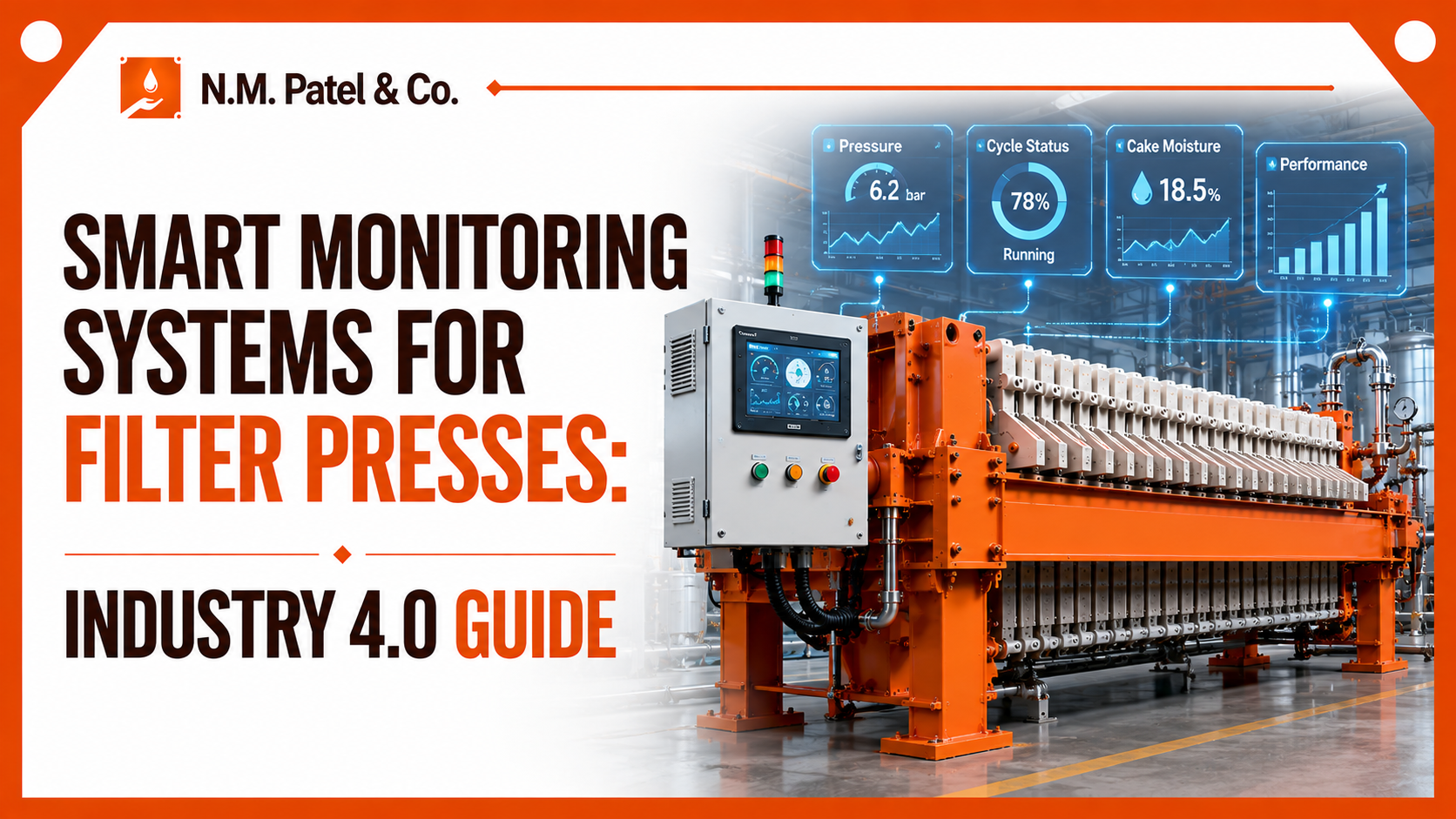
As industries embrace Industry 4.0 and Industrial Internet of Things (IIoT) technologies, filtration systems are becoming smarter, more connected, and highly efficient. Traditional filter presses have long been trusted for reliable solid-liquid separation, but modern manufacturing demands more than just mechanical performance. Today’s plants require real-time monitoring, predictive maintenance, automated reporting, and data-driven decision-making to maximize productivity and minimize downtime.
Smart monitoring systems transform conventional filter presses into intelligent filtration solutions by integrating sensors, programmable logic controllers (PLCs), cloud connectivity, and advanced analytics. These technologies continuously monitor machine performance, operating conditions, hydraulic pressure, slurry flow, filter cake formation, cycle time, and equipment health. Instead of waiting for failures to occur, operators receive instant alerts and actionable insights that help prevent unexpected breakdowns.
Industries such as mining, wastewater treatment, pharmaceuticals, food processing, chemicals, ceramics, and metal finishing increasingly rely on smart monitoring to improve operational efficiency, reduce maintenance costs, optimize filtration cycles, and extend equipment lifespan.
By combining automation with real-time data, smart monitoring systems enable manufacturers to improve production reliability, reduce manual intervention, enhance safety, and support sustainable industrial operations.
In this guide, we’ll explore how smart monitoring systems work, the technologies behind them, their key components, and why they are becoming an essential part of modern filter press operations.
Quick Answer
Smart monitoring systems for filter presses use IoT sensors, PLCs, cloud connectivity, and real-time analytics to continuously monitor machine performance, hydraulic pressure, slurry flow, cycle times, and equipment health. These systems improve filtration efficiency, enable predictive maintenance, reduce downtime, and support Industry 4.0 manufacturing by providing actionable operational insights.
Key Takeaways
- Smart monitoring enables real-time filter press performance tracking.
- IoT sensors help detect problems before failures occur.
- Predictive maintenance reduces unexpected downtime.
- Automated alerts improve operational safety and efficiency.
- Remote monitoring supports faster decision-making.
- Industry 4.0 technologies increase productivity while lowering maintenance costs.
What Are Smart Monitoring Systems for Filter Presses?
Quick Answer
Smart monitoring systems are advanced digital solutions that continuously collect, analyze, and display operational data from filter presses. Using sensors, controllers, and software, they help operators monitor machine performance in real time, identify abnormalities, and optimize filtration processes without relying solely on manual inspections.
Unlike conventional monitoring methods, smart systems automatically capture performance data and generate alerts whenever operating conditions move outside predefined limits.
What Smart Monitoring Systems Can Monitor
- Hydraulic pressure
- Slurry feed pressure
- Filtration cycle time
- Filter cake formation
- Filtrate flow rate
- Pump performance
- Plate movement
- Temperature
- Vibration
- Energy consumption
- Equipment status
- Fault conditions
Operators can view this information through local HMIs, SCADA systems, or cloud-based dashboards from virtually anywhere.
Why Smart Monitoring Is Transforming Industrial Filtration
Quick Answer
Smart monitoring transforms industrial filtration by replacing reactive maintenance with proactive, data-driven operations. Instead of responding after a machine failure, operators receive early warnings and performance insights that help optimize filtration, reduce downtime, and improve equipment reliability.
Key Reasons Smart Monitoring Matters
Improved Operational Visibility
Operators gain complete visibility into machine performance through live dashboards and automated reports.
Reduced Downtime
Early fault detection allows maintenance teams to address issues before they lead to production stoppages.
Higher Filtration Efficiency
Continuous monitoring helps optimize pressure, cycle times, and slurry flow for maximum filtration performance.
Lower Maintenance Costs
Predictive maintenance reduces emergency repairs and extends the lifespan of critical machine components.
Better Decision-Making
Historical performance data supports process optimization, maintenance planning, and production scheduling.
Improved Regulatory Compliance
Automated data logging simplifies reporting and quality documentation for regulated industries.
Key Components of a Smart Filter Press Monitoring System
Quick Answer
A smart filter press monitoring system combines hardware, software, sensors, and communication technologies to provide real-time visibility into filtration operations. Each component plays a vital role in collecting data, analyzing machine performance, and supporting predictive maintenance.
1. IoT Sensors
Industrial-grade sensors continuously collect operational data from the filter press.
Common Sensors
- Pressure sensors
- Temperature sensors
- Flow sensors
- Level sensors
- Vibration sensors
- Position sensors
These sensors provide accurate, real-time measurements that enable automated monitoring.
2. Programmable Logic Controller (PLC)
The PLC acts as the central control unit, processing sensor data and managing machine operations.
Functions
- Control filtration cycles
- Monitor alarms
- Manage hydraulic operations
- Coordinate automation
- Execute safety protocols
3. Human Machine Interface (HMI)
The HMI provides operators with an easy-to-use interface for monitoring machine status and adjusting operational settings.
HMI Features
- Live performance dashboards
- Alarm notifications
- Cycle status display
- Production reports
- Maintenance reminders
4. Cloud Connectivity
Cloud platforms securely store operational data and enable remote monitoring from computers, tablets, or smartphones.
Advantages
- Remote access
- Historical data storage
- Multi-site monitoring
- Automated reporting
- Performance analytics
5. Data Analytics Software
Analytics software converts raw sensor data into actionable insights that help improve productivity and reduce maintenance costs.
Capabilities
- Performance trends
- Predictive maintenance
- KPI dashboards
- Energy analysis
- Equipment health monitoring
6. Communication Network
Industrial communication protocols ensure reliable data transfer between sensors, PLCs, HMIs, and cloud platforms.
Common Protocols
- Modbus
- Ethernet/IP
- PROFINET
- OPC UA
- MQTT
Reliable communication enables accurate real-time monitoring.
Smart Monitoring Features Comparison
Quick Answer
Different smart monitoring features contribute to improved productivity, lower maintenance costs, and greater operational efficiency. Choosing the right combination depends on plant requirements, automation level, and production goals.
| Feature | Primary Function | Business Benefit |
| Real-Time Monitoring | Live machine performance tracking | Faster operational decisions |
| IoT Sensors | Continuous data collection | Improved process visibility |
| PLC Automation | Automatic process control | Reduced manual intervention |
| Predictive Maintenance | Early fault detection | Lower maintenance costs |
| Cloud Connectivity | Remote machine access | Multi-location monitoring |
| HMI Dashboard | Operator visualization | Faster issue identification |
| Automated Alerts | Instant fault notifications | Reduced downtime |
| Data Analytics | Performance analysis | Better process optimization |
| Energy Monitoring | Track power usage | Lower operating costs |
| Maintenance Reports | Service scheduling | Longer equipment lifespan |
Selecting the right monitoring features allows manufacturers to increase machine reliability while supporting digital transformation and Industry 4.0 initiatives.
Benefits of Smart Monitoring Systems
Quick Answer
Smart monitoring systems provide continuous visibility into filter press operations, helping manufacturers optimize filtration performance, reduce downtime, improve equipment reliability, and lower operating costs through real-time data and predictive analytics.
1. Real-Time Equipment Monitoring
Operators can instantly monitor key operating parameters, including:
- Hydraulic pressure
- Feed pressure
- Filtration cycle status
- Cake discharge
- Pump performance
- Machine alarms
This enables faster response to operational changes and minimizes production disruptions.
2. Predictive Maintenance
Rather than waiting for equipment failure, predictive monitoring identifies potential issues early by analyzing sensor data and performance trends.
Benefits
- Reduced emergency repairs
- Lower maintenance costs
- Improved equipment lifespan
- Better maintenance scheduling
3. Increased Filtration Efficiency
Smart systems continuously optimize machine performance by monitoring process variables in real time.
Improvements
- Consistent cake formation
- Optimized filtration cycles
- Better slurry handling
- Improved filtrate quality
- Reduced cycle times
4. Lower Operating Costs
Automation and intelligent monitoring reduce unnecessary machine operation and maintenance expenses.
Cost Savings
- Reduced downtime
- Lower energy consumption
- Fewer spare part replacements
- Less manual inspection
- Improved production efficiency
5. Better Equipment Reliability
Continuous monitoring helps identify abnormal operating conditions before they become serious failures.
Examples
- Hydraulic pressure fluctuations
- Pump performance issues
- Plate movement abnormalities
- Excessive vibration
- Sensor failures
6. Improved Safety
Quick Answer
Smart monitoring enhances workplace safety by automatically detecting hazardous operating conditions and notifying operators before equipment damage or accidents occur.
Safety improvements include:
- Automatic emergency alarms
- Pressure overload alerts
- Hydraulic fault detection
- Temperature monitoring
- Emergency shutdown integration
IoT Sensors Used in Filter Presses
Quick Answer
Industrial IoT sensors are the foundation of smart filter press systems. They continuously collect machine data and provide accurate information for automation, diagnostics, and predictive maintenance.
Pressure Sensors
Monitor:
- Hydraulic pressure
- Slurry feed pressure
- Membrane squeezing pressure
Benefits
- Prevent over-pressurization
- Improve cake quality
- Protect hydraulic components
Flow Sensors
Measure:
- Slurry flow rate
- Filtrate flow
- Water consumption
Benefits
- Optimize filtration cycles
- Detect blockages
- Improve process efficiency
Temperature Sensors
Monitor:
- Hydraulic oil temperature
- Motor temperature
- Bearing temperature
Benefits
- Prevent overheating
- Extend equipment life
- Improve maintenance planning
Vibration Sensors
Detect abnormal vibration patterns in:
- Feed pumps
- Motors
- Bearings
- Hydraulic systems
Benefits
- Early fault detection
- Predictive maintenance
- Reduced equipment failure
Position Sensors
Track:
- Plate movement
- Hydraulic cylinder position
- Cake discharge mechanisms
Benefits
- Improve automation accuracy
- Prevent mechanical failures
- Enhance production consistency
Energy Monitoring Sensors
Measure:
- Power consumption
- Motor load
- Energy efficiency
Benefits
- Reduce electricity costs
- Identify inefficient equipment
- Support sustainability goals
Predictive Maintenance & Remote Monitoring
Quick Answer
Predictive maintenance uses machine data and analytics to forecast equipment failures before they occur. Remote monitoring enables operators and maintenance teams to access live filter press data from anywhere, improving response times and reducing operational risks.
Predictive Maintenance Advantages
- Early fault detection
- Reduced unplanned downtime
- Lower maintenance costs
- Improved spare parts planning
- Longer equipment lifespan
Remote Monitoring Benefits
- 24/7 equipment visibility
- Mobile and desktop access
- Instant notifications
- Faster troubleshooting
- Multi-plant monitoring
Modern cloud-based dashboards also allow plant managers to compare machine performance across multiple production facilities, helping standardize operations and improve decision-making.
Industry Applications
Quick Answer
Smart monitoring systems are widely used across industries where reliable filtration, continuous production, and process optimization are critical. These systems help manufacturers improve productivity while reducing maintenance and operational costs.
| Industry | Smart Monitoring Benefits |
| Mining | Monitor slurry pressure, optimize cake moisture, reduce downtime |
| Chemical Processing | Improve process control and safety through real-time monitoring |
| Wastewater Treatment | Track filtration efficiency and automate reporting |
| Food & Beverage | Maintain hygienic operations and ensure consistent filtration quality |
| Pharmaceuticals | Support process validation, compliance, and batch consistency |
| Ceramics | Optimize slurry filtration and improve production efficiency |
| Metal Finishing | Monitor filtration performance and extend equipment life |
| Pulp & Paper | Reduce maintenance costs and improve filtration reliability |
Future Trends in Smart Filter Press Technology
Quick Answer
The next generation of filter press systems will combine AI, machine learning, cloud computing, and Industrial IoT to create highly autonomous filtration solutions capable of self-monitoring, self-diagnosing, and continuously optimizing performance.
Emerging Technologies
- AI-powered process optimization
- Machine learning for failure prediction
- Digital twin technology
- Cloud-based analytics
- Edge computing
- Remote diagnostics
- Automated maintenance scheduling
- ERP and MES integration
These innovations will further improve efficiency, reduce downtime, and support fully connected smart factories.
Why Choose N.M. Patel & Co.?
Quick Answer
N.M. Patel & Co. delivers advanced filtration solutions that combine robust engineering with modern automation technologies. Our filter press systems are designed to support Industry 4.0 initiatives through reliable performance, scalable automation, and intelligent monitoring capabilities.
Why Industries Trust Us
- High-performance filter press machines
- Smart automation solutions
- Industry-specific engineering
- IoT-ready system integration
- Reliable filter plates and spare parts
- Preventive maintenance support
- Custom-designed filtration systems
- Installation & commissioning
- Operator training
- Responsive after-sales service
Whether you’re upgrading an existing filtration line or implementing a fully automated smart filtration system, our team provides tailored solutions to improve efficiency and maximize return on investment.
Frequently Asked Questions
What is a smart monitoring system for a filter press?
A smart monitoring system combines IoT sensors, PLCs, HMIs, cloud connectivity, and analytics software to monitor filter press performance in real time, helping operators improve efficiency and prevent equipment failures.
How does predictive maintenance improve filter press performance?
Predictive maintenance analyzes sensor data to identify early signs of wear or malfunction, allowing maintenance teams to fix issues before they cause unexpected downtime.
What sensors are commonly used in smart filter presses?
Common sensors include pressure sensors, flow sensors, temperature sensors, vibration sensors, position sensors, and energy monitoring sensors.
Can smart monitoring systems be integrated with existing filter presses?
Yes. Many existing filter press systems can be retrofitted with sensors, PLC upgrades, HMIs, and cloud-based monitoring platforms, depending on the machine’s design and control architecture.
Why choose N.M. Patel & Co.?
N.M. Patel & Co. provides high-quality filter press machines, automation-ready solutions, expert engineering support, and reliable after-sales service to help industries achieve efficient, intelligent, and future-ready filtration operations.
Build a Smarter Filtration System Today
Digital transformation is reshaping industrial filtration. By adopting smart monitoring systems, manufacturers can reduce downtime, improve filtration efficiency, lower maintenance costs, and make faster, data-driven decisions.
Contact N.M. Patel & Co. today to explore intelligent filter press solutions, automation upgrades, IoT-ready monitoring systems, and expert support designed for Industry 4.0 manufacturing.
Conclusion
Smart monitoring systems are revolutionizing filter press operations by combining IoT sensors, real-time analytics, cloud connectivity, and predictive maintenance into a single intelligent solution. These technologies provide greater operational visibility, improve filtration efficiency, reduce unexpected downtime, and support proactive maintenance strategies. As industries continue adopting Industry 4.0 practices, investing in smart filtration technology helps manufacturers increase productivity, reduce operating costs, and maintain a competitive advantage. With N.M. Patel & Co., businesses gain access to advanced filter press solutions engineered for reliable performance, intelligent automation, and long-term operational excellence.