






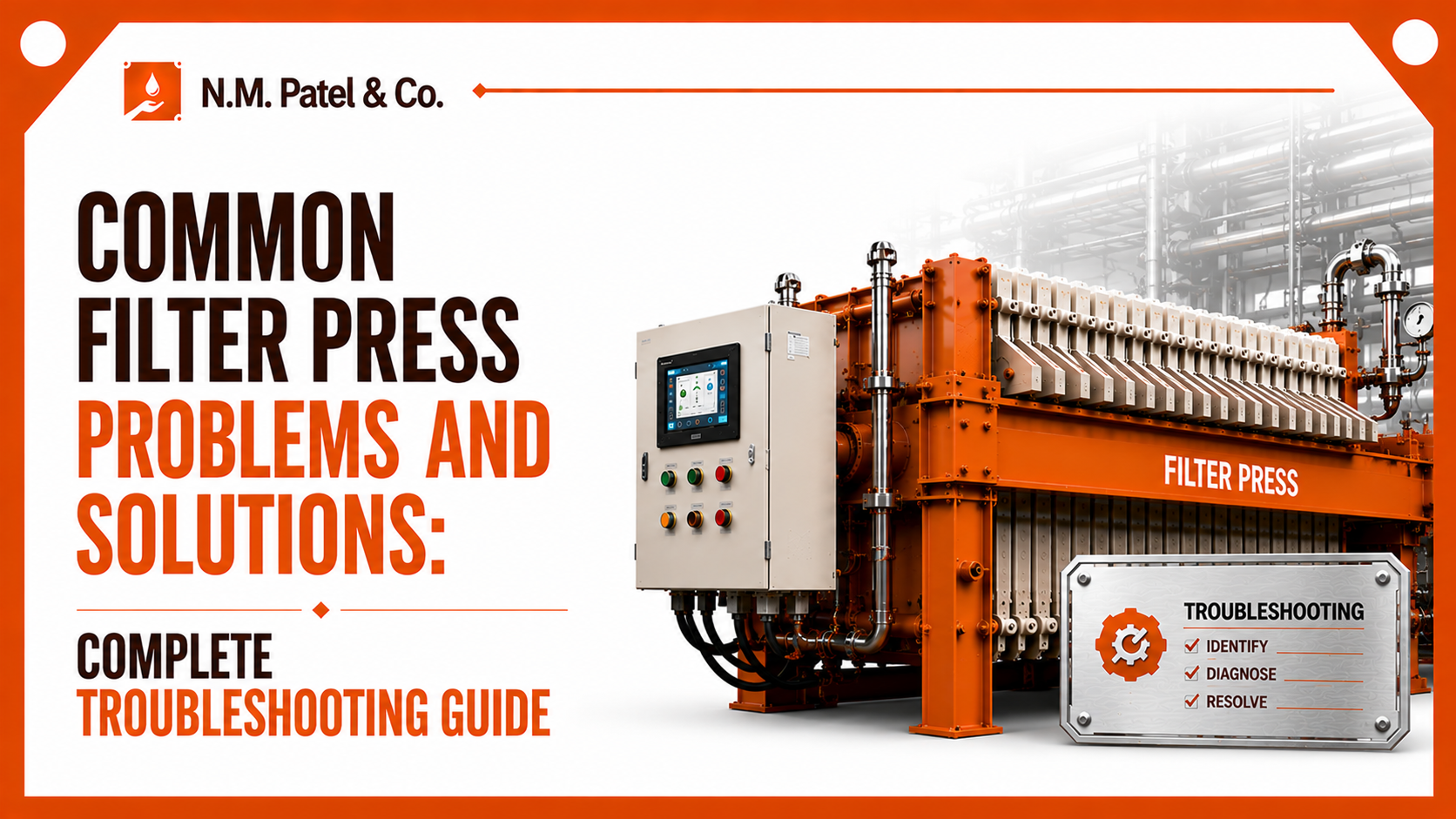
Filter press machines are among the most reliable and efficient solid-liquid separation systems used in industries such as wastewater treatment, mining, chemicals, pharmaceuticals, food processing, ceramics, and metal finishing. Designed for continuous and demanding industrial operations, these machines play a critical role in achieving high-quality filtration while minimizing waste and operating costs.
However, like any industrial equipment, filter presses can experience operational problems over time. Issues such as uneven cake formation, slurry leakage, low filtration efficiency, excessive cycle times, hydraulic failures, damaged filter plates, or clogged filter cloths can reduce productivity, increase maintenance costs, and cause unexpected downtime if left unresolved.
Many of these problems are preventable through proper maintenance, timely inspections, and correct operating practices. Identifying early warning signs and understanding the root causes can significantly extend equipment life while improving filtration performance and operational efficiency.
Whether you operate a manual, semi-automatic, or fully automatic filter press, knowing how to troubleshoot common issues is essential for maintaining consistent production and minimizing costly interruptions.
In this guide, we’ll explore the most common filter press problems, their causes, practical solutions, and preventive maintenance strategies to help you maximize equipment performance.
Quick Answer
Common filter press problems include slurry leakage, uneven filter cake formation, clogged filter cloths, hydraulic pressure loss, damaged filter plates, slow filtration, and incomplete cake discharge. Most issues can be resolved through regular maintenance, proper operating procedures, timely replacement of worn components, and routine inspections, ensuring maximum filtration efficiency and longer equipment life.
Key Takeaways
- Most filter press issues are preventable with regular maintenance.
- Early diagnosis reduces downtime and repair costs.
- Clean filter cloths improve filtration efficiency.
- Proper hydraulic pressure ensures leak-free operation.
- Damaged filter plates should be replaced immediately.
- Preventive maintenance extends machine lifespan.
What Are the Most Common Filter Press Problems?
Quick Answer
The most common filter press problems include slurry leakage, clogged filter cloths, uneven filter cake formation, hydraulic pressure loss, damaged filter plates, poor filtration performance, slow cycle times, and incomplete cake discharge. These issues often result from wear and tear, improper maintenance, incorrect operating conditions, or poor-quality feed slurry.
Most Frequently Encountered Problems
- Slurry leakage between filter plates
- Uneven filter cake formation
- Clogged or blinded filter cloths
- Low hydraulic pressure
- Damaged or cracked filter plates
- Slow filtration cycles
- Poor filtrate quality
- Incomplete cake discharge
- Excessive moisture in filter cake
- Automatic plate shifting failures
Each of these problems affects machine performance differently and requires a specific troubleshooting approach.
Why Do Filter Presses Develop Performance Issues?
Quick Answer
Filter press performance issues usually occur because of inadequate maintenance, incorrect operating parameters, worn components, poor slurry characteristics, or improper machine setup. Understanding the root cause helps operators solve problems faster and avoid recurring failures.
Common Causes
1. Lack of Preventive Maintenance
Neglecting scheduled inspections allows minor issues to develop into major equipment failures.
2. Dirty Filter Cloths
Blocked filter cloth pores reduce filtration speed and increase operating pressure.
3. Incorrect Feed Pressure
Too much or too little slurry pressure affects cake formation and filtration efficiency.
4. Worn Hydraulic Components
Hydraulic cylinder wear, oil leaks, or seal damage can reduce plate closing force.
5. Damaged Filter Plates
Cracked or warped plates cause slurry leakage and uneven pressure distribution.
6. Poor Slurry Characteristics
High solids concentration, oversized particles, or inconsistent slurry composition can negatively affect filtration performance.
7. Improper Machine Operation
Incorrect operating procedures may result in equipment damage, inefficient filtration, or increased downtime.
Regular inspections and operator training are essential for preventing these issues.
Signs Your Filter Press Needs Immediate Attention
Quick Answer
Early warning signs such as slurry leaks, abnormal noises, increased filtration time, hydraulic pressure fluctuations, uneven filter cakes, or poor filtrate clarity indicate that a filter press requires immediate inspection. Addressing these symptoms promptly helps prevent expensive repairs and unexpected production stoppages.
Warning Signs
- Slurry leaking around filter plates
- Longer filtration cycles
- Reduced filtrate flow
- Cloudy filtrate
- Hydraulic pressure drops
- Uneven filter cake thickness
- Excessive vibration
- Unusual mechanical noises
- Filter plates not aligning correctly
- Difficulty releasing filter cake
Ignoring these symptoms can lead to equipment damage, lower production efficiency, and higher maintenance costs.
Common Filter Press Problems at a Glance
Quick Answer
Understanding the relationship between symptoms, likely causes, and corrective actions helps maintenance teams diagnose problems quickly and restore filter press performance with minimal downtime.
| Problem | Likely Cause | Recommended Solution |
| Slurry leakage | Damaged plates or improper plate alignment | Inspect, realign, or replace damaged plates |
| Slow filtration | Clogged filter cloths | Clean or replace filter cloths |
| Uneven filter cake | Uneven feed pressure or damaged plates | Check feed system and inspect plates |
| Cloudy filtrate | Torn filter cloth or poor sealing | Replace cloth and inspect sealing surfaces |
| Hydraulic pressure loss | Oil leaks or worn hydraulic seals | Repair hydraulic system and replace seals |
| Wet filter cake | Low filtration pressure or short cycle time | Optimize operating pressure and filtration cycle |
| Filter cake sticking | Incorrect cloth selection or high moisture | Use suitable cloth and adjust process parameters |
| Plate shifting problems | Mechanical wear or automation fault | Inspect shifting mechanism and lubricate components |
| Excessive cycle time | Poor slurry consistency or clogged cloth | Optimize slurry preparation and clean filter media |
| Frequent component wear | Lack of maintenance | Follow preventive maintenance schedule |
This quick-reference table allows operators and maintenance teams to identify problems rapidly and take the appropriate corrective action before productivity is affected.
Detailed Solutions for Common Filter Press Problems
Quick Answer
Most filter press issues can be resolved by identifying the root cause rather than treating the symptom. Regular inspection, timely replacement of worn components, proper operating procedures, and preventive maintenance significantly reduce downtime while improving filtration efficiency and equipment lifespan.
1. Slurry Leakage Between Filter Plates
Problem
Slurry leaks from the sides of the filter press during operation.
Possible Causes
- Damaged filter plates
- Improper plate alignment
- Worn filter cloth
- Insufficient hydraulic pressure
- Debris on sealing surfaces
Solution
- Inspect all filter plates for cracks or warping.
- Clean sealing surfaces before every cycle.
- Replace damaged filter cloths immediately.
- Verify hydraulic pressure settings.
- Ensure plates are properly aligned before closing.
Maintenance Tip: Never operate a filter press with damaged sealing surfaces.
2. Slow Filtration Speed
Problem
Filtration cycles take much longer than normal.
Possible Causes
- Clogged filter cloths
- High slurry viscosity
- Incorrect feed pressure
- Excessively fine particles
- Blocked filtrate outlets
Solution
- Clean or replace filter cloths.
- Adjust feed pressure according to slurry characteristics.
- Inspect filtrate channels for blockages.
- Optimize slurry preparation.
- Perform routine cloth washing.
3. Uneven Filter Cake Formation
Problem
Filter cakes vary in thickness across different chambers.
Possible Causes
- Uneven slurry distribution
- Plate damage
- Feed pump issues
- Incorrect operating pressure
Solution
- Inspect feed pump performance.
- Verify slurry distribution.
- Replace damaged filter plates.
- Maintain recommended operating pressure.
Proper cake formation improves filtration efficiency and shortens cycle times.
4. Cloudy or Dirty Filtrate
Problem
Filtrate contains suspended solids or appears cloudy.
Possible Causes
- Torn filter cloth
- Improper cloth installation
- Plate sealing failure
- Excessive feed pressure
Solution
- Replace damaged filter cloth.
- Reinstall cloth correctly.
- Inspect sealing surfaces.
- Adjust operating pressure.
Clear filtrate is a key indicator of a properly functioning filter press.
5. Hydraulic Pressure Loss
Problem
The filter press cannot maintain adequate closing pressure.
Possible Causes
- Hydraulic oil leakage
- Worn seals
- Damaged hydraulic cylinder
- Faulty pressure valves
Solution
- Inspect hydraulic oil levels.
- Replace worn seals.
- Repair hydraulic leaks.
- Test pressure control valves.
- Schedule hydraulic system maintenance.
Hydraulic pressure directly affects sealing performance and filtration efficiency.
6. Filter Cake Sticking to Plates
Problem
Filter cake does not release properly after filtration.
Possible Causes
- Incorrect filter cloth
- High cake moisture
- Sticky slurry composition
- Damaged plate surface
Solution
- Select the correct filter cloth.
- Optimize filtration cycle time.
- Improve slurry conditioning.
- Clean plate surfaces regularly.
Automatic cake discharge systems can significantly reduce manual cleaning.
7. Excess Moisture in Filter Cake
Problem
The discharged filter cake contains excessive water.
Possible Causes
- Low filtration pressure
- Short filtration cycle
- Worn filter cloth
- High slurry moisture
Solution
- Increase filtration pressure within recommended limits.
- Extend filtration time.
- Replace worn cloths.
- Optimize slurry concentration.
Dryer filter cakes reduce transportation and disposal costs.
8. Filter Plate Damage
Problem
Cracked, bent, or broken filter plates.
Possible Causes
- Excessive operating pressure
- Improper handling
- Mechanical impact
- Aging components
Solution
- Replace damaged plates immediately.
- Avoid over-pressurization.
- Handle plates carefully during maintenance.
- Conduct routine visual inspections.
Operating with damaged plates increases leakage and reduces productivity.
9. Automatic Plate Shifting Failure
Problem
Automatic plate shifting mechanism does not operate correctly.
Possible Causes
- Mechanical wear
- Lack of lubrication
- Sensor malfunction
- Hydraulic issues
Solution
- Lubricate moving parts.
- Inspect guide rails.
- Replace faulty sensors.
- Verify hydraulic operation.
Preventive servicing minimizes automation failures.
10. Excessive Machine Downtime
Problem
Frequent unexpected shutdowns.
Possible Causes
- Deferred maintenance
- Component wear
- Operator errors
- Lack of spare parts
Solution
- Implement preventive maintenance schedules.
- Train machine operators.
- Maintain critical spare parts inventory.
- Perform periodic inspections.
Preventive maintenance costs significantly less than emergency repairs.
Preventive Maintenance Best Practices
Quick Answer
Routine preventive maintenance is the most effective way to maximize filter press efficiency, reduce unexpected breakdowns, and extend equipment lifespan. A structured maintenance schedule helps identify wear before it causes costly failures.
Daily Maintenance
- Inspect filter plates
- Check slurry leakage
- Clean filter cloths
- Verify hydraulic pressure
- Monitor unusual noises
- Remove accumulated residue
Weekly Maintenance
- Inspect hydraulic hoses
- Lubricate moving components
- Check feed pump performance
- Verify plate alignment
- Clean filtrate channels
Monthly Maintenance
- Replace worn seals if necessary
- Inspect hydraulic oil condition
- Tighten fasteners
- Check automation systems
- Inspect electrical connections
- Review machine performance data
Annual Maintenance
- Complete hydraulic system inspection
- Replace worn filter cloths
- Calibrate automation controls
- Inspect structural components
- Replace damaged filter plates
- Perform comprehensive performance testing
Why Choose N.M. Patel & Co.?
Quick Answer
N.M. Patel & Co. is a trusted manufacturer of industrial filtration equipment, delivering reliable, high-performance filter press solutions for a wide range of industries. Our machines are engineered for durability, efficiency, and long-term operational reliability.
Why Industries Trust Us
- High-quality filter press manufacturing
- Customized filtration solutions
- Automatic and semi-automatic systems
- Durable filter plates and accessories
- Advanced engineering expertise
- Comprehensive after-sales support
- Spare parts availability
- Installation and commissioning
- Operator training
- Preventive maintenance assistance
Whether you’re upgrading an existing filtration system or investing in a new filter press, our team helps you achieve reliable performance and lower operating costs.
Frequently Asked Questions
What is the most common filter press problem?
Slurry leakage caused by damaged filter plates, worn filter cloths, or inadequate hydraulic pressure is one of the most common filter press issues.
How often should filter cloths be cleaned?
Filter cloths should be cleaned after production cycles or whenever filtration efficiency begins to decline. Regular cleaning prevents clogging and extends cloth life.
Why is my filter cake too wet?
Wet filter cakes are typically caused by low filtration pressure, insufficient cycle time, worn filter cloths, or improper slurry characteristics.
How can I improve filter press efficiency?
Regular maintenance, proper hydraulic pressure, clean filter cloths, quality spare parts, and optimized slurry preparation all contribute to better filtration performance.
Why choose N.M. Patel & Co.?
N.M. Patel & Co. provides high-quality filter press machines, customized engineering solutions, reliable after-sales support, and decades of experience serving industries across India and international markets.
Need Reliable Filter Press Solutions?
A well-maintained filter press delivers better filtration efficiency, lower operating costs, and longer equipment life. Whether you need a new filter press, replacement components, or expert technical support, choosing the right partner makes all the difference.
Contact N.M. Patel & Co. today to explore high-performance filter press machines, spare parts, automation solutions, and professional maintenance services tailored to your industry.
Conclusion
Common filter press problems such as slurry leakage, clogged filter cloths, hydraulic pressure loss, damaged plates, and uneven filter cake formation can significantly impact productivity if not addressed promptly. Understanding the root causes and implementing the right corrective actions helps minimize downtime, improve filtration efficiency, and extend equipment lifespan. By following a structured preventive maintenance program and using high-quality components, industries can ensure consistent performance and lower operational costs. N.M. Patel & Co. provides reliable filter press solutions, expert technical support, and durable filtration equipment designed to meet the demanding needs of modern industrial applications.