






Introduction
Filter plates are the heart of every filter press system. They create the filtration chambers where solid-liquid separation takes place and directly influence filtration efficiency, cycle time, cake dryness, operating pressure, and overall equipment performance. Selecting the right filter plate is just as important as choosing the right filter press machine because different industries and filtration processes require different plate designs and materials.
From wastewater treatment and mining to pharmaceuticals, chemicals, food processing, ceramics, and metal finishing, each application has unique filtration requirements. Factors such as slurry characteristics, operating pressure, chemical compatibility, cake washing requirements, and production capacity determine which type of filter plate delivers the best performance.
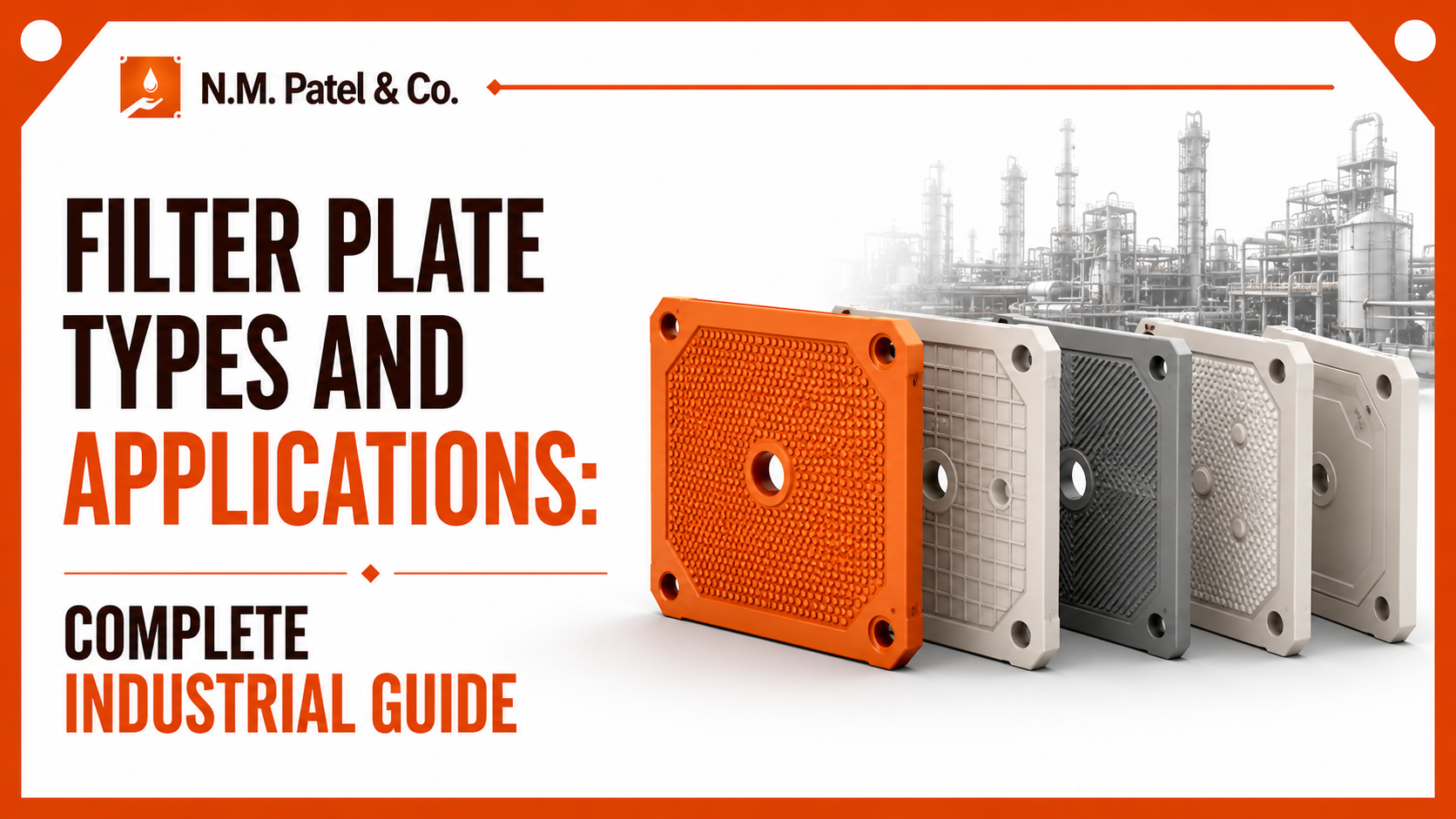
Modern filter presses use a variety of plate designs, including recessed chamber plates, membrane plates, plate and frame plates, diaphragm plates, and special-purpose plates. Each type offers distinct advantages depending on the filtration process.
Choosing the wrong filter plate can lead to poor cake formation, excessive moisture content, increased maintenance costs, reduced production efficiency, and unnecessary downtime. On the other hand, selecting the right plate improves filtration performance, extends equipment life, and reduces operational expenses.
In this guide, we’ll explore the different filter plate types, their industrial applications, advantages, and key factors to consider when selecting the ideal filter plates for your filtration system.
Quick Answer
Filter plates are essential components of a filter press that form filtration chambers and support the filter cloth during solid-liquid separation. Different filter plate types—including recessed chamber, membrane, plate and frame, diaphragm, and specialty plates—are designed for specific industrial applications based on filtration efficiency, slurry properties, pressure requirements, and cake dryness.
Key Takeaways
- Filter plates determine filtration efficiency and cake quality.
- Different industries require different filter plate designs.
- Membrane plates improve cake dryness and shorten cycle times.
- Material selection affects durability and chemical resistance.
- Proper plate selection reduces maintenance and operating costs.
- High-quality filter plates increase equipment lifespan.
What Are Filter Plates?
Quick Answer
Filter plates are specially designed components installed inside a filter press to create filtration chambers. They hold the filter cloth in place while allowing liquid to pass through and retaining solid particles. Their design directly influences filtration capacity, cake formation, operating pressure, and filtration efficiency.
During filtration, slurry is pumped into the chambers formed by adjacent filter plates. The liquid passes through the filter cloth and drainage channels, while solids remain trapped to form a filter cake.
Primary Functions of Filter Plates
- Create filtration chambers
- Support filter cloths
- Distribute slurry evenly
- Drain filtered liquid
- Form filter cakes
- Withstand high operating pressures
- Enable cake discharge
Because filter plates are exposed to continuous mechanical stress and chemical contact, they must be manufactured from durable, corrosion-resistant materials that match the application.
Why Filter Plate Selection Matters
Quick Answer
Selecting the correct filter plate improves filtration efficiency, cake dryness, production capacity, and equipment reliability. Using the wrong plate design can lead to slower filtration, higher maintenance costs, slurry leakage, and reduced operational performance.
Benefits of Choosing the Right Filter Plate
Improved Filtration Efficiency
Proper plate selection ensures consistent slurry distribution and faster liquid separation.
Better Filter Cake Quality
Correct chamber design produces uniform cake thickness and lower moisture content.
Lower Operating Costs
Efficient filtration reduces cycle time, energy consumption, and maintenance expenses.
Longer Equipment Life
High-quality plates resist wear, corrosion, and mechanical stress, extending the lifespan of the filter press.
Reduced Downtime
Durable filter plates require fewer replacements and minimize production interruptions.
Better Process Performance
Selecting the appropriate plate design helps optimize pressure, throughput, and filtration consistency for specific industrial applications.
Different Types of Filter Plates
Quick Answer
Filter plates are available in several designs, each developed for specific filtration requirements. The most commonly used types include recessed chamber plates, membrane plates, plate and frame plates, diaphragm plates, and specialty filter plates.
1. Recessed Chamber Filter Plates
The most widely used filter plate type in industrial filtration.
Features
- Fixed chamber design
- High durability
- Cost-effective
- Simple operation
- Suitable for medium to high-pressure filtration
Best Applications
- Wastewater treatment
- Chemical processing
- Mining
- Ceramics
- Industrial sludge dewatering
2. Membrane Filter Plates
Membrane plates use flexible diaphragms to squeeze the filter cake after filtration.
Features
- Lower cake moisture
- Faster cycle times
- Improved cake washing
- Higher filtration efficiency
Best Applications
- Pharmaceuticals
- Food processing
- Specialty chemicals
- High-value minerals
- Fine chemical production
3. Plate and Frame Filter Plates
A traditional design where separate plates and frames create filtration chambers.
Features
- Excellent cake washing
- Flexible chamber thickness
- Easy maintenance
- Suitable for precision filtration
Best Applications
- Pharmaceutical manufacturing
- Laboratory filtration
- Food processing
- Beverage production
4. Diaphragm Filter Plates
These plates apply additional pressure after filtration to improve dewatering performance.
Features
- Higher cake dryness
- Reduced filtration time
- Better washing efficiency
- Improved productivity
Best Applications
- Mining
- Chemical plants
- Municipal wastewater treatment
- Industrial sludge management
5. Specialty Filter Plates
Designed for unique industrial filtration processes.
Examples
- CGR (Caulked Gasketed Recessed) Plates
- Non-Gasketed Plates
- High-Pressure Plates
- Mixed Pack Configurations
- Custom Engineered Plates
Best Applications
- Hazardous chemicals
- Fine filtration
- Corrosive environments
- Specialized manufacturing processes
Filter Plate Types Comparison
Quick Answer
Each filter plate type offers unique advantages depending on filtration pressure, cake dryness requirements, maintenance preferences, and industry-specific applications.
| Filter Plate Type | Major Advantage | Typical Applications |
| Recessed Chamber Plates | Cost-effective and versatile | Wastewater, mining, chemicals |
| Membrane Plates | Lower cake moisture | Pharmaceuticals, food, chemicals |
| Plate & Frame Plates | Excellent cake washing | Laboratories, food, beverages |
| Diaphragm Plates | Higher dewatering efficiency | Mining, sludge treatment |
| Specialty Plates | Customized performance | High-pressure and corrosive applications |
Selecting the right plate depends on process requirements, slurry characteristics, operating pressure, desired cake dryness, maintenance strategy, and production capacity.
Applications of Different Filter Plate Types
Quick Answer
Different filter plate types are engineered for specific filtration processes. Selecting the right plate depends on factors such as slurry composition, operating pressure, cake dryness requirements, chemical compatibility, and production capacity. Matching the plate type to the application ensures better filtration efficiency, lower operating costs, and longer equipment life.
1. Recessed Chamber Filter Plates
Recessed chamber plates are the most commonly used filter plates because they offer reliable performance across a wide range of industrial filtration applications.
Typical Applications
- Industrial wastewater treatment
- Chemical processing plants
- Mining operations
- Metal finishing
- Textile industry
- Paper mills
- Ceramic manufacturing
Advantages
- Economical solution
- High mechanical strength
- Easy maintenance
- Long service life
- Suitable for continuous operation
2. Membrane Filter Plates
Membrane filter plates use compressed air or water to squeeze the filter cake after filtration, producing a drier cake and shorter cycle times.
Typical Applications
- Pharmaceutical manufacturing
- Food & beverage processing
- Specialty chemicals
- Pigments and dyes
- High-value mineral processing
- Fine chemical production
Advantages
- Lower cake moisture
- Reduced drying costs
- Higher productivity
- Improved cake washing
- Faster filtration cycles
3. Plate and Frame Filter Plates
Plate and frame systems provide excellent filtration precision and are commonly used where product purity is critical.
Typical Applications
- Pharmaceutical filtration
- Beverage production
- Sugar industry
- Edible oil processing
- Laboratory filtration
- Biotechnology
Advantages
- Superior filtration quality
- Easy cake washing
- Flexible chamber thickness
- Simple maintenance
4. Diaphragm Filter Plates
Diaphragm plates apply additional pressure to remove more liquid from the filter cake.
Typical Applications
- Mining concentrates
- Municipal sludge treatment
- Industrial sludge dewatering
- Chemical processing
- Power plants
Advantages
- Maximum cake dryness
- Lower disposal costs
- Faster production cycles
- Better filtration efficiency
5. Specialty Filter Plates
Special-purpose filter plates are designed for challenging industrial environments.
Typical Applications
- Highly corrosive chemicals
- Hazardous waste treatment
- High-pressure filtration
- Fine particle separation
- Custom industrial processes
Advantages
- Custom-engineered solutions
- Improved safety
- Enhanced chemical resistance
- Specialized filtration performance
Filter Plate Materials
Quick Answer
The material used to manufacture a filter plate directly affects its durability, pressure resistance, chemical compatibility, and operating lifespan. Selecting the correct material ensures reliable performance while minimizing maintenance and replacement costs.
Polypropylene (PP)
The most widely used material for modern filter press plates.
Benefits
- Excellent corrosion resistance
- Lightweight
- High strength
- Low maintenance
- Cost-effective
Applications
- Chemicals
- Wastewater treatment
- Food processing
- Pharmaceuticals
Cast Iron
Used for heavy-duty industrial filtration requiring high mechanical strength.
Benefits
- Excellent pressure resistance
- High durability
- Long operating life
Applications
- Mining
- Steel plants
- High-temperature processes
Stainless Steel
Ideal for hygienic and corrosive applications.
Benefits
- Corrosion resistant
- Hygienic surface
- Easy cleaning
- Long lifespan
Applications
- Food industry
- Pharmaceutical industry
- Beverage production
Engineering Plastics
Used in specialized filtration applications requiring chemical resistance and lightweight construction.
Benefits
- Chemical compatibility
- Lightweight
- Low maintenance
Applications
- Specialty chemicals
- Fine chemicals
- Laboratory filtration
How to Choose the Right Filter Plate
Quick Answer
Choosing the right filter plate requires evaluating the filtration process, slurry characteristics, pressure requirements, chemical compatibility, and production goals. The correct selection improves productivity, reduces maintenance, and lowers operating costs.
Consider the Slurry Characteristics
Evaluate:
- Solid concentration
- Particle size
- Viscosity
- Chemical composition
- Temperature
Determine Required Cake Dryness
Some industries require extremely dry filter cakes to reduce disposal or transportation costs.
Recommended Plates
- Membrane plates
- Diaphragm plates
Evaluate Operating Pressure
Higher-pressure applications require stronger plate designs and materials.
Check Chemical Compatibility
Ensure plate materials can withstand acids, alkalis, solvents, and aggressive chemicals without degradation.
Production Capacity
High-volume operations benefit from automated systems and durable filter plate designs that support continuous production.
Maintenance Requirements
Choose plates that are easy to clean, inspect, and replace to minimize downtime and maintenance costs.
Filter Plate Maintenance Best Practices
Quick Answer
Proper maintenance extends filter plate life, improves filtration performance, and reduces unexpected downtime. A preventive maintenance schedule helps identify wear before it affects production.
Daily Maintenance
- Inspect plates for cracks
- Remove slurry deposits
- Check sealing surfaces
- Clean drainage ports
- Verify proper alignment
Weekly Maintenance
- Inspect filter cloth condition
- Tighten fasteners
- Check hydraulic pressure
- Lubricate moving components
- Inspect filtrate outlets
Monthly Maintenance
- Inspect plate deformation
- Replace damaged gaskets
- Check automation systems
- Clean complete filtration assembly
- Review operating parameters
Best Practices
- Never operate with cracked plates.
- Replace damaged filter cloths promptly.
- Avoid excessive operating pressure.
- Store spare plates correctly.
- Train operators on proper handling procedures.
Regular maintenance increases equipment reliability while reducing long-term operating costs.
Why Choose N.M. Patel & Co.?
Quick Answer
N.M. Patel & Co. manufactures premium-quality filter plates engineered for durability, superior filtration performance, and long service life. Our products are designed to meet the demanding requirements of industries across India and global markets.
Why Industries Choose Us
- High-quality filter plates
- Custom-engineered solutions
- Automatic & membrane filter press systems
- Corrosion-resistant materials
- Precision manufacturing
- Industry-specific filtration solutions
- Reliable spare parts support
- Technical consultation
- Installation assistance
- Comprehensive after-sales service
Whether you require standard filter plates or customized solutions, our engineering team delivers products designed for maximum productivity and long-term reliability.
Frequently Asked Questions
Which filter plate is most commonly used?
Recessed chamber filter plates are the most widely used because they are versatile, cost-effective, and suitable for a broad range of industrial filtration applications.
What are membrane filter plates used for?
Membrane filter plates are used when lower cake moisture, faster cycle times, and improved filtration efficiency are required, especially in pharmaceutical, food, and specialty chemical industries.
Which material is best for filter plates?
Polypropylene (PP) is the most popular choice due to its excellent corrosion resistance, lightweight construction, durability, and suitability for many industrial applications.
How long do filter plates last?
The lifespan depends on operating conditions, slurry characteristics, maintenance practices, and material quality. With proper maintenance, high-quality filter plates can operate reliably for many years.
Why choose N.M. Patel & Co.?
N.M. Patel & Co. provides durable, precision-engineered filter plates, customized filtration solutions, expert technical support, and dependable after-sales service for a wide range of industrial applications.
Looking for the Right Filter Plates?
Choosing the correct filter plate is essential for achieving maximum filtration efficiency, reducing downtime, and lowering operating costs. Whether you need recessed chamber plates, membrane plates, diaphragm plates, or custom-engineered filtration solutions, selecting the right manufacturer makes all the difference.
Contact N.M. Patel & Co. today to discuss your filtration requirements and discover high-performance filter plates designed for your industry.
Conclusion
Filter plates play a crucial role in determining the performance, efficiency, and reliability of any filter press system. From recessed chamber and membrane plates to diaphragm and specialty designs, each type serves specific industrial applications and operating conditions. Selecting the right plate based on slurry characteristics, operating pressure, material compatibility, and production requirements helps improve filtration efficiency, reduce maintenance costs, and extend equipment life. With decades of engineering expertise, N.M. Patel & Co. delivers premium-quality filter plates and customized filtration solutions that support consistent performance across diverse industrial sectors.