






Introduction
Sludge is generated during many industrial and wastewater treatment processes. It contains a mixture of water and solid materials, and its high moisture content can make handling, transportation, treatment, and disposal difficult.
This is where sludge dewatering becomes important.
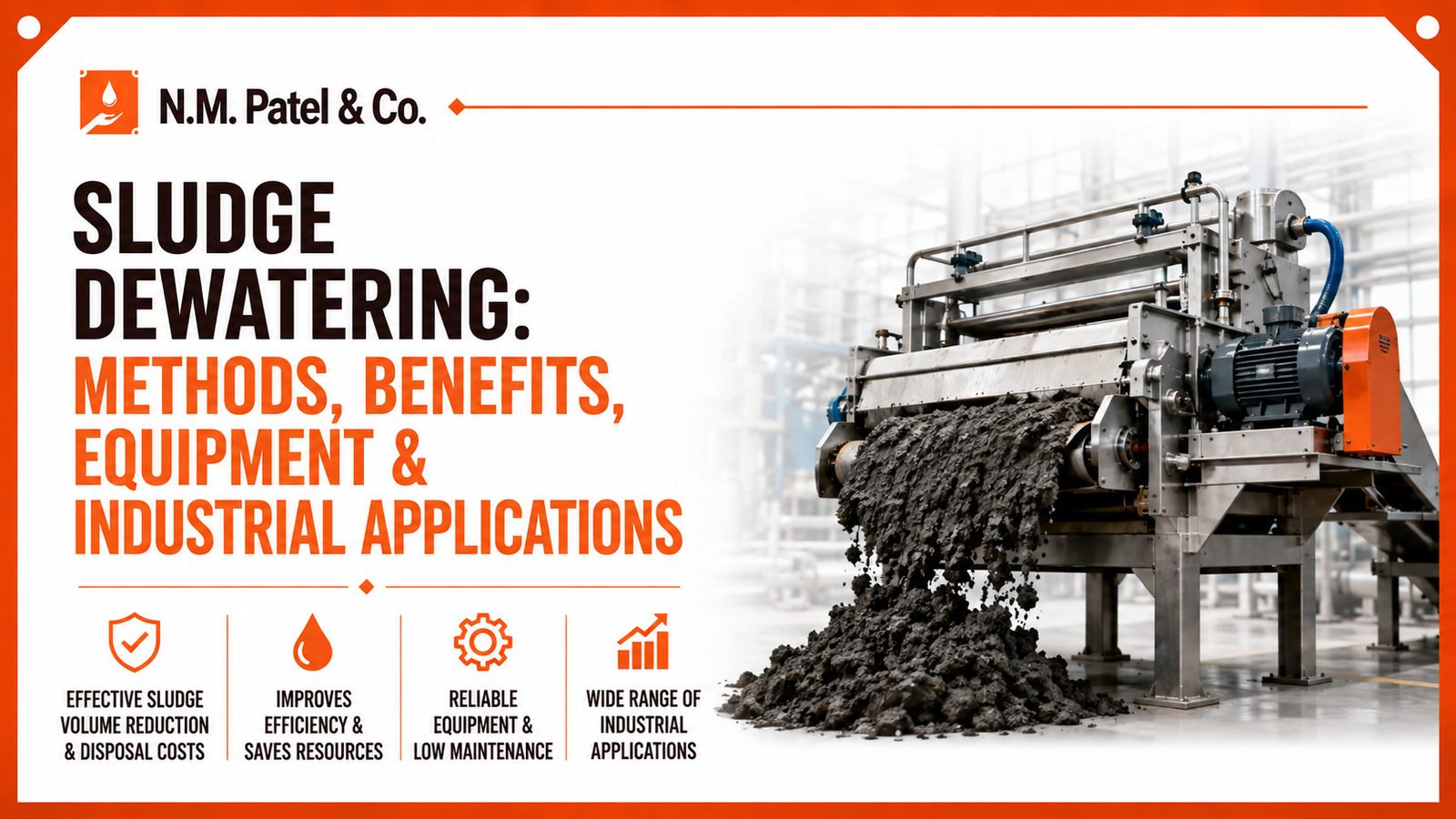
Sludge dewatering is the process of removing a significant portion of water from sludge to produce a more concentrated and manageable solid material.
A properly designed dewatering system can help industries:
- Reduce sludge volume
- Lower transportation requirements
- Improve sludge handling
- Reduce disposal costs
- Improve downstream treatment
- Recover or reuse water where appropriate
- Make solids easier to manage
Different industries require different dewatering technologies depending on sludge characteristics, required dryness, throughput, available space, and operating conditions.
Quick Answer
Sludge dewatering is the process of separating water from sludge to reduce its moisture content and volume.
Common sludge dewatering methods include:
- Filter Press
- Belt Filter Press
- Centrifuge
- Screw Press
- Drying Beds
Among these, a filter press is widely used for applications where effective solid-liquid separation and relatively dry filter cake are required.
The right technology depends on the sludge type, feed concentration, required capacity, desired cake characteristics, and operating requirements.
What Is Sludge Dewatering?
Quick Answer
Sludge dewatering separates water from sludge so that the remaining solids become easier to handle.
Untreated sludge can contain a large percentage of water.
The basic process is:
Wet Sludge → Dewatering → Water Removal → Concentrated Sludge Cake
The separated liquid is often called filtrate, centrate, or effluent depending on the technology used.
The dewatered solids can then be transported, further treated, recovered, or disposed of according to the application’s requirements and applicable regulations.
Why Is Sludge Dewatering Important?
Quick Answer
The primary purpose of sludge dewatering is to reduce the amount of water associated with sludge.
Consider the difference between:
High-Moisture Sludge → Large Volume → Difficult Handling → Higher Transport Burden
and:
Dewatered Sludge → Lower Volume → Easier Handling → More Efficient Transport
Dewatering does not necessarily mean that sludge becomes completely dry.
Instead, the objective is to remove enough water to achieve the desired solids concentration and handling characteristics.
How Does Sludge Dewatering Work?
A typical sludge dewatering process can be represented as:
Sludge Generation
↓
Sludge Collection
↓
Conditioning
↓
Dewatering Equipment
↓
Liquid-Solid Separation
↓
Filtrate / Separated Water
↓
Dewatered Sludge Cake
↓
Further Treatment / Transport / Disposal
The exact process depends on the type of dewatering equipment and the characteristics of the sludge.
Sludge Dewatering Process Step by Step
1. Sludge Collection
Sludge is collected from industrial processes or wastewater treatment systems.
The characteristics of sludge can vary significantly depending on its source.
For example, sludge may contain:
- Organic solids
- Inorganic particles
- Suspended solids
- Chemicals
- Fine particles
- Water
2. Sludge Conditioning
Some sludge requires conditioning before mechanical dewatering.
Conditioning can improve the separation of liquid and solids.
Depending on the application, conditioning may involve:
- Chemical treatment
- Polymer addition
- pH adjustment
- Blending
The appropriate conditioning method depends on the sludge chemistry and the selected dewatering technology.
3. Mechanical Dewatering
The conditioned sludge is introduced into the selected dewatering equipment.
The machine applies mechanical forces or pressure to separate water from solids.
Different technologies use different mechanisms.
4. Liquid Separation
Water is separated from the solids.
The separated liquid may require additional treatment before discharge or reuse.
5. Formation of Dewatered Sludge
After sufficient water removal, the remaining solids form a more concentrated material.
In a filter press, this material is commonly referred to as filter cake.
Major Sludge Dewatering Methods
There is no single dewatering technology suitable for every application.
The most common methods include:
| Dewatering Method | Basic Principle | Typical Advantage |
| Filter Press | Pressure filtration | High solids capture and relatively dry cake |
| Belt Filter Press | Continuous belt filtration | Continuous operation |
| Centrifuge | Centrifugal force | Compact and continuous |
| Screw Press | Mechanical compression | Lower-speed operation and compact design |
| Drying Beds | Natural drainage and evaporation | Simple operation in suitable environments |
The best option depends on the sludge characteristics and production requirements.
Filter Press for Sludge Dewatering
Quick Answer
A filter press uses pressure filtration to separate liquid from sludge and produce a dewatered filter cake.
A simplified process is:
Sludge Feed → Filter Chambers → Pressure → Filtration → Filter Cake
During operation, sludge is pumped into chambers formed between filter plates.
Filter cloths retain the solids while liquid passes through the filtration media.
As filtration continues, solids accumulate and form a filter cake.
How a Filter Press Dewaters Sludge
The basic process is:
Sludge Feed
↓
Filter Press
↓
Pressure Applied
↓
Liquid Passes Through Cloth
↓
Solids Remain in Chambers
↓
Filter Cake Formation
↓
Press Opening
↓
Cake Discharge
Filter press performance depends on several factors, including:
- Sludge characteristics
- Feed pressure
- Filter cloth selection
- Chamber configuration
- Sludge conditioning
- Filtration time
- Solids concentration
Filter Press vs Centrifuge for Sludge Dewatering
Both technologies can be effective, but their operating principles are different.
| Factor | Filter Press | Centrifuge |
| Separation Principle | Pressure filtration | Centrifugal force |
| Operation | Often batch | Continuous |
| Cake Formation | Yes | Typically discharged continuously |
| Solids Concentration | Can produce relatively dry cake | Depends on application |
| Footprint | Depends on configuration | Generally compact |
| Maintenance | Mechanical and cloth maintenance | Rotating equipment requires specialized maintenance |
| Automation | Can be automated | Can be highly automated |
| Best Fit | Applications requiring pressure filtration and cake formation | Continuous sludge processing |
The correct choice should be based on actual sludge characteristics and process requirements rather than equipment type alone.
Factors That Affect Sludge Dewatering Performance
Several factors influence the final dewatering result.
Sludge Characteristics
Different sludges behave differently during dewatering.
Important characteristics include:
- Particle size
- Solids concentration
- Organic content
- Chemical composition
- Compressibility
- Water-binding characteristics
Feed Solids Concentration
The concentration of solids entering the dewatering system can affect equipment performance and throughput.
Proper upstream thickening may improve the overall process depending on the application.
Chemical Conditioning
Some sludge requires chemical conditioning to improve filtration.
The selection and dosage of conditioning chemicals should be established through appropriate testing.
Filter Cloth Selection
For filter press applications, filter cloth plays an important role in filtration performance.
The cloth must be selected based on:
- Particle size
- Sludge characteristics
- Filtration requirements
- Chemical compatibility
- Cake release requirements
Operating Pressure
Pressure affects filtration performance, but higher pressure does not automatically guarantee better results.
The appropriate pressure depends on the equipment design and sludge characteristics.
Benefits of Sludge Dewatering
1. Reduced Sludge Volume
Removing water can significantly reduce the volume of material that needs to be handled.
2. Easier Transportation
Dewatered sludge is generally easier to transport than high-moisture sludge.
3. Improved Handling
A more concentrated sludge cake can be easier to store, move, and process.
4. Lower Disposal Burden
Reducing water content can reduce the amount of material transported for disposal, depending on the disposal method and applicable requirements.
5. Better Downstream Processing
Dewatering can prepare sludge for additional treatment or handling processes.
6. Improved Solid-Liquid Separation
Mechanical dewatering systems can provide controlled separation of liquid and solids.
Industrial Applications of Sludge Dewatering
Sludge dewatering is used across many industries.
Chemical Manufacturing
Chemical manufacturing processes can generate sludge containing suspended solids and process residues.
Dewatering can help separate solids from process wastewater.
Pharmaceutical Manufacturing
Pharmaceutical processes can generate wastewater and sludge requiring specialized treatment.
The appropriate dewatering system depends on the composition and characteristics of the waste stream.
Food Processing
Food and beverage facilities can generate organic-rich wastewater sludge.
Dewatering can reduce the volume of material requiring further handling.
Municipal Wastewater Treatment
Wastewater treatment plants generate sludge that often requires thickening and dewatering before further treatment or disposal.
Mining
Mining and mineral-processing operations can generate large quantities of slurry and sludge.
Dewatering can support solids recovery and water management.
Textile Industry
Textile wastewater treatment can produce sludge containing suspended solids and process-related contaminants.
Mechanical dewatering can help reduce the volume of this material.
How to Choose the Right Sludge Dewatering Equipment
Quick Answer
Choosing a sludge dewatering system requires evaluating the sludge characteristics, required throughput, desired cake condition, operating model, available space, and total operating requirements.
Consider the following factors.
1. Sludge Type
Determine:
- Solids concentration
- Particle size
- Organic content
- Chemical composition
- Compressibility
2. Required Capacity
Estimate the amount of sludge that must be processed per hour, day, or production cycle.
3. Desired Cake Characteristics
Determine the required solids concentration and handling properties of the final cake.
4. Continuous or Batch Operation
Some processes benefit from continuous operation, while others may be better suited to batch filtration.
5. Available Space
Plant layout can influence the choice of equipment.
6. Operating Costs
Consider:
- Energy
- Water
- Chemicals
- Filter media
- Maintenance
- Labor
- Spare parts
7. Maintenance Requirements
Equipment should be evaluated based on accessibility, wear components, service requirements, and expected operating conditions.
Sludge Dewatering Equipment Selection Checklist
| Selection Factor | Questions to Ask |
| Sludge Type | What is the composition of the sludge? |
| Feed Solids | What is the initial solids concentration? |
| Capacity | How much sludge must be processed? |
| Cake Quality | What solids concentration is required? |
| Operation | Batch or continuous? |
| Space | How much installation space is available? |
| Energy | What are the expected energy requirements? |
| Chemicals | Is conditioning required? |
| Maintenance | What service and replacement components are needed? |
| Automation | What level of automation is required? |
Common Sludge Dewatering Problems
High Moisture in Final Cake
Possible contributing factors include:
- Poor conditioning
- Incorrect filtration parameters
- Unsuitable filter media
- Excessive feed rate
- Sludge characteristics
Poor Solids Capture
Possible causes include:
- Incorrect filter cloth
- Fine particles
- Poor conditioning
- Incorrect operating conditions
Slow Filtration
Possible causes include:
- Cloth blinding
- High sludge viscosity
- Poor conditioning
- Excessive solids loading
Uneven Cake Formation
Possible causes can include:
- Uneven sludge distribution
- Feed problems
- Incorrect operating conditions
- Equipment issues
Proper troubleshooting should consider the entire process rather than replacing individual components without diagnosis.
How to Improve Sludge Dewatering Efficiency
Optimize Sludge Conditioning
Test appropriate conditioning methods to improve separation.
Select the Correct Filter Media
Filter cloth selection can have a significant impact on filtration performance.
Maintain Equipment Regularly
Regular inspection helps prevent equipment problems from affecting production.
Monitor Operating Parameters
Track relevant parameters such as:
- Feed pressure
- Filtration time
- Solids concentration
- Cake characteristics
- Filtrate quality
Prevent Filter Cloth Blinding
Regular cleaning and appropriate cloth selection can help maintain filtration performance.
Evaluate the Complete System
Dewatering performance depends not only on the machine but also on upstream thickening, conditioning, feed consistency, and downstream handling.
Sludge Dewatering and Waste Reduction
Dewatering can contribute to more efficient waste management by reducing the amount of water transported with sludge.
A simplified flow is:
Wet Sludge → Water Removal → Reduced Volume → Easier Handling
However, dewatering does not eliminate contaminants from sludge.
The final treatment and disposal route must be selected according to the material characteristics and applicable environmental requirements.
Why Filter Presses Are Used for Sludge Dewatering
Filter presses are commonly considered for applications where pressure filtration and filter-cake formation are important.
Key characteristics include:
- Pressure-based separation
- Replaceable filter cloths
- Modular plate-and-frame/chamber configurations
- Controlled filtration cycles
- Filter cake discharge
- Potential for automation
They can be suitable for industrial applications where a controlled batch filtration process is acceptable.
Preventive Maintenance for Sludge Dewatering Equipment
Regular maintenance can help maintain consistent performance.
Important maintenance areas include:
| Component | Maintenance Focus |
| Filter Cloth | Cleaning, inspection, replacement |
| Filter Plates | Damage and sealing surfaces |
| Hydraulic System | Pressure and leakage |
| Feed Pump | Performance and wear |
| Valves | Leakage and operation |
| Piping | Blockages and leaks |
| Electrical System | Connections and controls |
| Structural Components | Wear and alignment |
Maintenance intervals should follow the equipment manufacturer’s recommendations and actual operating conditions.
How N.M. Patel & Co. Can Help
Choosing the right sludge dewatering equipment requires more than comparing machine specifications.
The system should be evaluated according to:
Sludge Characteristics → Capacity → Separation Requirement → Equipment Selection → Installation → Operation → Maintenance
N.M. Patel & Co. can help businesses evaluate industrial filtration and dewatering requirements and identify suitable equipment configurations for their applications.
Potential considerations include:
- Filter press systems
- Industrial filtration equipment
- Sludge dewatering
- Solid-liquid separation
- Wastewater treatment applications
- Custom filtration requirements
Looking for a sludge dewatering solution for your industrial application? Contact N.M. Patel & Co. to discuss your filtration and solid-liquid separation requirements.
Frequently Asked Questions
What is sludge dewatering?
Sludge dewatering is the process of removing water from sludge to increase its solids concentration and make the material easier to handle, transport, treat, or dispose of.
What is the best method for sludge dewatering?
There is no single best method for every application. Filter presses, centrifuges, belt filter presses, screw presses, and drying beds can all be suitable depending on sludge characteristics and process requirements.
Is a filter press suitable for sludge dewatering?
Yes. Filter presses are widely used for pressure filtration applications where solid-liquid separation and filter-cake formation are required.
What equipment is used for sludge dewatering?
Common equipment includes filter presses, belt filter presses, centrifuges, screw presses, and drying beds.
What factors affect sludge dewatering?
Important factors include sludge composition, solids concentration, particle size, conditioning, filter media, pressure, filtration time, and equipment configuration.
How can sludge dewatering reduce costs?
By removing water, dewatering can reduce the volume and weight of material requiring transportation and further handling. Actual savings depend on the process and disposal requirements.
Can sludge dewatering remove all water?
No. Mechanical dewatering generally removes a significant portion of free and some bound water, but the resulting cake still contains moisture. The achievable solids concentration depends on the sludge and technology.
Conclusion
Sludge dewatering is an important step in industrial wastewater and sludge management.
By separating water from solids, businesses can reduce sludge volume, improve handling, simplify transportation, and prepare material for further treatment or disposal.
The right dewatering technology depends on several factors, including:
Sludge Type + Solids Concentration + Required Capacity + Cake Quality + Operating Requirements
Filter presses, centrifuges, belt filter presses, and screw presses each offer different operating characteristics.
For industrial applications where pressure filtration and filter-cake formation are important, a filter press can be an effective sludge dewatering solution.
The most reliable approach is to evaluate the complete process rather than selecting equipment based only on capacity or price.
N.M. Patel & Co. can help businesses evaluate filtration and sludge dewatering requirements and identify suitable industrial equipment for their applications.